At a glance: Wakes during the night and can't resettle without you. This is a normal part of toddler development. See practical steps and related activities below.
Built by a parent of toddlersDesigned for common toddler moments across 1 to 4 years (12–48 months)
Field-tested ideas shaped by direct parenting experience and guidance from reputable sources including the NHS, NSPCC, and Zero to Three.
Handle the need (nappy, water, reassurance) and leave. Don’t bring toys or stories into the dark.
Keep the daytime nap in place — overtired toddlers wake more, not less.
If it’s been weeks, look at the day: growth spurts, new nursery, big changes. Sleep mirrors life.
Why this works
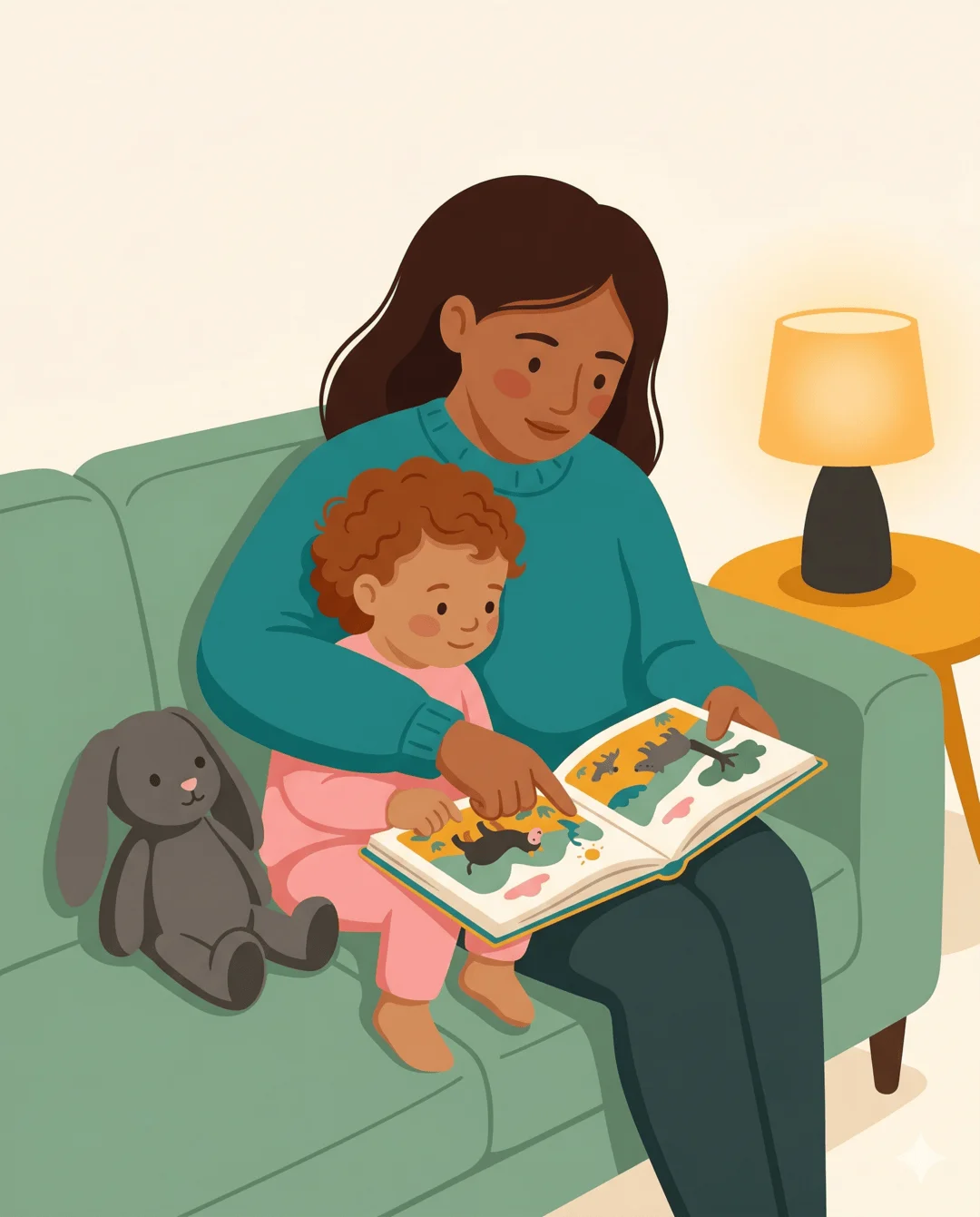
Make sure the room is set up for self-resettling: a comfort object (special toy or blanket), a nightlight, white noise. The AAP notes that comfort objects often help children fall asleep, especially if they wake up during the night. If you do go in, keep it boring — no eye contact, minimal talking, brief reassurance, then leave. Consistency over a few nights is the key — every concession to a wake-up teaches them that the wake-up was worth it. If they're sick, teething, or going through a regression, drop your expectations temporarily and return to the routine when they're well. Rule out hunger, a wet nappy, or temperature first if the wake-up is unusual for them.
Many toddler behaviour spikes come from hunger, tiredness, transitions, or a mismatch between big feelings and limited language. The goal is regulation first, teaching second.
When should I worry about night waking?
If this pattern feels intense, persistent, or starts affecting sleep, safety, nursery, or family routines, it’s worth speaking to a professional. Your health visitor or GP can discuss your concerns and refer you to specialist support if needed. The NSPCC helpline (0808 800 5000) also offers free, confidential advice on any child behaviour concern.
Why does night waking happen?
All children — and adults — wake briefly four to six times every night. The American Academy of Pediatrics notes that the question is not whether toddlers wake, but whether they can resettle on their own. Toddlers who have always been rocked, fed, or held to sleep have not yet practised the skill of falling back to sleep independently. Developmental milestones, teething, illness, and big life changes all temporarily disrupt sleep — but the underlying skill of self-resettling is what determines whether a wake-up becomes a 90-minute battle or a 90-second blip.
What should I avoid during night waking?
Don't rush in at the first sound — give them a moment to find their own way back. The AAP warns that 'children's main goal is to get you to appear, so if you appear for any reason, even just for checking, they will expect you to come each time.' Don't bring them into your bed if you're trying to teach independent sleep — it makes the next night harder. Don't introduce new sleep associations during a wake-up (a new bottle, new song, new toy) — you're creating tomorrow's problem. Don't react with frustration — children sense it and the cortisol spike makes resettling harder.
Every child is different, and progress isn’t always steady. With a calm, consistent response and a little time, many families find things gradually ease. A brief wobble — or a patch where it feels harder — is usually part of the process, not a sign you’re doing anything wrong.
Get weekly tips for tough toddler moments
One email a week with practical behaviour tips, calming activities, and developmental insights. No spam, unsubscribe any time.