At a glance: Wakes screaming or scared from a bad dream — or appears terrified but stays asleep. This is a normal part of toddler development. See practical steps and related activities below.
Built by a parent of toddlersDesigned for common toddler moments across 1 to 4 years (12–48 months)
Field-tested ideas shaped by direct parenting experience and guidance from reputable sources including the NHS, NSPCC, and Zero to Three.
Try this first
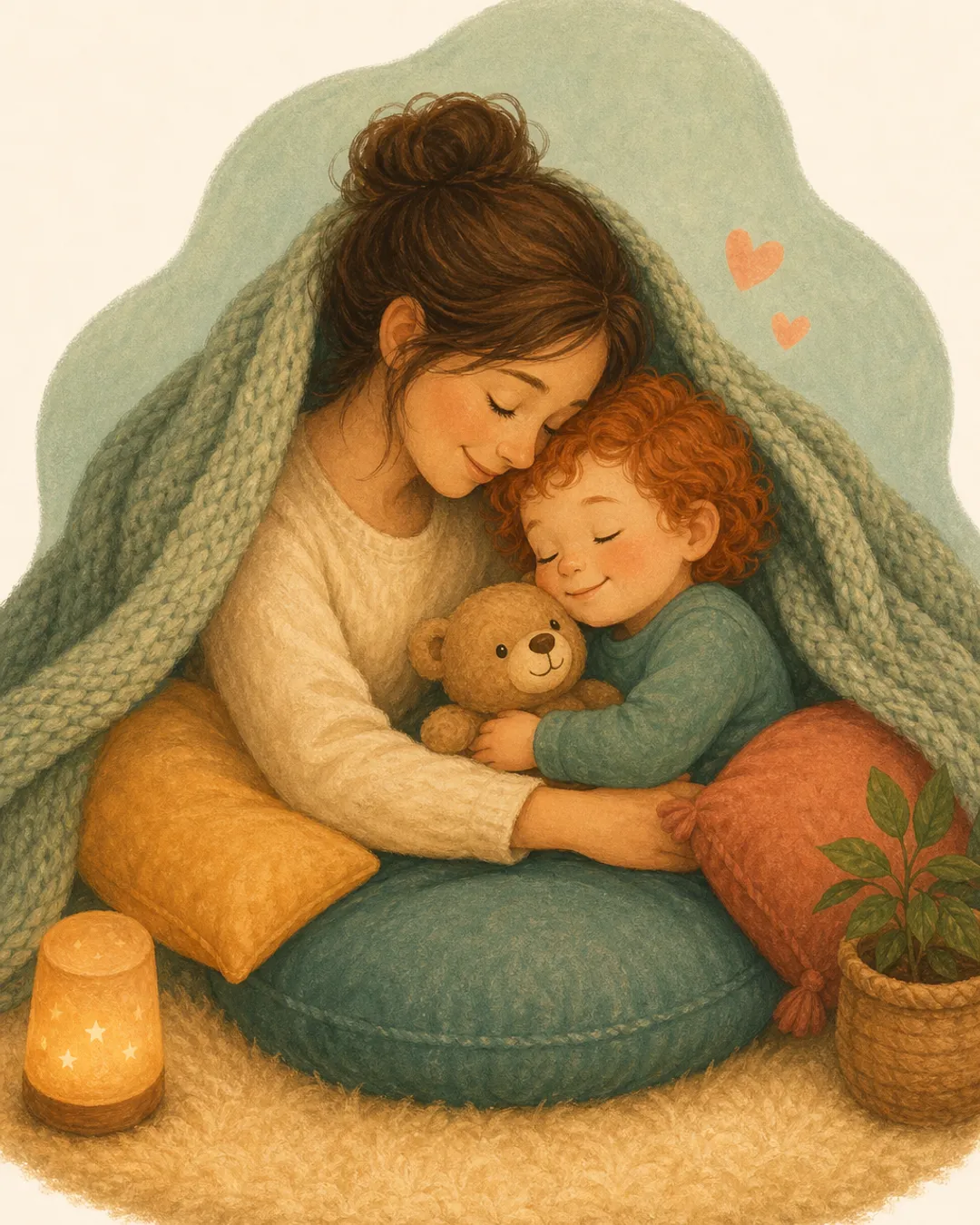
For nightmares, go in. Calm voice, soft hand, wait it out — they remember you being there.
For night terrors (eyes open, unresponsive), don’t try to wake them. Keep them safe and let it pass.
Avoid screens and big stories in the last hour before bed. Overload shows up at night.
In daylight, don’t rehash the dream in detail. Brief acknowledgement, then move on.
Why this works
For nightmares, the AAP advises: 'Go to your child as quickly as you can. Assure them that you are there and will not let anything harm them.' Keep the room dim, voice soft, and offer brief comfort. Mention the dream briefly the next day in a relaxed moment so the fear has somewhere to go. For night terrors, stay calm and make sure your child cannot hurt themself — that's the entire response. Don't try to wake them or comfort them — they're not awake to receive it. The episode usually passes within a few minutes and they fall back into deep sleep. If night terrors happen at the same time every night, try gently rousing them about 15 minutes before that time for a few nights to disrupt the sleep cycle. Talk to your GP or paediatrician if night terrors are frequent or seem to be hurting them.
Are nightmares and night terrors normal for toddlers?
Many toddler behaviour spikes come from hunger, tiredness, transitions, or a mismatch between big feelings and limited language. The goal is regulation first, teaching second.
When should I worry about nightmares and night terrors?
If this pattern feels intense, persistent, or starts affecting sleep, safety, nursery, or family routines, it’s worth speaking to a professional. Your health visitor or GP can discuss your concerns and refer you to specialist support if needed. The NSPCC helpline (0808 800 5000) also offers free, confidential advice on any child behaviour concern.
Why do nightmares and night terrors happen?
Nightmares and night terrors are different events with different responses. The American Academy of Pediatrics explains that nightmares happen during REM sleep in the second half of the night — your child wakes, remembers the dream, and can be comforted. They can begin as young as six months and tend to peak between three and twelve years old as imagination develops. Night terrors are something else entirely: they happen during the deepest stage of sleep early in the night, your child appears panicked but is actually still asleep, and they will not remember it in the morning. Night terrors are most common in toddlers and preschoolers and almost always resolve on their own.
What should I avoid during nightmares and night terrors?
For nightmares: don't dismiss the fear ('it was just a dream' isn't reassuring at this age — the fear is real to them). Don't make a long discussion of it in the middle of the night — it can fix the image in their mind. For night terrors: don't try to wake them. Don't restrain them forcefully if they push you away. Don't ask them about it the next morning — they have no memory of it and your worry will only confuse them.
Every child is different, and progress isn’t always steady. With a calm, consistent response and a little time, many families find things gradually ease. A brief wobble — or a patch where it feels harder — is usually part of the process, not a sign you’re doing anything wrong.
Get weekly tips for tough toddler moments
One email a week with practical behaviour tips, calming activities, and developmental insights. No spam, unsubscribe any time.