
Why this skill matters
Each skill area supports everyday confidence, communication, and play. Growth here often shows up as small, repeated gains rather than sudden leaps.
At a glance: Identifying feelings, calming strategies, managing frustration, and developing patience. You see this developing when your child starts naming emotions ('I'm mad!'), takes deep breaths when upset, or waits briefly for a turn. Tantrums are a normal sign that this skill is still under construction, and every meltdown is a learning opportunity when met with calm support. Browse 197 related activities below.

Each skill area supports everyday confidence, communication, and play. Growth here often shows up as small, repeated gains rather than sudden leaps.
Short, repeated activities usually build this skill better than one long session. Keep the challenge light and the interaction playful.
Look for slightly longer engagement, smoother coordination, or more willingness to try the skill again tomorrow.
Meltdowns and tantrums
Start with calm regulation, then move to a simple activity that helps the moment settle.
Read the meltdown guideUse this skill page when you want to understand the bigger picture behind tantrums and plan play that builds regulation over time.
This is not for the middle of a meltdown. During a tantrum, use the behaviour guide for that specific moment instead.
Your child starts naming a feeling, tries a calming strategy you have modelled, or recovers from a big emotion a little faster than last month.
Choose one calming activity from the list below and try it at a calm moment today, not during a meltdown.
A simple visual sequence — eat lunch, nap, snack, mum comes back — drawn together so your toddler knows exactly when pickup happens at nursery.
Use big, fast brush strokes on large paper to express angry feelings through colour and movement — a safe outlet for fury.

Redirect big feelings into loud, satisfying stomps along a path.
A playful game contrasting a drippy whining voice with a calm 'asking voice', so your toddler can actually hear the difference and reach for the clearer one instead of being told off.
Stomp through crunchy autumn leaves, then gather and sort them by colour, size, or shape — a high-energy seasonal adventure.
Set up a little corner where your toddler looks after their own doll, feeding, cuddling, and settling it, so they can rehearse life with a new little one and feel like a capable, caring big sibling.

Stack and balance pebbles into a tower at the beach or park — how high can you go before it tumbles?

Balance a beanbag on different body parts while moving.
Showing 8 of 197 activities
Emotional regulation is the ability to identify feelings, manage frustration, develop patience, and use calming strategies. It develops gradually — tantrums are a normal sign this skill is still under construction, not a failure of discipline.
Toddlers can’t self-regulate yet — the brain wiring for it takes years to develop. Zero to Three describes co-regulation as the way young children ‘borrow’ a calm adult’s regulation before they can do it on their own. When you stay calm during their meltdown, you are not just being patient — you are literally lending them your nervous system. Each calm moment becomes a building block: as you co-regulate with them hundreds of times, they slowly internalise the skill and start to do it themselves. This is why staying steady matters even when nothing else seems to be working.
Look for small signs: naming emotions (‘I’m mad!’), taking a deep breath when upset, waiting briefly for a turn, or recovering from frustration a little faster than before. Progress is measured in months, not days.
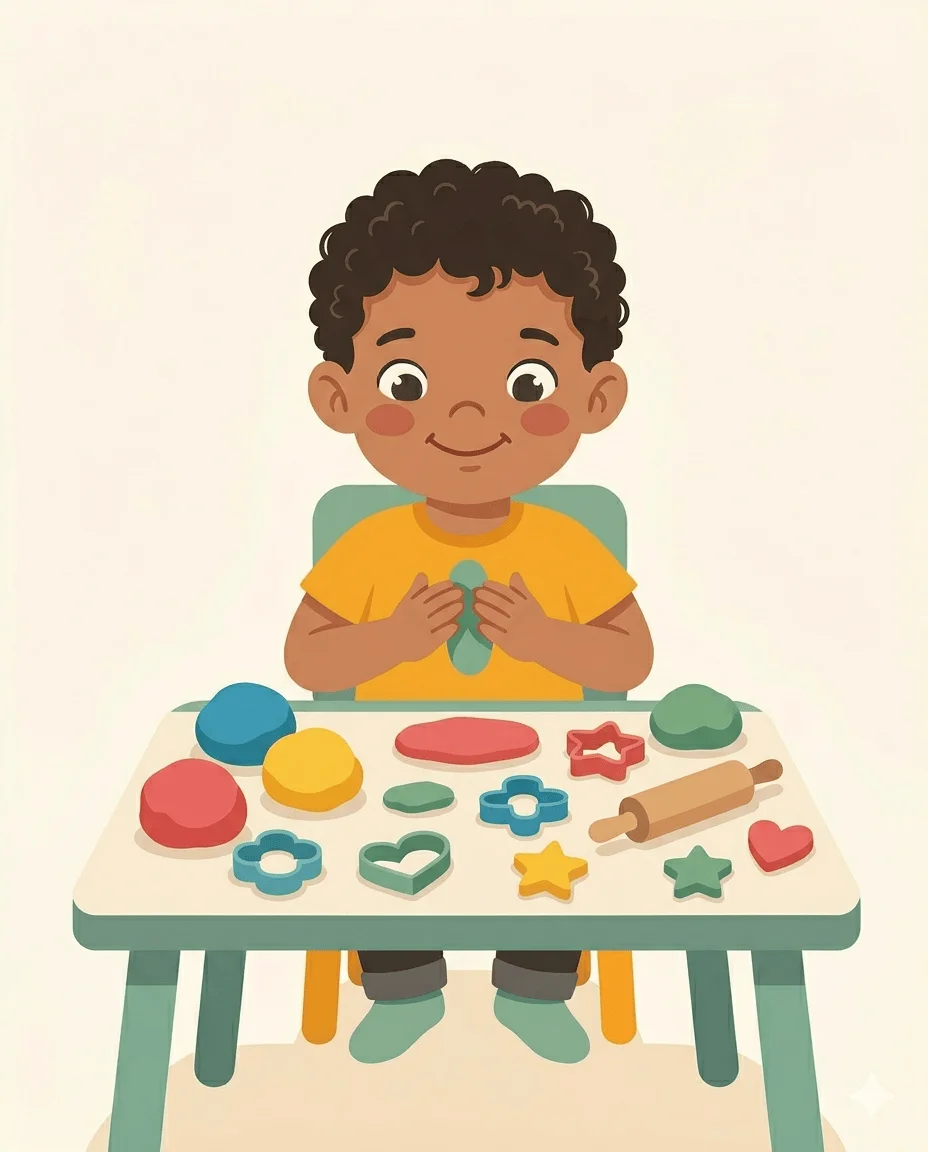
Stay calm during their meltdowns — your regulation teaches theirs. Name what they’re feeling (‘You’re frustrated’), offer physical outlets (stomping, squeezing playdough), and practise calming strategies during calm moments, not during a crisis.
One email a week with age-appropriate activities, developmental tips, and practical play ideas. No spam, unsubscribe any time.