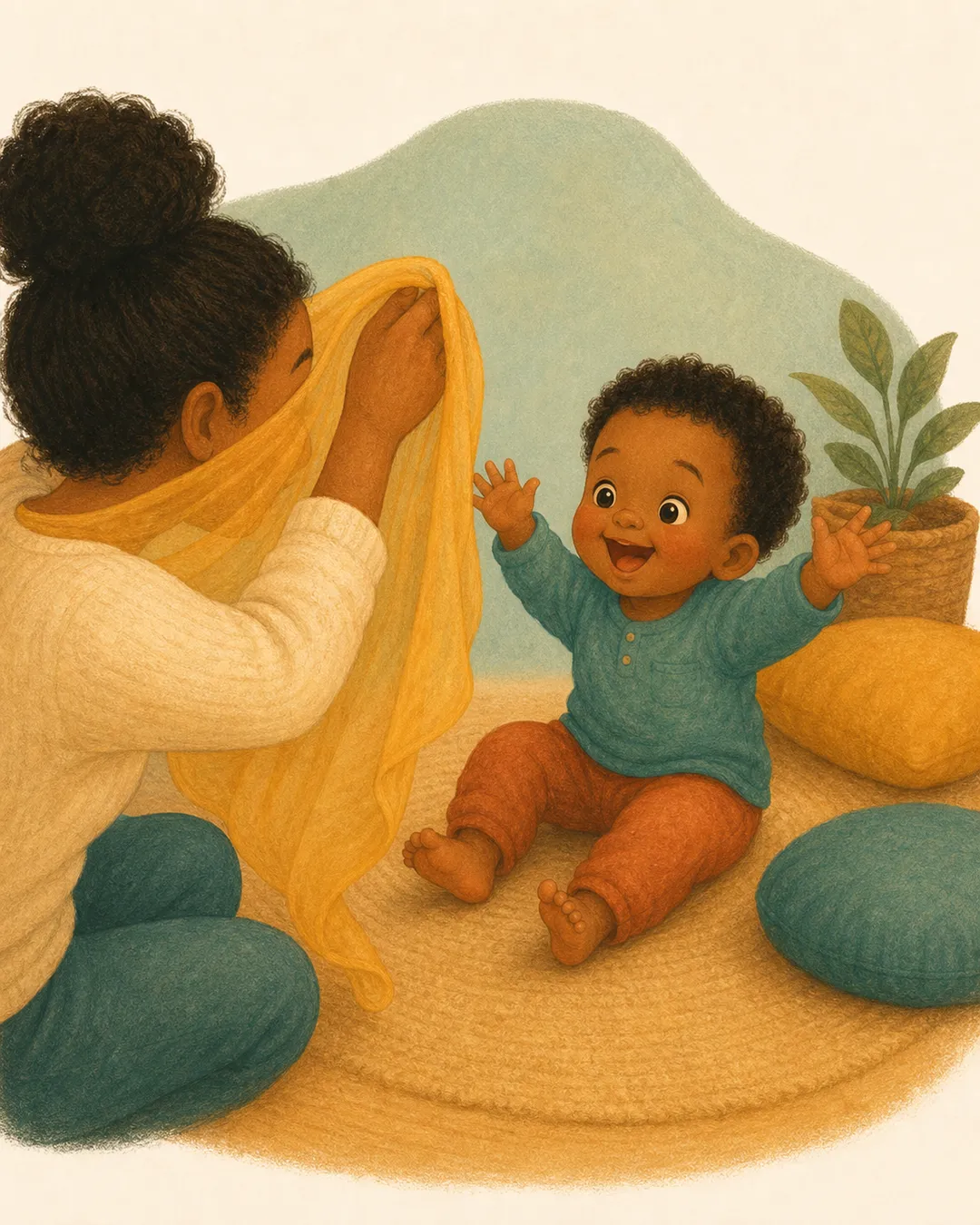
At a glance: Regression, jealousy, or sudden behaviour changes after a new baby arrives. This is a normal part of toddler development. See practical steps and related activities below.
Built by a parent of toddlersDesigned for common toddler moments across 1 to 4 years (12–48 months)
Field-tested ideas shaped by direct parenting experience and guidance from reputable sources including the NHS, NSPCC, and Zero to Three.
Try this first
Expect regression — baby talk, night waking, potty slips. It’s communication, not backsliding.
Carve out ten minutes a day that’s only theirs. Name it (“our time”) so they can hold it.
Let them help with the baby when they want — nappy passer, song picker, burp spotter.
Don’t fake-enthuse about the baby to them. Acknowledge the hard bit: “it’s a big change.”
Why this works
Make the older child feel needed, not displaced. The AAP advises: 'Make sure the focus isn't all on your new baby' — protect small one-on-one moments daily, even ten minutes. Involve them in baby care in age-appropriate ways: fetching nappies, choosing the baby's outfit, singing a song to baby. Read books together about being a big sibling so they have language for their feelings. When the baby cries and you have to attend, narrate it kindly: 'I have to feed baby first, and then it's your turn for a story.' Tolerate regression — let them have the bottle, the carrying, the babying — and it usually passes within a few weeks. Tell them often that they are loved exactly as they are. The adjustment is real and temporary; what stays is the relationship.
Is adjusting to a new sibling normal for toddlers?
Many toddler behaviour spikes come from hunger, tiredness, transitions, or a mismatch between big feelings and limited language. The goal is regulation first, teaching second.
When should I worry about adjusting to a new sibling?
If this pattern feels intense, persistent, or starts affecting sleep, safety, nursery, or family routines, it’s worth speaking to a professional. Your health visitor or GP can discuss your concerns and refer you to specialist support if needed. The NSPCC helpline (0808 800 5000) also offers free, confidential advice on any child behaviour concern.
More on this moment
When to use this guide
Use this when a new baby has arrived, or is about to arrive, and your toddler is showing jealousy, regression, clinginess, sleep disruption, or sudden behaviour changes.
When to step back
If your toddler is unsafe with the baby, prioritise supervision and separation first. If the behaviour feels extreme or persistent, ask your health visitor or GP for support.
What success looks like
Your toddler still has big feelings, but they recover faster, accept small moments of connection, and start to believe there is still enough of you for them.
What to try first
Create one protected ten-minute moment each day where the baby is not the focus. Let your toddler choose the play, and narrate that this is their special time with you.
When a new baby arrives, your toddler's whole world shifts. The American Academy of Pediatrics notes that the older child may not understand why their special people are suddenly so busy with someone else, and that 'your attitude will rub off on them.' Regression is one of the most common responses — a previously toilet-trained child has accidents, a confident sleeper starts waking, a chatty toddler asks for a bottle. This isn't manipulation: it's a small person testing whether they're still loved when they act like the baby that's getting all the attention. Toddlers don't have the words for jealousy, displacement, or worry — so they show it through their behaviour instead.
What should I avoid during adjusting to a new sibling?
Don't dismiss regression as 'attention seeking' as if that's a bad thing — they're seeking reassurance, and they need it. Don't ask them to be 'a big boy now' or 'a big girl now' — being big sounds lonely. Don't make every interaction about the new baby ('Look how good your sister is sleeping'). Don't expect them to feel grateful for a new sibling. Don't punish them for being upset about a major life change you decided for them.
Every child is different, and progress isn’t always steady. With a calm, consistent response and a little time, many families find things gradually ease. A brief wobble — or a patch where it feels harder — is usually part of the process, not a sign you’re doing anything wrong.
Get weekly tips for tough toddler moments
One email a week with practical behaviour tips, calming activities, and developmental insights. No spam, unsubscribe any time.