Wash, wring, and peg out dolly's clothes on a mini washing line — pretend domestic play that builds fine motor strength and sequencing skills.
Activity details
2y–4y20 minsmediumbothClothespegsFabric StripsString or YarnTowelsWashing-Up Liquid
Instructions
Tiny Steps
Get ready
Tie a length of string between two chairs at your child's shoulder height to create a mini washing line.
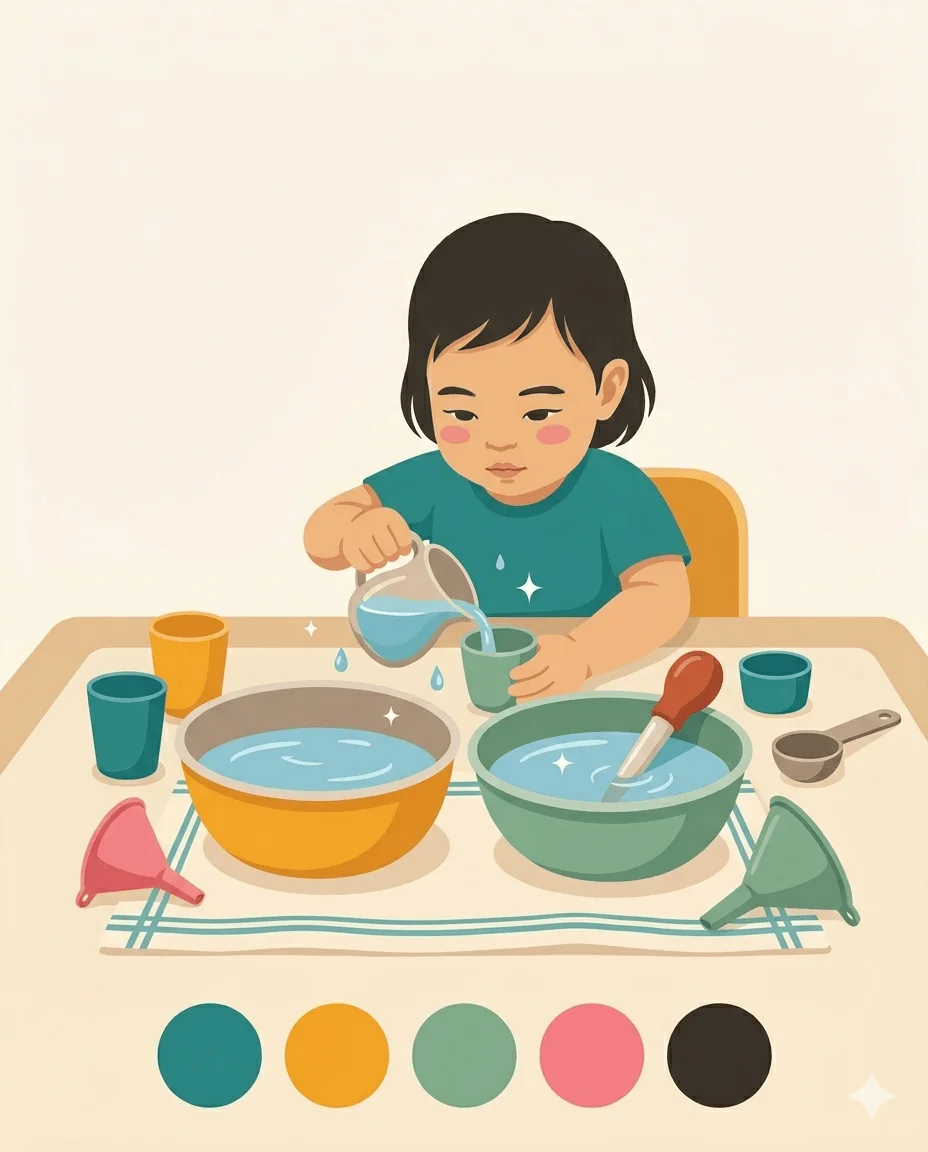
Fill a small bowl with warm soapy water and place it on a towel next to the washing line.
1/4
Tie a length of string between two chairs at your child's shoulder height to create a mini washing line.
Fill a small bowl with warm soapy water and place it on a towel next to the washing line.
Gather small fabric items: doll's clothes, face flannels, fabric scraps, or old baby socks.
Put the fabric items in a small basket and tell your child 'Dolly's clothes are dirty! Shall we wash them?'
Show them how to dip a cloth in the water, swish it around, and then squeeze it out: 'Squeeze, squeeze — get the water out!'
Help them drape the wet cloth over the washing line and attach it with a clothespeg — the pegging is brilliant fine motor practice.
Continue until all the items are washed and pegged out, then admire the washing line together: 'Look at all that clean laundry!'
Once dry (or once patience runs out), let your child unpeg each item and fold it into the basket — the complete domestic cycle.
Parent tip
Set out clothespegs and fabric strips before inviting your toddler in so the first minute feels smooth.
What success looks like
Watch for focused exploration — fingers digging in, pouring back and forth, or sorting by feel. Even a few minutes of this builds concentration.
Toddlers who watch their parents doing laundry are desperate to join in, but real clothes are too heavy and the machine too complex. This scaled-down version gives them their own laundry basket of doll-sized clothes or fabric scraps, a bowl of soapy water, and a low washing line strung between two chairs. The full sequence — wash, wring, peg, dry — is a satisfying multi-step process that exercises fine motor control, sequencing memory, and the deeply motivating sense of doing 'real' work.
Why it helps
Using clothespegs requires a strong pincer grip and sustained finger pressure — the same muscle groups used for holding a pencil. Occupational therapists frequently recommend pegging activities for fine motor development because they build both strength and endurance in the small hand muscles. The multi-step sequencing (wash, wring, peg, dry) also exercises working memory, as children must remember what comes next and plan ahead. The EYFS Physical Development goals include exactly this kind of careful hand movement — it is how children build the dexterity they will need for everyday tasks.
Variations
On a sunny day, move the whole station outdoors and let the clothes genuinely dry in the sun — checking back later adds a time concept.
Add a toy iron and ironing board for the next stage of the laundry process — pressing flat with a play iron is satisfying and builds bilateral coordination.
For younger toddlers, skip the pegging and simply drape the wet cloths over the line — the washing and wringing are the key skills.
Safety tips
Ensure the washing line is at an appropriate height and cannot be pulled down onto your child — secure it firmly to the chair backs.
Supervise water play closely, and mop up any spills immediately to prevent slipping.
Test clothespegs before offering them — very stiff pegs can pinch small fingers painfully, so choose soft spring pegs or wooden dolly pegs.
Try one of these next
A few connected ideas chosen by theme, energy, set-up, and age fit.