At a glance: Rocking, head banging, hair twirling, or other repetitive habits — when normal, when to worry. This is a normal part of toddler development. See practical steps and related activities below.
Built by a parent of toddlersDesigned for common toddler moments across 1 to 4 years (12–48 months)
Field-tested ideas shaped by direct parenting experience and guidance from reputable sources including the NHS, NSPCC, and Zero to Three.
Try this first
Stay calm. Most toddler head-banging looks alarming but is a self-soothing rhythm, not an injury.
Don’t pull them away mid-episode unless they’re hurting themselves — it often prolongs the cycle.
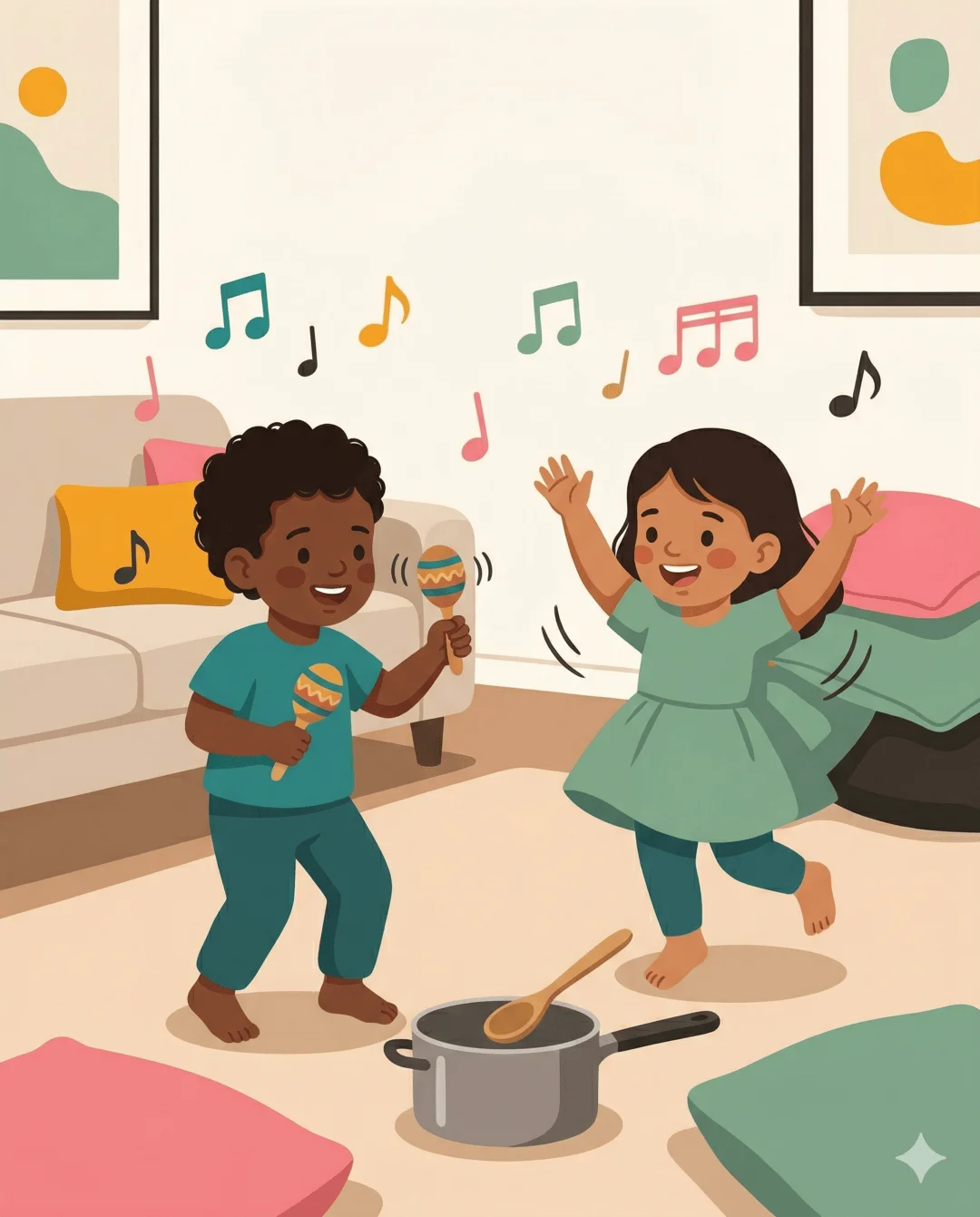
Offer safer rhythmic outlets in the day: drumming, rocking horse, music with a steady beat.
If bruises appear, it continues past age 3, or comes with other concerns, the NHS recommends speaking to your GP or health visitor.
Why this works
The first step is the hardest one for parents: ignore it. Most self-comforting habits fade naturally if they're not reinforced by attention. Pad the cot if the banging is loud or you're worried about safety, but otherwise let the behaviour run its course. Reduce overall daily stress where you can — overstimulation and tiredness amplify the habit. Build in a calmer wind-down before sleep so the brain has another route to settle. Offer alternative soothing tools: a favourite cuddly, a soft brush, a weighted blanket appropriate for age. Talk to your GP, paediatrician, or health visitor if you spot red flags: head banging or rocking happening during the daytime away from sleep transitions, signs of injury or bruising, missed developmental milestones in other areas, or if it's happening alongside other behaviours that worry you. A quick conversation with a professional is always worth it for peace of mind.
Are head banging and self-soothing habits normal for toddlers?
Many toddler behaviour spikes come from hunger, tiredness, transitions, or a mismatch between big feelings and limited language. The goal is regulation first, teaching second.
When should I worry about head banging and self-soothing habits?
If this pattern feels intense, persistent, or starts affecting sleep, safety, nursery, or family routines, it’s worth speaking to a professional. Your health visitor or GP can discuss your concerns and refer you to specialist support if needed. The NSPCC helpline (0808 800 5000) also offers free, confidential advice on any child behaviour concern.
Why do head banging and self-soothing habits happen?
Self-comforting habits — head banging, body rocking, hair twirling, fingernail biting, cuticle picking — are extremely common in toddlers. The American Academy of Pediatrics describes their repetitive nature as something that serves a calming purpose for the brain, particularly in the transition from wakefulness to sleep. Body rocking can begin around 6 months, head rolling and head banging around 9 months, and most children stop on their own by age 5. This is why the behaviour often appears at bedtime, naptime, or when a child is tired or overstimulated — it's a self-regulation strategy. As alarming as head banging can look from the outside, toddlers very rarely hurt themselves; they're remarkably good at pulling back if it actually starts to hurt.
What should I avoid during head banging and self-soothing habits?
Don't draw attention to the habit. When you call attention with harsh words, ridicule, or punishment, the tension that the habit relieves only increases — which makes the habit get worse, not better. Don't punish or shame; punishment is not effective for habits like this. Don't strap a helmet on or rearrange the room dramatically — it makes the child feel something is wrong with them. And don't film it to show others; it amplifies your own anxiety, and the child senses it.
Every child is different, and progress isn’t always steady. With a calm, consistent response and a little time, many families find things gradually ease. A brief wobble — or a patch where it feels harder — is usually part of the process, not a sign you’re doing anything wrong.
Get weekly tips for tough toddler moments
One email a week with practical behaviour tips, calming activities, and developmental insights. No spam, unsubscribe any time.