Parent tip
Start before you overthink it. No-prep activities work best when you begin while the moment is still recoverable.

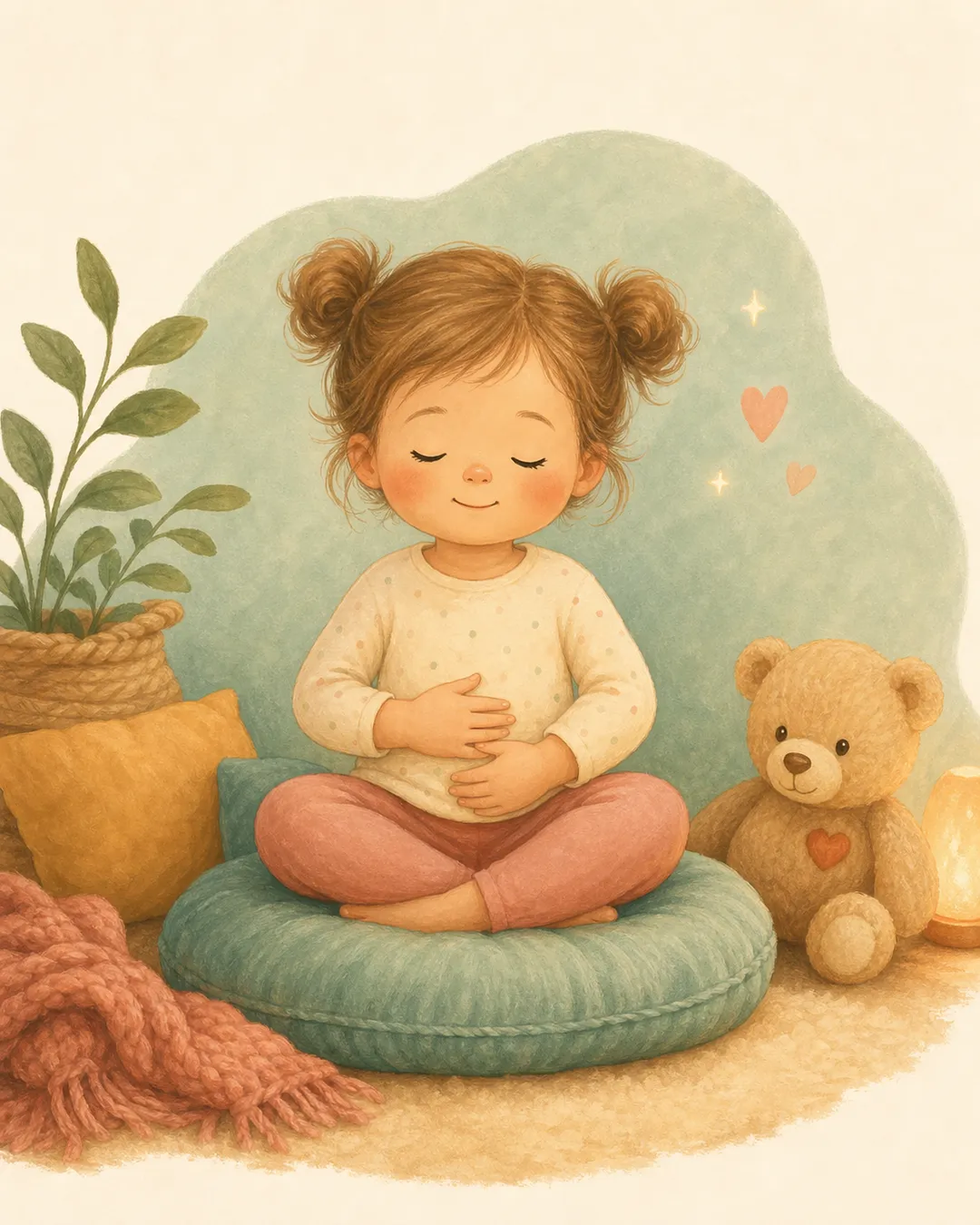
Lie down and watch your tummy rise and fall as you take deep breaths together.
Tiny Steps
Start before you overthink it. No-prep activities work best when you begin while the moment is still recoverable.

A few quiet minutes together without pressure. If your child relaxes even slightly, that’s self-regulation building.
Lie on your backs together and place a hand on your tummy. Breathe in deeply through your nose — watch your hand rise — then blow out slowly through your mouth. This deceptively simple activity teaches diaphragmatic breathing in a concrete, visible way that toddlers can grasp. It's a powerful calm-down tool that you're teaching them to use independently for years to come.
Birth to 5 Matters identifies self-regulation as children's developing ability to regulate their emotions, thoughts and behaviour, noting that co-regulation — where adults model calming strategies — is the foundation from which children build this skill. Diaphragmatic breathing activates the parasympathetic nervous system, lowering heart rate and cortisol levels. By making the breath visible through hand or toy movement, toddlers learn interoceptive awareness — the ability to notice and respond to internal body signals. This is a foundational self-regulation skill that children can carry into stressful moments independently. NHS early years guidance recognises that emotional development is just as important as physical or cognitive milestones, and it grows best through warm, consistent interactions.
One email a week with practical toddler activities, behaviour tips, and developmental insights. No spam, unsubscribe any time.