Pack a small bag with five sensory items to use as a calming toolkit when feelings escalate in public places.
Activity details
19m–4y15 minslowindoorBubblesPlastic ContainersRocksScarves or Fabric
Instructions
Tiny Steps
Get ready
Gather a small bag and five sensory items: a smooth pebble, a small piece of soft fabric, a photo of your family, a tiny pot of bubbles, and a chewy snack in a container.
Number each item: 'One is our smooth stone. Two is our soft cloth. Three is our family photo. Four is our magic bubbles. Five is our special snack.'
1/4
Gather a small bag and five sensory items: a smooth pebble, a small piece of soft fabric, a photo of your family, a tiny pot of bubbles, and a chewy snack in a container.
Number each item: 'One is our smooth stone. Two is our soft cloth. Three is our family photo. Four is our magic bubbles. Five is our special snack.'
Sit together and practise the countdown: pull out item one, hold the stone and take a breath. Pull out item two, stroke the fabric. Continue through all five.
Narrate the process: 'When we feel wobbly in the shops, we get our bag out and go one, two, three, four, five.'
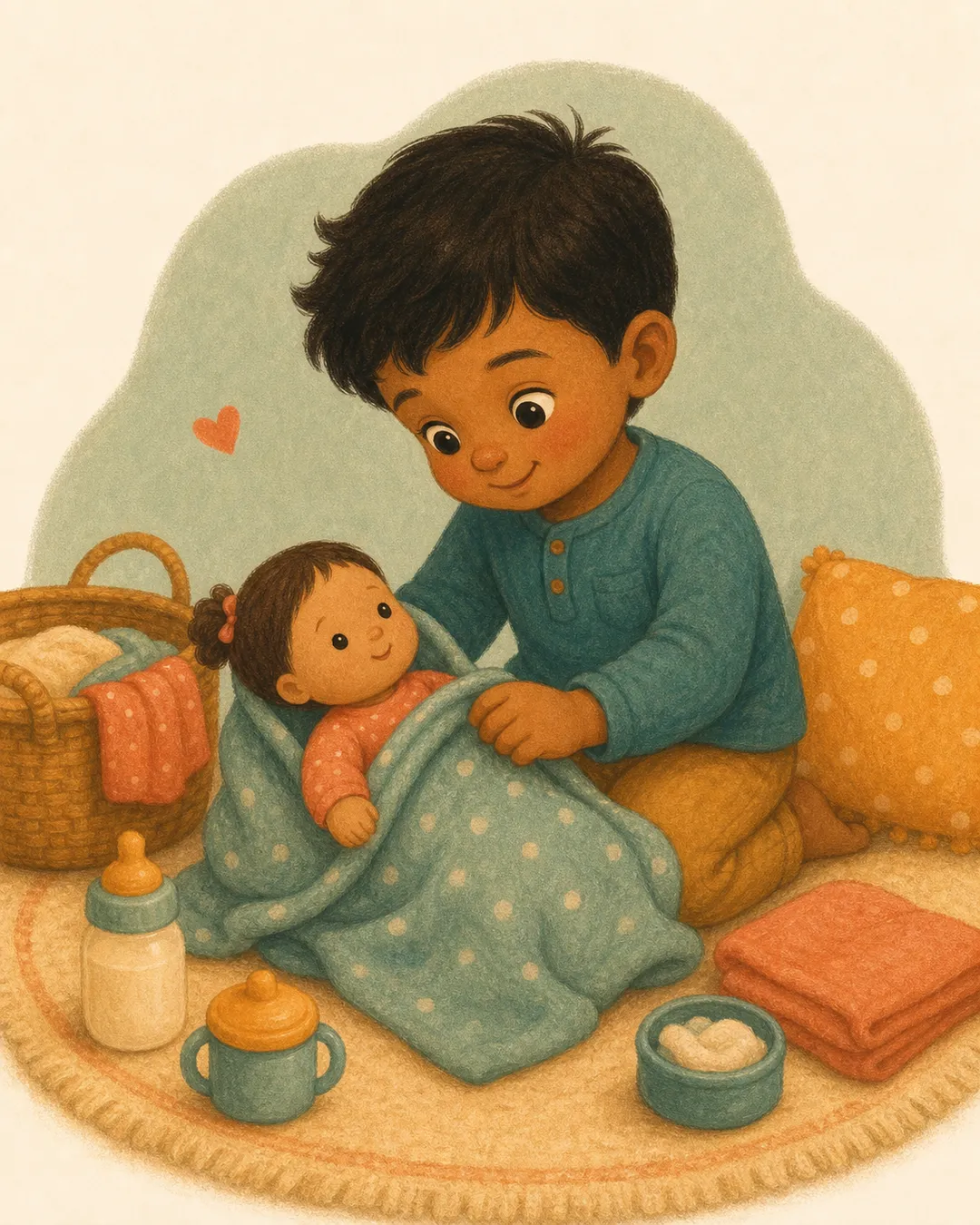
Role-play a pretend meltdown: 'Oh no, Teddy is upset in the pretend supermarket! Quick, let's help him with the bag!'
Let your child lead the countdown for Teddy, pulling out each item and 'helping' Teddy calm down.
Practise two or three times over the week at home before using it in a real outing.
On your next trip out, take the bag and preemptively offer it before stress builds: 'Shall we check our calm-down bag is ready?'
Parent tip
Set out bubbles and plastic containers before inviting your toddler in so the first minute feels smooth.
What success looks like
A few quiet minutes together without pressure. If your child relaxes even slightly, that’s self-regulation building.
Public meltdowns often escalate because parents feel rushed and children feel overwhelmed, and neither has a plan. This activity creates a portable calm-down toolkit — a small bag containing five specific sensory items, numbered one to five — that you practise using at home before you ever need it in public. The repetition of the countdown sequence at home builds a predictable routine your child can rely on when everything else feels chaotic. It's a proactive strategy, not a reactive one, which is why it works.
Why it helps
Birth to 5 Matters identifies self-regulation as children's developing ability to regulate their emotions, thoughts and behaviour, noting that co-regulation — where adults model calming strategies — is the foundation from which children build this skill. Proactive coping strategies — tools prepared before a stressful event — are significantly more effective than reactive ones attempted mid-meltdown. The numbered countdown provides a predictable sequence that activates procedural memory, which remains accessible even when a child is emotionally dysregulated. Each sensory item targets a different calming pathway: tactile (stone, fabric), visual (photo), respiratory (bubbles), and oral (snack), ensuring at least one will resonate with your child's needs in the moment. Zero to Three emphasises that co-regulation — where a calm adult helps a child through big emotions — is how toddlers gradually learn to manage feelings by themselves.
Variations
Let your child choose the five items themselves from a selection — having ownership over the kit increases buy-in.
Add a sixth item: a small card with a simple breathing picture (breathe in on the circle, out on the square) for older toddlers.
Make a mini version that fits in a coat pocket — just two items (the stone and the fabric) — for quick access in a queue.
Safety tips
Ensure the stone is too large to be a choking hazard and has no sharp edges.
Check bubble pots are sealed tightly to avoid spills inside the bag.
Replace the snack regularly to ensure freshness, and choose something your child can eat safely without close supervision.
Try one of these next
A few connected ideas chosen by theme, energy, set-up, and age fit.