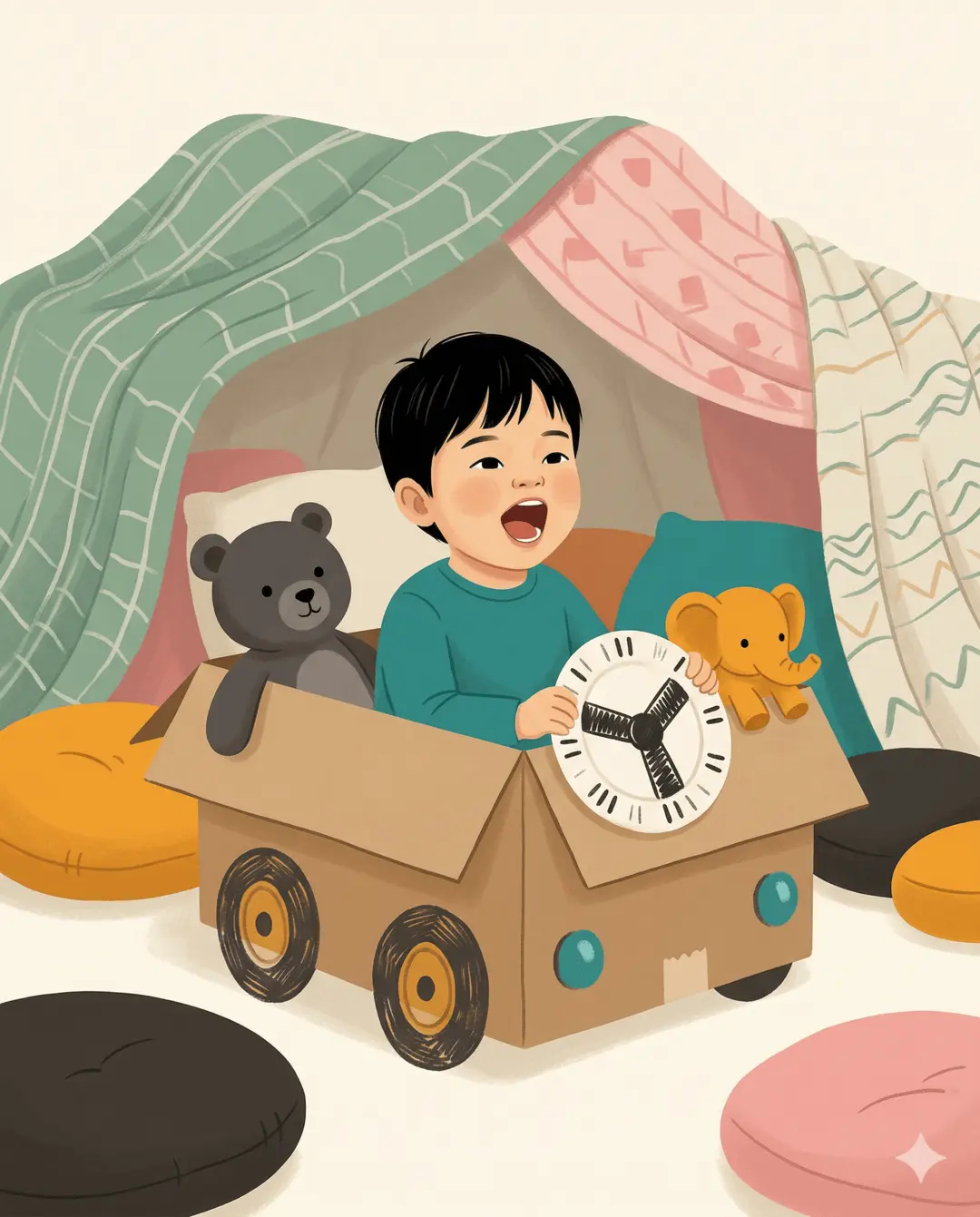
At a glance: Tantrums when screens are limited or turned off. This is a normal part of toddler development. See practical steps and related activities below.
Built by a parent of toddlersDesigned for common toddler moments across 1 to 4 years (12–48 months)
Field-tested ideas shaped by direct parenting experience and guidance from reputable sources including the NHS, NSPCC, and Zero to Three.
Try this first
Decide the end-point before you start: “one episode, then bath.” Agreed up front, not mid-show.
Warn them clearly: “two more minutes, then we turn it off.” Predictability beats surprise.
Bridge the switch with something physical — a chase to the kitchen, carrying an item for you.
Expect a wobble and don’t fold. The first few days of a new limit are always the loudest.
Why this works
Set clear, consistent limits BEFORE screens start ("We'll watch 2 episodes"). Use timers and give warnings ("One more minute"). Choose content with clear endings (episodes, not endless YouTube). Turn off at a natural stopping point. Have the next activity ready to transition to immediately. Co-view when possible and talk about what you're watching. Make screen-free times predictable (no screens at meals, before bed). The goal isn't just less screen time — it's more active play. Offer interactive floor-based play, outdoor time, and physical games as the actual alternative; empty time without screens often becomes whining time without something to fill it.
Many toddler behaviour spikes come from hunger, tiredness, transitions, or a mismatch between big feelings and limited language. The goal is regulation first, teaching second.
When should I worry about screen time battles?
If this pattern feels intense, persistent, or starts affecting sleep, safety, nursery, or family routines, it’s worth speaking to a professional. Your health visitor or GP can discuss your concerns and refer you to specialist support if needed. The NSPCC helpline (0808 800 5000) also offers free, confidential advice on any child behaviour concern.
Why do screen time battles happen?
Screens deliver intense, fast-paced stimulation that produces strong dopamine responses. Turning them off feels like a small withdrawal — a literal neurological letdown. Toddlers can't yet self-regulate screen time, and the instant gratification makes other activities seem boring by comparison. Transitioning from high to low stimulation is genuinely jarring for a developing brain. The World Health Organization guidance is clear about why limits matter: for children under 1, screen time isn't recommended at all; for 1-year-olds, sedentary screen time is not recommended; for 2-year-olds, screen time should be no more than one hour, with less being better. The framing the WHO uses is positive — increasing active play matters more than just reducing screens.
What should I avoid during screen time battles?
Don't extend screen time to avoid a tantrum — it teaches that tantrums get results. Don't use screens as the default for every difficult moment. Don't turn off abruptly without warning. Don't make screens a "special reward" that increases their value in your child's eyes. Don't negotiate rules in the moment — set them BEFORE screens start. Don't allow screens at meals or in the hour before bed; the light disrupts melatonin and makes settling for sleep harder.
Every child is different, and progress isn’t always steady. With a calm, consistent response and a little time, many families find things gradually ease. A brief wobble — or a patch where it feels harder — is usually part of the process, not a sign you’re doing anything wrong.