At breakfast time, place two or three cereal boxes and food packets on the table where your child can see the fronts clearly.
Point to the biggest word on the first box and say 'Look, that says Weetabix! Can you see the big W?'
1/4
At breakfast time, place two or three cereal boxes and food packets on the table where your child can see the fronts clearly.
Point to the biggest word on the first box and say 'Look, that says Weetabix! Can you see the big W?'
Ask 'Can you find another W on the table?' — let them scan the packaging with their eyes and fingers.
Move to a letter from their name: 'Your name starts with M — can you find an M anywhere on these boxes?'
When they find a letter, trace it together with your finger right on the packet: 'That's an M — up, down, up, down.'
Point to a logo they know well — the milk brand or a favourite snack — and say 'You know what that says, don't you?'
Let your child 'read' any words they recognise from the colours and shapes of the logos — this is real reading behaviour.
End by picking a favourite letter and putting a sticker next to every one you can find together on one box.
Parent tip
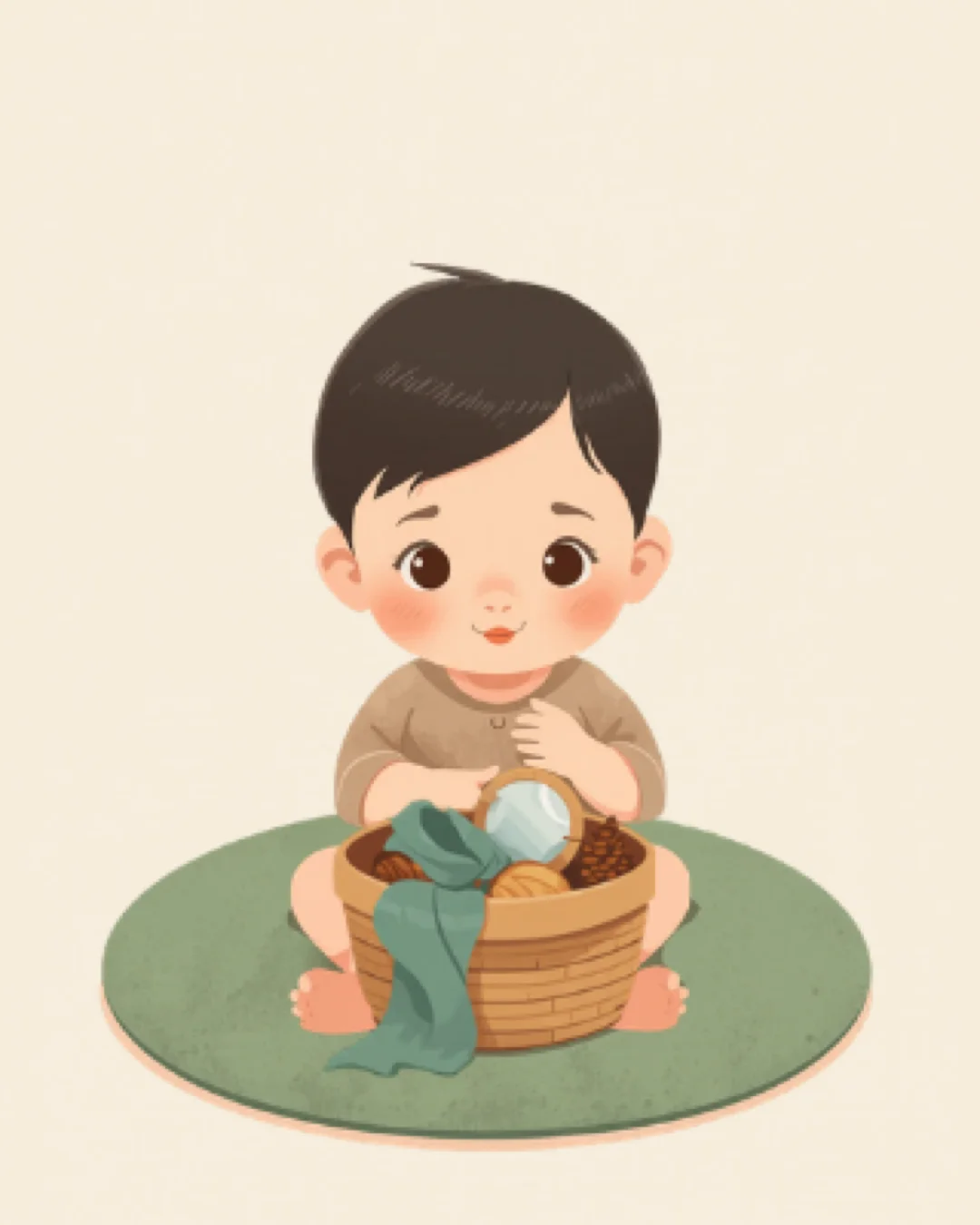
Set out cereal boxes and magnifying glass before inviting your toddler in so the first minute feels smooth.
What success looks like
A few quiet minutes together without pressure. If your child relaxes even slightly, that’s self-regulation building.
The breakfast table is a literacy classroom in disguise. This activity invites toddlers to hunt for letters and words they recognise on cereal boxes, milk cartons, and food packaging. Environmental print — the logos, labels, and brand names children encounter daily — is often the first print a child learns to 'read,' and recognising it builds the crucial understanding that written marks carry meaning.
Why it helps
The National Literacy Trust notes that recognising print in the environment is one of the earliest stages of reading development, building the understanding that marks carry meaning. Environmental print recognition is a foundational stage of emergent literacy. When a child 'reads' a cereal brand from its logo, they are demonstrating print awareness — the understanding that written symbols carry meaning. Research by Goodman (1986) showed that environmental print is the bridge between a pre-literate child and formal letter recognition. Hunting for individual letters within familiar logos begins to shift attention from the whole logo to its component parts, a step toward grapheme awareness.
Variations
Collect packaging labels throughout the week and stick them into a scrapbook — your child's first 'reading' book.
Take the hunt to the bathroom — shampoo bottles and toothpaste tubes carry familiar print too.
Give your child a magnifying glass to search for tiny letters in the ingredients list — this adds investigative excitement.
Safety tips
Keep scissors away if your child wants to cut boxes — offer pre-cut labels instead to avoid sharp cardboard edges.
Ensure any packaging explored is clean and free from residue that could be a choking hazard for mouthing toddlers.
Supervise magnifying glass use in sunlight — it can concentrate light and cause burns.
Try one of these next
A few connected ideas chosen by theme, energy, set-up, and age fit.