Hunt for friendly 'monsters' (stuffed animals) hidden in a dim room using a torch — makes darkness feel safe and exciting.
Activity details
2y–4y10 minsmediumindoorStuffed AnimalsTorch
Instructions
Tiny Steps
Get ready
While your child is in another room, hide 4-5 stuffed animals around a bedroom — behind curtains, under pillows, on a shelf.
Dim the lights (do not make it fully dark — a nightlight or hallway light is fine).
1/4
While your child is in another room, hide 4-5 stuffed animals around a bedroom — behind curtains, under pillows, on a shelf.
Dim the lights (do not make it fully dark — a nightlight or hallway light is fine).
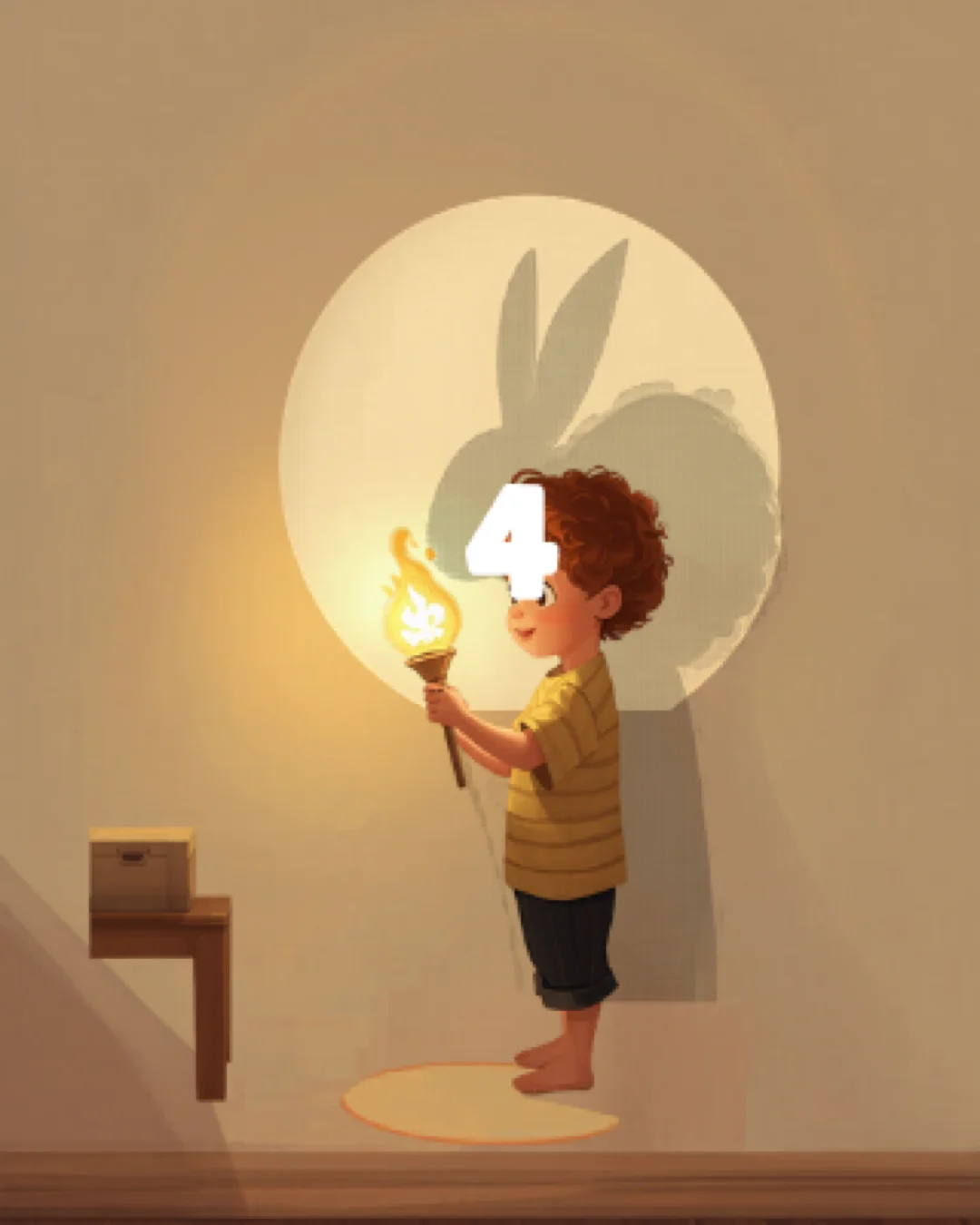
Give your child a torch and say: 'The friendly monsters are hiding! They need us to find them!'
Walk together, shining the torch around the room.
When they spot one, celebrate: 'You found Bear Monster! He was hiding behind the curtain!'
Give each monster a cuddle and a name. They are friendly, not scary.
Find all the monsters and line them up: 'We rescued them all! They are not scared anymore.'
Let your child hide the monsters for you to find — being the hider builds further confidence.
Parent tip
Set out stuffed animals and torch before inviting your toddler in so the first minute feels smooth.
What success looks like
Back-and-forth between you — words, gestures, shared pretend. Connection is the real outcome here.
Hide 4-5 stuffed animals around a dimly lit room and give your child a torch to find them. Each 'monster' is friendly — they wave, they need a hug, they are hiding because THEY are scared. This reframes darkness from something frightening to something adventurous, and gives the child control (they hold the light).
Why it helps
Fear of the dark typically develops between 2 and 4 years as imaginative thinking matures — children can now imagine threats they cannot see. Giving them control of the light source (the torch) and framing the darkness as an adventure rather than a threat builds coping strategies. Play England's research shows that child-led brave play reduces anxiety more effectively than reassurance alone. NSPCC guidance highlights that children who feel emotionally safe and supported are better equipped to explore, learn, and build healthy relationships.
Variations
Add glow sticks near the hidden animals — they glow in the dim light, creating a trail of clues.
Tell a story as you go: 'Monster Bear lost his friends in the dark forest. Can we help him find them?'
Gradually make the room darker over multiple sessions — building tolerance naturally.
Safety tips
Never force a child into a dark room — keep lighting at a level they are comfortable with.
Use a child-friendly torch that is not too bright — avoid shining in eyes.
Stay close throughout — your physical presence is the primary source of safety.
Try one of these next
A few connected ideas chosen by theme, energy, set-up, and age fit.