Parent tip
Start before you overthink it. No-prep activities work best when you begin while the moment is still recoverable.
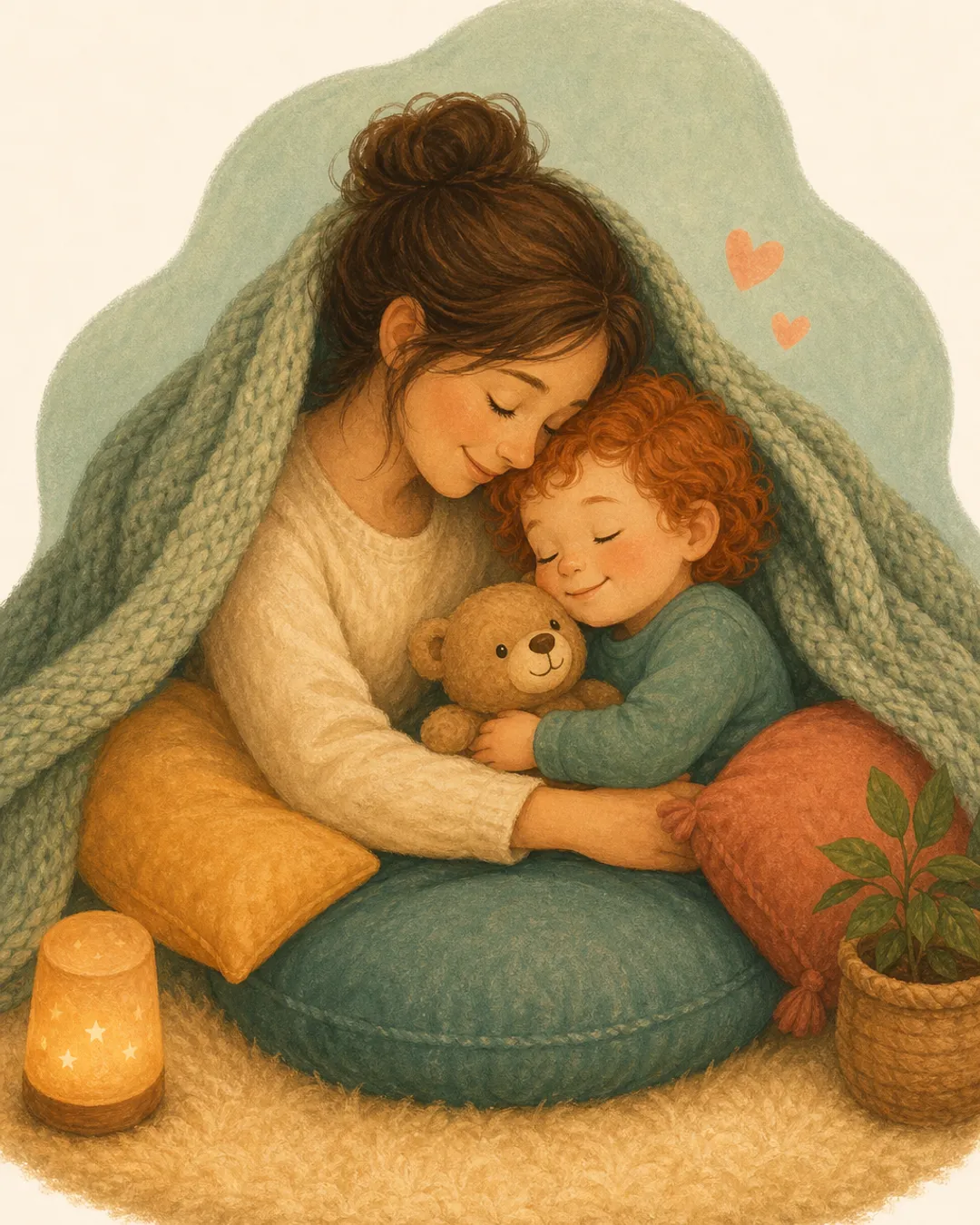
Teach your toddler three simple sentences they can say to themselves when they wake up scared in the night — short, calm, repeatable phrases that fit in their head when nothing else does.
Tiny Steps
Start before you overthink it. No-prep activities work best when you begin while the moment is still recoverable.

A few quiet minutes together without pressure. If your child relaxes even slightly, that’s self-regulation building.
Pick three short sentences your child can learn and say to themselves at 3am: 'I am safe in my bed', 'Mum is just down the hall', 'My sleep buddy is right here'. Practise them together in the daytime so they're familiar. The goal is to give your child something concrete to grab onto when their brain is flooded with scary feelings — a small set of words they own and can repeat without needing you to be in the room.
NHS guidance on toddler emotional development highlights the value of giving children specific, repeatable language for difficult feelings — words become tools the child can use independently when an adult is not immediately present. Practising the phrases in calm daylight transfers them to long-term memory in a way that feels safe, so when the 3am moment arrives the child has a verbal anchor ready. The simple act of speaking aloud also activates the prefrontal cortex, which helps dampen the amygdala's fear response.
One email a week with practical toddler activities, behaviour tips, and developmental insights. No spam, unsubscribe any time.