TinyStepper

Perspective-Taking Puppets

At a glance: Use simple sock puppets to act out social scenarios from different characters' points of view. A 20-minute, low-energy indoor activity for ages 2y4y.

Built by a parent of toddlersBest for 2y-4y

Field-tested ideas shaped by direct parenting experience and advice from reputable sources, including NHS Best Start in Life and NSPCC child development research.

2y4y20 minslow energyindoornone mess

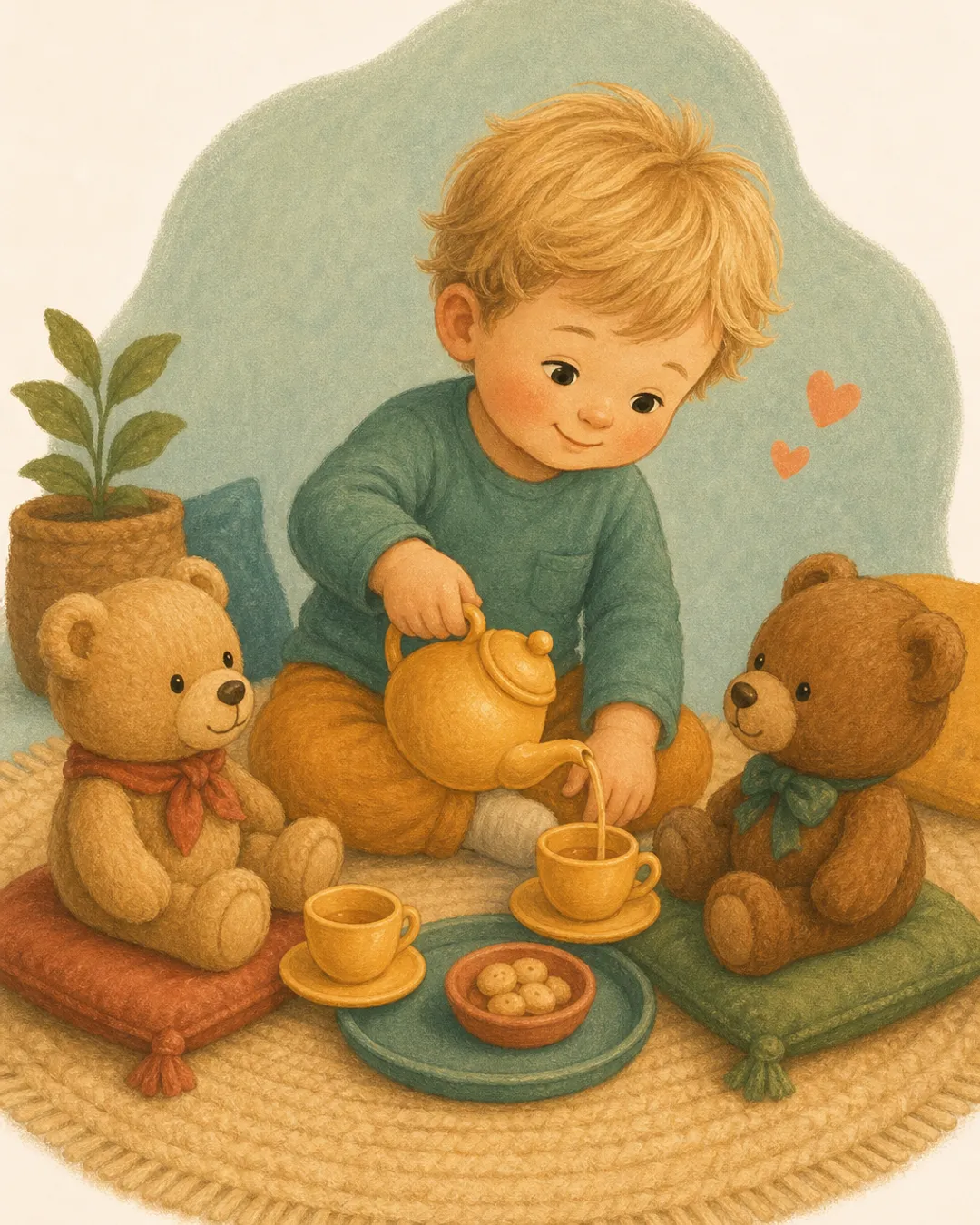
Make two simple sock puppets — slip socks over each of your hands and draw faces with a marker, or just use existing stuffed animals. Set up a simple social scenario: the puppets both want the last biscuit; one puppet is sad because the other won't share; two puppets are playing and a third wants to join. Act out the scenario from one perspective first, then replay it from the other character's point of view. Gently ask: "How does this puppet feel now?" and "What could the other puppet do differently?"

Best for this moment

for calmer, lower-pressure moments, especially when you need an indoor option.

Parent tip

Set out markers and scarves or fabric before inviting your toddler in so the first minute feels smooth.
What success looks like

A good outcome is a few minutes of engaged play, some back-and-forth with you, and a small sign of progress in creativity.

More help for this situation

Instructions

Get ready
  • Prepare two sock puppets or use soft toys as stand-ins.
  • Introduce the puppets with names and brief personalities.
  1. Prepare two sock puppets or use soft toys as stand-ins.
  2. Introduce the puppets with names and brief personalities.
  3. Set up the first scenario: "These two puppets both want to be first on the slide."
  4. Act out the scenario from Puppet A's perspective: they feel frustrated and push.
  5. Pause and ask your child: "How is Puppet B feeling right now?"
  6. Replay the scenario from Puppet B's point of view.
  7. Ask: "What could Puppet A do differently so everyone feels okay?"
  8. Act out the kind resolution together and celebrate the puppets' problem-solving.

Why it helps

Perspective-taking is a core component of theory of mind, and the ability to understand that others have different thoughts, feelings, and desires from our own is foundational to empathy and prosocial behaviour (Wellman et al., 2001). Using puppets allows children to explore social scenarios at a safe emotional distance — the puppet has the problem, not the child — which research shows increases engagement and reduces defensiveness (Reddy & Williams, 2018). Replaying scenarios from multiple viewpoints directly builds the cognitive flexibility and empathic imagination that underpin positive social skills.

Variations

  • Use the puppets to replay a real recent situation from your child's life, reframing it gently.
  • Let your child direct the puppets while you voice the characters.
  • Make puppets from paper bags for an extended craft component.

Safety tips

  • Keep scenarios gentle and resolvable — the puppets should always find a kind solution.
  • If a scenario feels close to a real issue your child is experiencing, tread sensitively and follow their emotional cues.
  • Wash sock puppets regularly if they go near mouths — toddlers often kiss or nibble their puppet characters.

When to pause and seek extra support

Stop if your child becomes distressed, unsafe, or consistently frustrated by the activity. If play, behaviour, or development worries keep showing up across settings, check in with a qualified professional.

Get weekly activity ideas for your toddler

One email a week with practical toddler activities, behaviour tips, and developmental insights. No spam, unsubscribe any time.