TinyStepper

Book Author Game

At a glance: Create a simple homemade book together from scratch, from the story idea to the illustrated cover. A 30-minute, low-energy indoor activity for ages 2y4y.

Built by a parent of toddlersBest for 2y-4y

Field-tested ideas shaped by direct parenting experience and advice from reputable sources, including NHS Best Start in Life and NSPCC child development research.

2y4y30 minslow energyindoornone mess

Fold three or four sheets of A4 paper in half to make a small book and staple the spine. Together, decide on a story: a character, a problem, and a resolution. Your child dictates the words as you write them, and then illustrates each page. At the end, design the cover with the title and author's name. Read the finished book together, then add it to the bookshelf. The pride of authorship is extraordinary — and so is the literacy learning packed inside.

Best for this moment

for calmer, lower-pressure moments, especially when you need an indoor option.

Parent tip

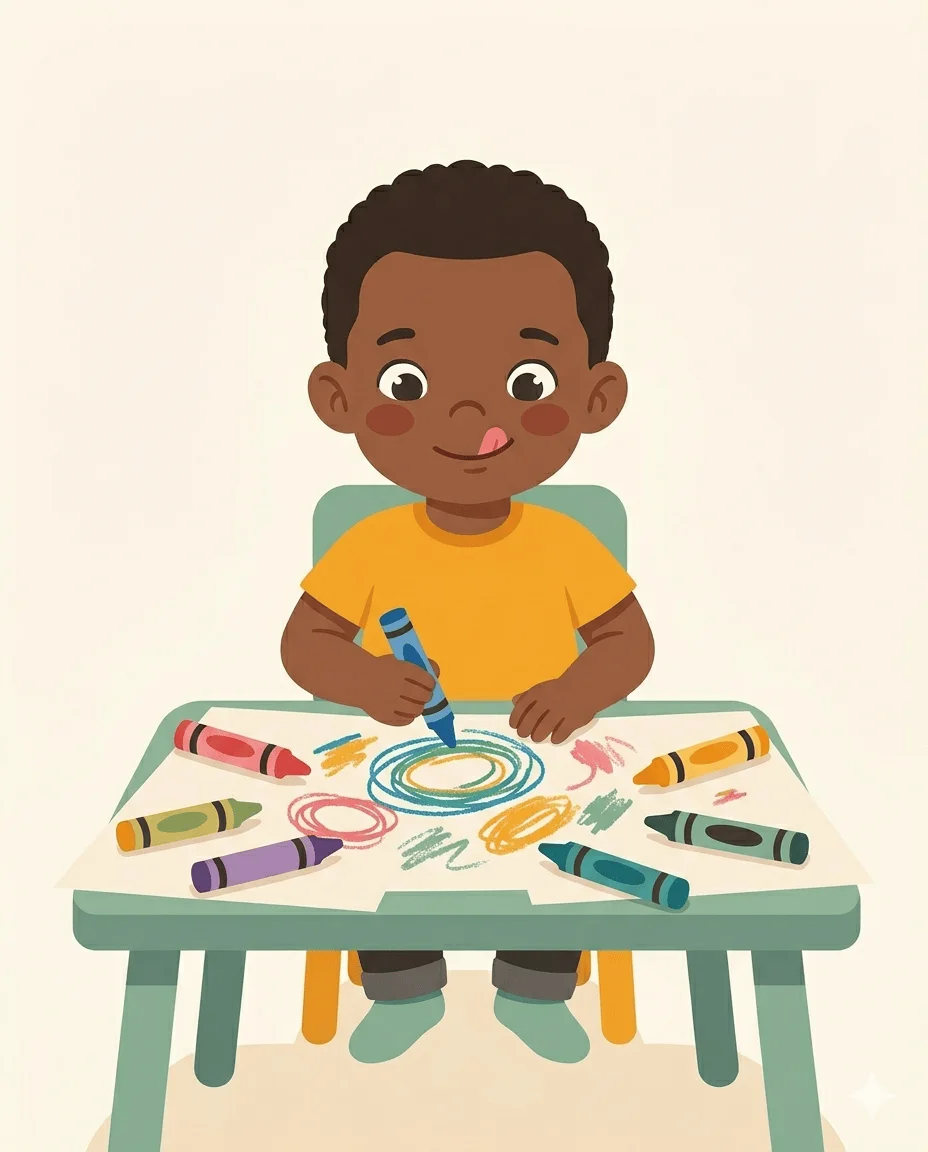
Set out crayons and paper before inviting your toddler in so the first minute feels smooth.
What success looks like

A good outcome is a few minutes of engaged play, some back-and-forth with you, and a small sign of progress in creativity.

More help for this situation

Instructions

Get ready
  • Fold four sheets of paper in half and staple along the spine to create an eight-page book.
  • Sit together and brainstorm a character: "Who is our story about?"
  1. Fold four sheets of paper in half and staple along the spine to create an eight-page book.
  2. Sit together and brainstorm a character: "Who is our story about?"
  3. Decide on a simple problem and resolution together.
  4. On page one, write the child's dictated opening sentence as they watch.
  5. Hand them a pencil or crayons to illustrate that page.
  6. Continue page by page, alternating between dictation and illustration.
  7. Design the cover last: title, author name (your child's name), and a cover illustration.
  8. Read the completed book aloud with full dramatic expression.

Why it helps

The authoring process builds print awareness, narrative structure, and the understanding that written words represent spoken language — a concept foundational to reading acquisition (Clay, 1975). Dictating a story develops oral composition skills, while illustrating connects meaning-making to print. Research on shared book creation shows that the process dramatically increases motivation to engage with books and deepens comprehension of author's purpose (Duke & Purcell-Gates, 2003).

Variations

  • Make a non-fiction book instead: "Everything I Know About Dinosaurs."
  • Use stickers, magazine cut-outs, and stamps instead of drawing for illustrations.
  • Share the finished book with a grandparent or relative via photo or video.

Safety tips

  • Supervise stapling — use a safety stapler or do that step yourself.
  • Keep the story simple: three to five pages is plenty for sustained engagement.
  • If your child wants to cut pages, guide their hand and use child-safe scissors — let them do the folding and decorating independently.

When to pause and seek extra support

Stop if your child becomes distressed, unsafe, or consistently frustrated by the activity. If play, behaviour, or development worries keep showing up across settings, check in with a qualified professional.

Get weekly activity ideas for your toddler

One email a week with practical toddler activities, behaviour tips, and developmental insights. No spam, unsubscribe any time.