Parent tip
Start before you overthink it. No-prep activities work best when you begin while the moment is still recoverable.
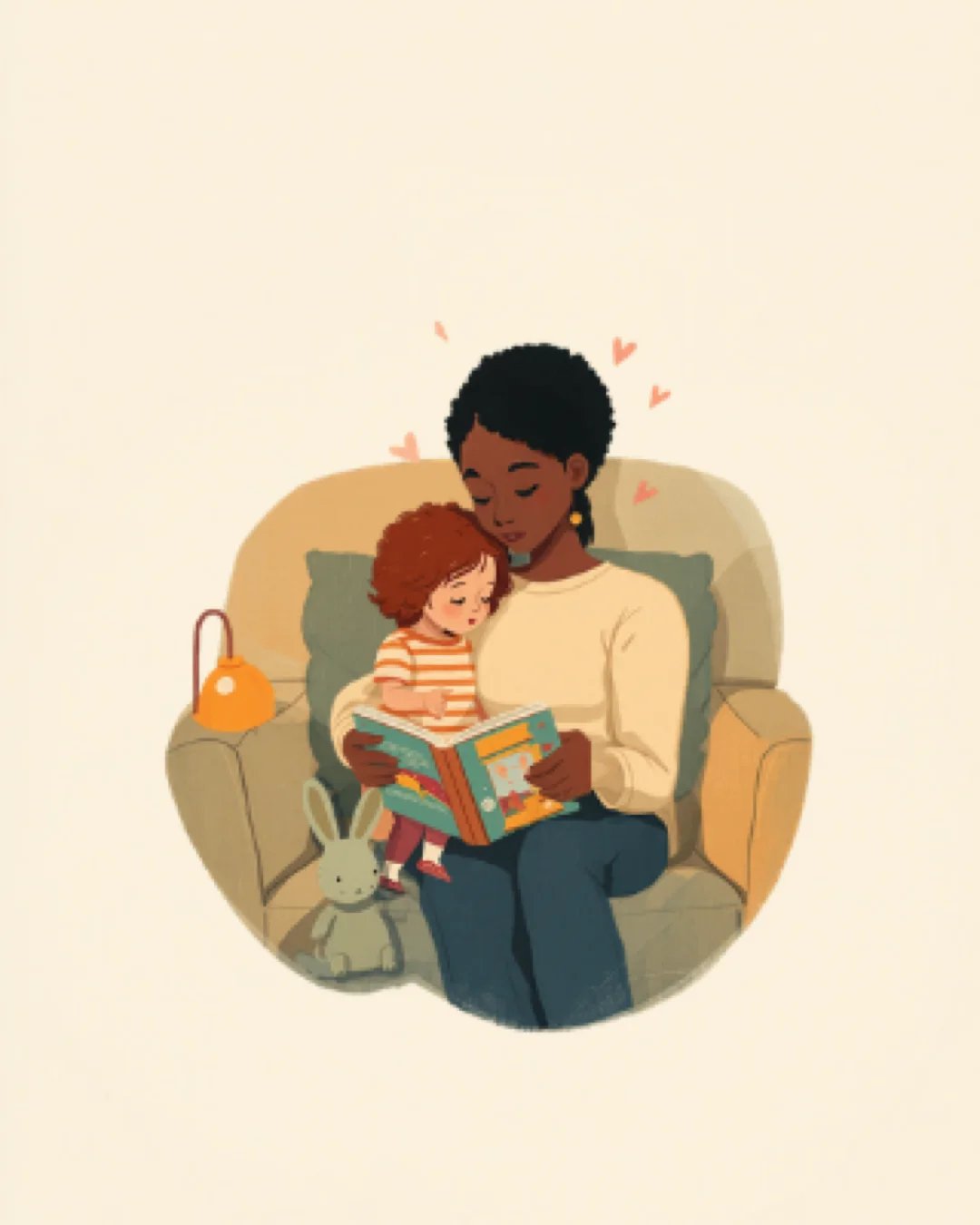
Pick one new word each morning and weave it through the day — building vocabulary through repetition and play.
Tiny Steps
Start before you overthink it. No-prep activities work best when you begin while the moment is still recoverable.

A few quiet minutes together without pressure. If your child relaxes even slightly, that’s self-regulation building.
Each morning, choose one interesting word from a picture book or conversation. Introduce it at breakfast: 'Today's big word is delighted — it means really, really happy.' Then use it throughout the day in different contexts: 'The dog looks delighted to see you!' 'Are you delighted with your tower?' See how many times the whole family can use it. By bedtime, your toddler owns a word they didn't know that morning.
We started this early and still use it now. My son’s vocabulary jumped noticeably once we made it a daily habit. His nursery commented on it. The key is picking words that are fun to say — ‘magnificent’ and ‘enormous’ were early favourites.
Speech and Language UK emphasises that children need to hear words many times before they can understand or use them, making repetition and labelling during play a powerful vocabulary builder. Vocabulary acquisition in toddlers is driven by frequency and context. Hearing a word once is not enough — research shows children need to encounter a word in multiple contexts before it becomes part of their active vocabulary. By weaving one word through an entire day, you provide the repetition and variety that locks it in. The game element adds motivation, and involving the whole family models that learning is something everyone does.
One email a week with practical toddler activities, behaviour tips, and developmental insights. No spam, unsubscribe any time.