Gather pots, pans, and wooden spoons for a toddler drum circle — taking turns to lead the rhythm builds listening skills and social confidence.
Activity details
12m–3y15 minsmediumbothNo prepPlastic ContainersPots and PansWooden Spoons
Instructions
Tiny Steps
Get ready
Gather four or five 'drums' and place them upside down on the floor: a large pot, a small pot, a plastic container, a biscuit tin, and a cardboard box.
Offer your child a wooden spoon as a drumstick and let them bang each drum freely, exploring the sounds.
1/4
Gather four or five 'drums' and place them upside down on the floor: a large pot, a small pot, a plastic container, a biscuit tin, and a cardboard box.
Offer your child a wooden spoon as a drumstick and let them bang each drum freely, exploring the sounds.
Name the sounds together: 'That one's loud! That one's quiet. This one goes BONG!'
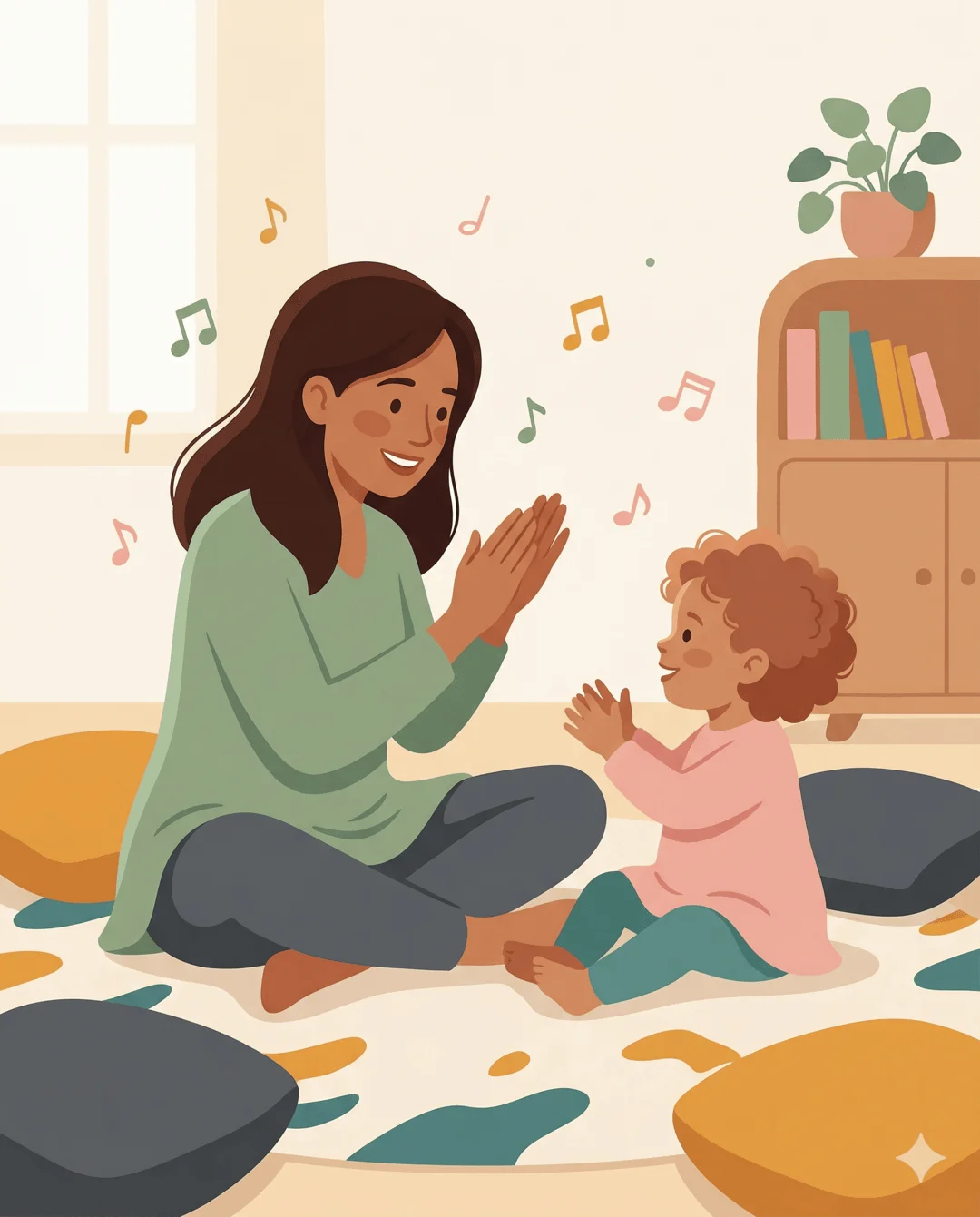
Start a simple rhythm — two slow beats: 'Boom, boom' — and ask your child to copy you.
Let your child create a rhythm and you copy them: 'Your turn to be the leader! I'll copy you.'
Try playing fast, then slow. Try playing loud, then whisper-quiet. Exaggerate the contrasts.
Put on a favourite song and drum along together, trying to match the beat — close enough is perfect.
End with a crescendo — both drumming as fast and loud as you can — then a dramatic stop with hands in the air.
Parent tip
Start before you overthink it. No-prep activities work best when you begin while the moment is still recoverable.
What success looks like
Flushed cheeks, big smiles, and a calmer child afterwards. If they want to do it again, you’ve found a winner.
There is something primal and deeply satisfying about banging a drum, and toddlers feel it instinctively. This activity gathers a collection of household 'drums' — upturned pots, plastic containers, biscuit tins — and invites your child to explore the different sounds each one makes. The activity then builds into a simple turn-taking drum circle where you copy each other's rhythms, introducing the foundational musical concepts of tempo, volume, and pattern while exercising social skills and focused listening.
Why it helps
Drumming develops bilateral coordination (using both hands in a controlled pattern), auditory discrimination (noticing differences between sounds), and temporal processing (tracking a beat over time). These are the same neural skills that underpin phonological awareness — the ability to hear the rhythmic patterns in speech that is critical for later reading. The turn-taking element builds social skills by requiring your child to listen, wait, and then respond — the conversational pattern that underpins all communication. Speech and Language UK identifies this type of playful activity as a natural way to develop the sound awareness that later helps children learn to read.
Variations
Add a 'drum solo' where each person plays alone while the other watches and claps — great for building performance confidence.
Tape different materials over the drum tops — fabric, foil, cling film — to change the sounds and explore how surfaces affect tone.
Outdoors, use sticks on tree stumps, fence posts, and buckets for a nature drum circle with completely different acoustics.
Safety tips
Check that all containers are free of sharp edges, rust, or loose handles before using them as drums.
Use wooden spoons rather than metal utensils to reduce the volume and prevent damage to surfaces or fingers.
Protect your own hearing and your child's — if the noise level becomes genuinely uncomfortable, move to quieter drums or take a break.
Try one of these next
A few connected ideas chosen by theme, energy, set-up, and age fit.