Use your body as the band — clap, pat, and stomp along to familiar songs, turning every tune into a full-body rhythm experience.
Activity details
2y–4y10 minsmediumbothNo prep
Instructions
Tiny Steps
Get ready
Choose a familiar song your toddler knows well — Twinkle Twinkle or Wheels on the Bus work brilliantly.
Stand up together in a clear space with room to move.
1/5
Choose a familiar song your toddler knows well — Twinkle Twinkle or Wheels on the Bus work brilliantly.
Stand up together in a clear space with room to move.
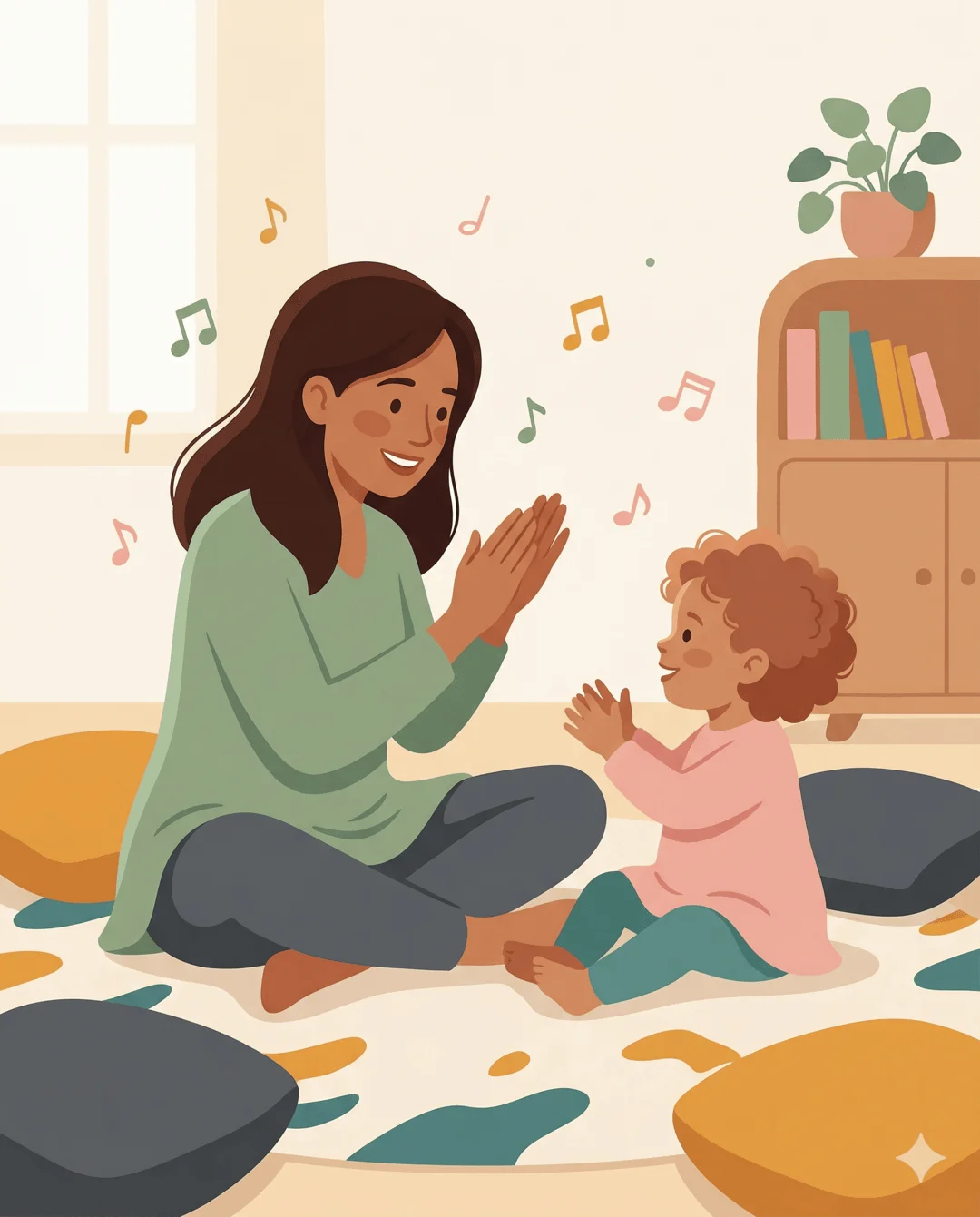
Sing the first line while clapping along to the beat — encourage your toddler to copy.
On the second line, switch to patting your knees in rhythm.
For the chorus or repeated section, stomp your feet firmly on each beat.
Sing through the whole song, switching between clap, pat, and stomp for different sections.
Once your toddler has the pattern, try speeding up — sing faster and see if the body percussion keeps up.
Slow right down to a crawl pace for contrast and giggles.
Let your toddler choose the next song and decide which body sounds go where.
Parent tip
Start before you overthink it. No-prep activities work best when you begin while the moment is still recoverable.
What success looks like
Back-and-forth between you — words, gestures, shared pretend. Connection is the real outcome here.
Instead of just singing a song, your toddler becomes the rhythm section. Clapping hands for the beat, patting knees for the verse, and stomping feet for the chorus turns a familiar melody into a whole-body coordination challenge. This activity builds on songs your child already knows and adds a physical layer that deepens their connection to rhythm, timing, and body awareness.
Why it helps
The EYFS Development Matters framework identifies rhythm and movement as key building blocks for both Communication & Language and Physical Development. Coordinating different body movements to different parts of a song requires working memory and sequencing — cognitive skills that the NHS Start for Life programme links to school readiness in 3-4 year olds.
Variations
Add chest tapping and thigh slapping for older toddlers who want more percussion options.
Try it as a follow-the-leader game — you lead one verse, they lead the next.
For a quieter version, whisper-sing with gentle finger taps on the floor instead of stomps.
Safety tips
Ensure the floor is non-slip, especially for the stomping sections.
If playing outdoors, check the ground is even and free from trip hazards.
Keep the pace manageable — overexcited stomping on hard floors can jar little joints.
Try one of these next
A few connected ideas chosen by theme, energy, set-up, and age fit.