TinyStepper

Sound Story Creator

At a glance: Build a short story together using homemade sound effects to bring each moment to life. A 15-minute, low-energy indoor activity for ages 2y4y. No prep needed.

Built by a parent of toddlersBest for 2y-4y

Field-tested ideas shaped by direct parenting experience and advice from reputable sources, including NHS Best Start in Life and NSPCC child development research.

2y4y15 minslow energyindoornone messNo prep

Tell a simple story while your child creates matching sound effects using their voice, body, or found objects: rain on a tin, footsteps on a book, a door creaking. You narrate; they perform the sounds. Then swap roles. The synchrony of voice and sound demands close listening, creative thinking, and real-time response. There's something deeply satisfying about the way sound fills a story out — and toddlers tend to find it absolutely hilarious.

Best for this moment

for calmer, lower-pressure moments, especially when you need an indoor option.

Parent tip

Start before you overthink it. No-prep activities work best when you begin while the moment is still recoverable.
What success looks like

A good outcome is a few minutes of engaged play, some back-and-forth with you, and a small sign of progress in creativity.

More help for this situation

Instructions

Get ready
  • Choose a short, familiar story line: a bear going for a walk in the forest.
  • Introduce the concept: "Every time something happens, you make the sound for it."
  1. Choose a short, familiar story line: a bear going for a walk in the forest.
  2. Introduce the concept: "Every time something happens, you make the sound for it."
  3. Model the first sound effect yourself: footsteps on a book for walking.
  4. Begin narrating slowly, leaving clear pauses for sound effects.
  5. Prompt gently if needed: "What sound does rain make?"
  6. Complete the story together, then ask your child to narrate a different one.
  7. You take on the sound effects role while they narrate.
  8. End by listening back to a recording if you made one.

Why it helps

Sound play develops auditory discrimination and phonological sensitivity — the ability to attend carefully to the qualities of sound — which supports both music and language development (Anvari et al., 2002). Creating sound effects to match narrative events requires children to think symbolically (this sound represents that thing), a skill closely linked to pretend play development and the later ability to understand that letters represent sounds. The collaborative, performative format also builds sustained attention and turn-taking.

Variations

  • Record the finished sound story on a phone for a listening-back treat.
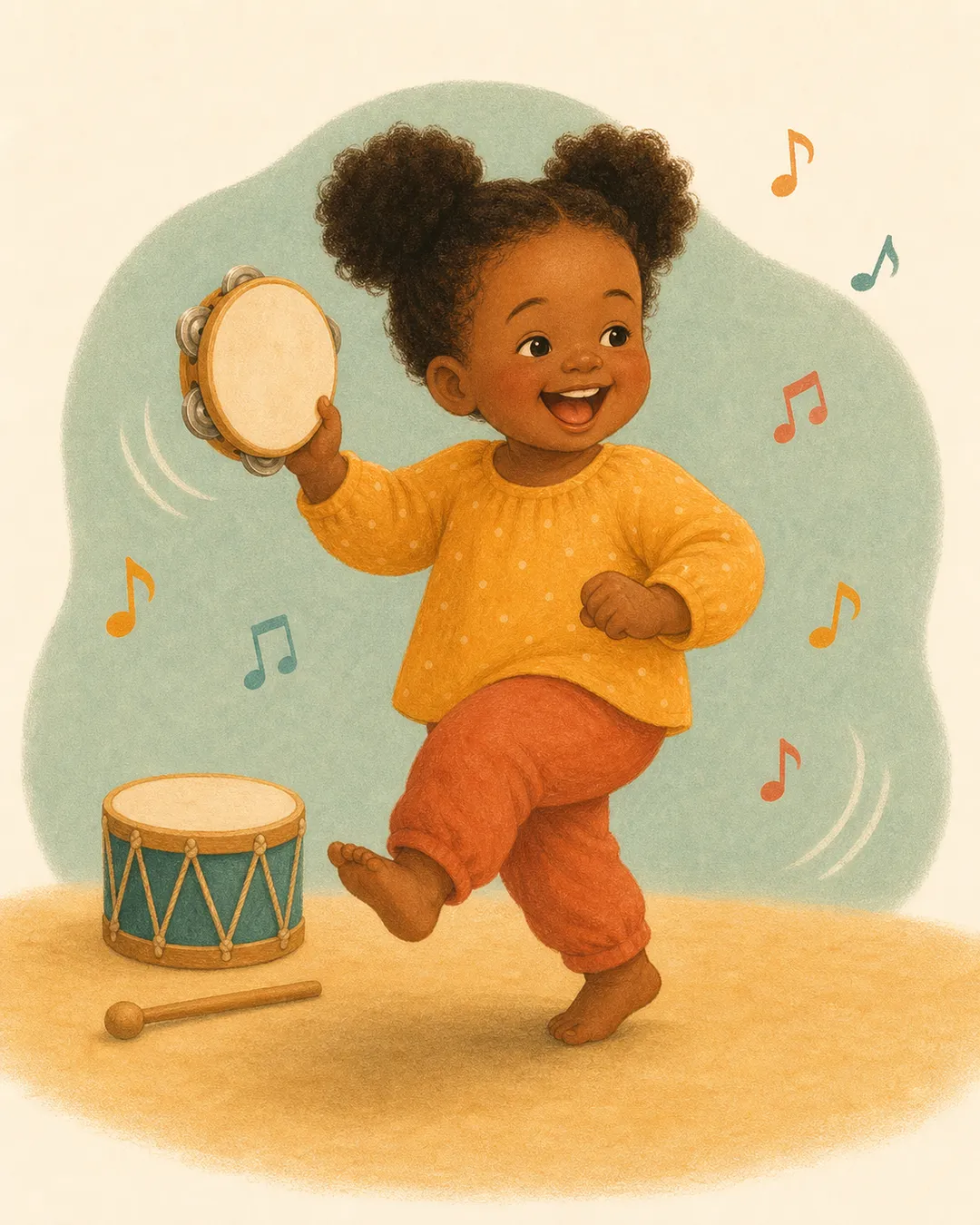
  • Use a tambourine, drum, or shaker as the primary sound effect instrument.
  • Create a 'sound effect library' together: list five sounds and what objects make them.

Safety tips

  • Keep volume at a comfortable level — avoid encouraging very loud sounds that could distress the child or others.
  • Check that any objects used for sound effects are safe and won't break.
  • If your child becomes frustrated trying to think of sounds, offer two options rather than leaving it open-ended.

When to pause and seek extra support

Stop if your child becomes distressed, unsafe, or consistently frustrated by the activity. If play, behaviour, or development worries keep showing up across settings, check in with a qualified professional.

Get weekly activity ideas for your toddler

One email a week with practical toddler activities, behaviour tips, and developmental insights. No spam, unsubscribe any time.