TinyStepper

Dolly's Day Out

At a glance: Take a doll or teddy through a full day — breakfast, getting dressed, a walk, nap time. A 20-minute, low-energy indoor activity for ages 19m3y. No prep needed.

Built by a parent of toddlersBest for 19m-3y

Field-tested ideas shaped by direct parenting experience and advice from reputable sources, including NHS Best Start in Life and NSPCC child development research.

19m3y20 minslow energyindoornone messNo prep

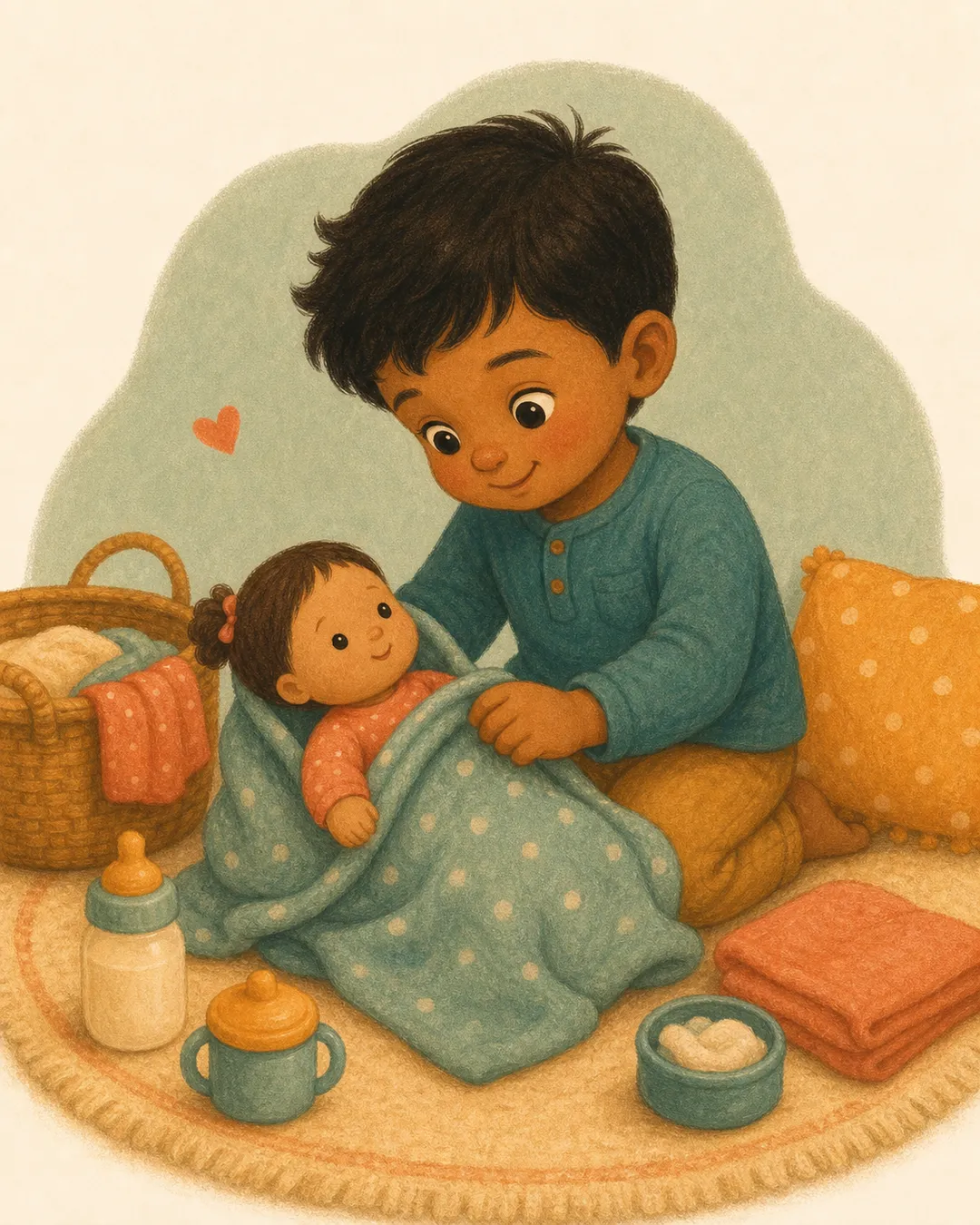
Your toddler guides their favourite doll or teddy through an entire day in miniature — wake up, breakfast, get dressed, go for a walk, eat lunch, nap time. This extended narrative role-play is a powerhouse for emotional development because it lets toddlers rehearse and process their own daily routines through a safe proxy. The sustained storyline demands memory and planning that builds naturally across the play session.

Best for this moment

for calmer, lower-pressure moments, especially when you need an indoor option.

Parent tip

Start before you overthink it. No-prep activities work best when you begin while the moment is still recoverable.
What success looks like

A good outcome is a few minutes of engaged play, some back-and-forth with you, and a small sign of progress in emotional regulation.

More help for this situation

Instructions

Get ready
  • Choose a favourite doll, teddy, or action figure as the 'main character'
  • Start the day: 'Oh! Dolly is waking up! What does she do first?'
  1. Choose a favourite doll, teddy, or action figure as the 'main character'
  2. Start the day: 'Oh! Dolly is waking up! What does she do first?'
  3. Follow your toddler's lead — if they say breakfast, help set up a pretend meal
  4. Move through daily events: getting dressed, brushing teeth, going to the park
  5. Act out each scene with simple props or just imagination
  6. Introduce a small problem: 'Dolly doesn't want to put her shoes on — what shall we do?'
  7. Let your toddler solve the problem using strategies they've experienced
  8. End the day with dolly's bedtime routine — tuck in, goodnight kiss

Why it helps

Extended narrative pretend play develops theory of mind — the understanding that others have thoughts, feelings, and experiences different from one's own. By problem-solving for the doll ('Dolly doesn't want her shoes on'), toddlers rehearse real-life challenges from a safe emotional distance. The sequential storytelling over 20 minutes exercises episodic memory and temporal sequencing — understanding that events happen in order.

Variations

  • Give dolly a special outing — the doctors, a birthday party, a trip to the shops.
  • Add feelings: 'Dolly is sad because she lost her hat — what can we do?'
  • For older toddlers, introduce another character so dolly has a friend to interact with.

Safety tips

  • Ensure the doll or teddy has no loose buttons, eyes, or small parts that could detach.
  • If using real food as pretend props, keep portions small and allergen-safe.
  • Watch for signs that the play is triggering real anxiety — if a scenario upsets them, gently redirect.

When to pause and seek extra support

Stop if your child becomes distressed, unsafe, or consistently frustrated by the activity. If play, behaviour, or development worries keep showing up across settings, check in with a qualified professional.

Get weekly activity ideas for your toddler

One email a week with practical toddler activities, behaviour tips, and developmental insights. No spam, unsubscribe any time.