Add drops of food colouring to puddles and mix the colours with sticks to see what happens.
Activity details
19m–3y10 minslowoutdoorFood ColouringRain Boots
Instructions
Tiny Steps
Get ready
Wait for a rainy day or water a patch of paving to create puddles.
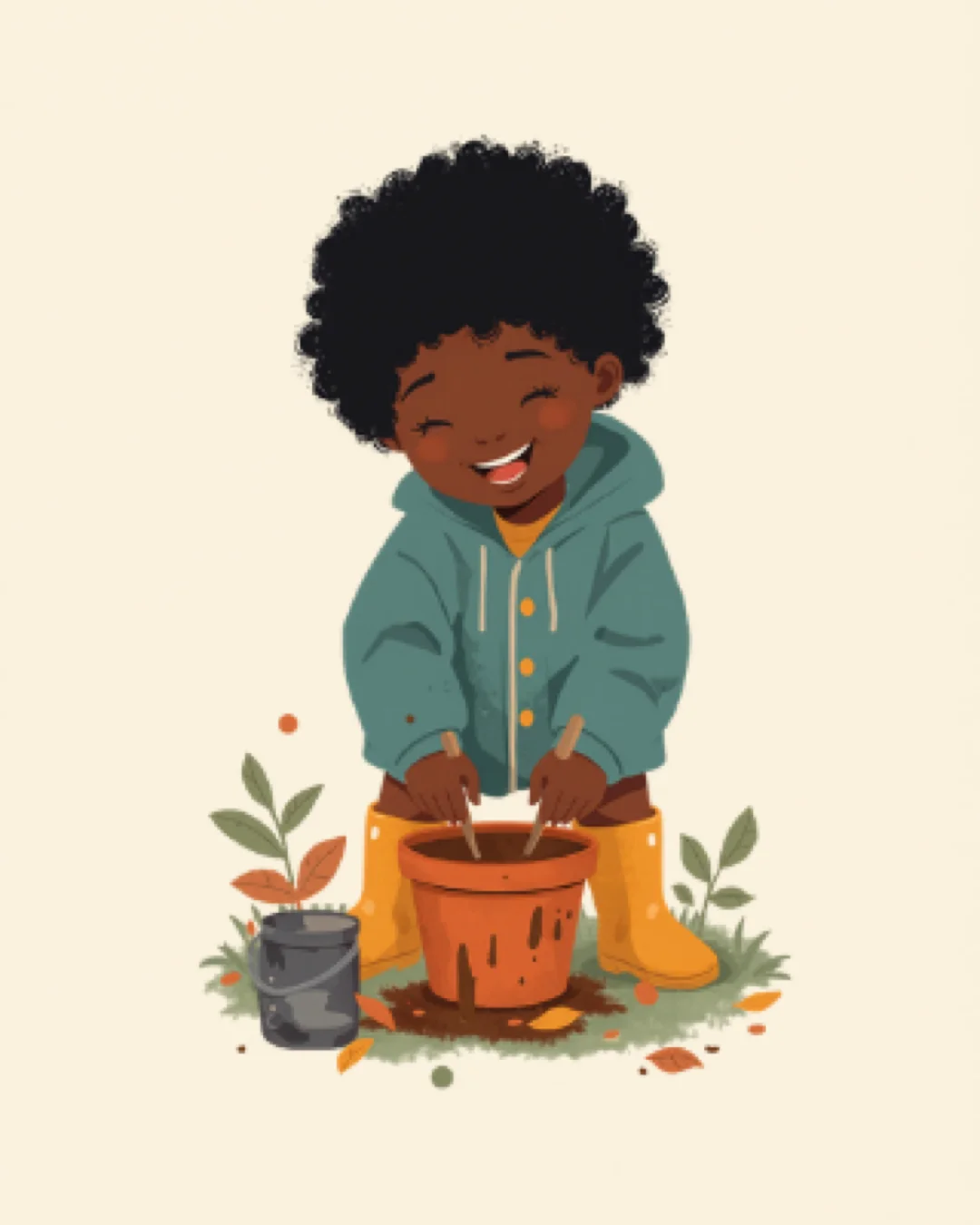
Dress your child in old clothes and wellies — this will get messy.
1/4
Wait for a rainy day or water a patch of paving to create puddles.
Dress your child in old clothes and wellies — this will get messy.
Bring 2-3 bottles of food colouring and some sticks.
Let your child choose a colour and squeeze a few drops into a puddle.
Hand them a stick and encourage stirring: 'Watch what happens!'
Add a second colour: 'What colour do you think it will make? Let us see!'
Try different combinations in different puddles — red+yellow, blue+yellow, red+blue.
Let them experiment freely — they may want to dump all the colours in one puddle. That is fine.
Parent tip
Set out food colouring and rain boots before inviting your toddler in so the first minute feels smooth.
What success looks like
Messy hands and a child who doesn’t want to stop. The artwork doesn’t need to look like anything — the process is the point.
After rain, your child finds puddles and adds drops of food colouring — red, blue, yellow. They stir with sticks and watch the colours swirl and blend. Red and blue make purple. Yellow and blue make green. The puddle becomes a giant mixing palette, and the learning happens through wonder.
Why it helps
Colour mixing is a direct, visual demonstration of cause and effect — the child's action produces an immediate, dramatic result. This builds scientific thinking and hypothesis testing ('What will happen if I add yellow?'). The EYFS Understanding the World area identifies hands-on experimentation as the foundation of early scientific reasoning.
Variations
Use pipettes or squeezy bottles instead of food colouring bottles — builds finger strength for writing.
Float white paper on the puddle to capture the colour patterns — lift it out for instant marbled art.
On a sunny day, watch how the coloured water dries and leaves a stain — introduces evaporation.
Safety tips
Food colouring stains hands and clothes — use old clothing and wash hands promptly.
Keep food colouring away from eyes — if contact occurs, rinse with clean water.
Supervise closely to prevent drinking puddle water.
Try one of these next
A few connected ideas chosen by theme, energy, set-up, and age fit.