Fill a paddling pool with a few centimetres of lukewarm water — enough to scoop but not deep.
Gather cups, jugs, colanders, small plastic containers, and a few floating toys.
1/4
Fill a paddling pool with a few centimetres of lukewarm water — enough to scoop but not deep.
Gather cups, jugs, colanders, small plastic containers, and a few floating toys.
Sit your child at the edge or inside the pool, depending on their confidence.
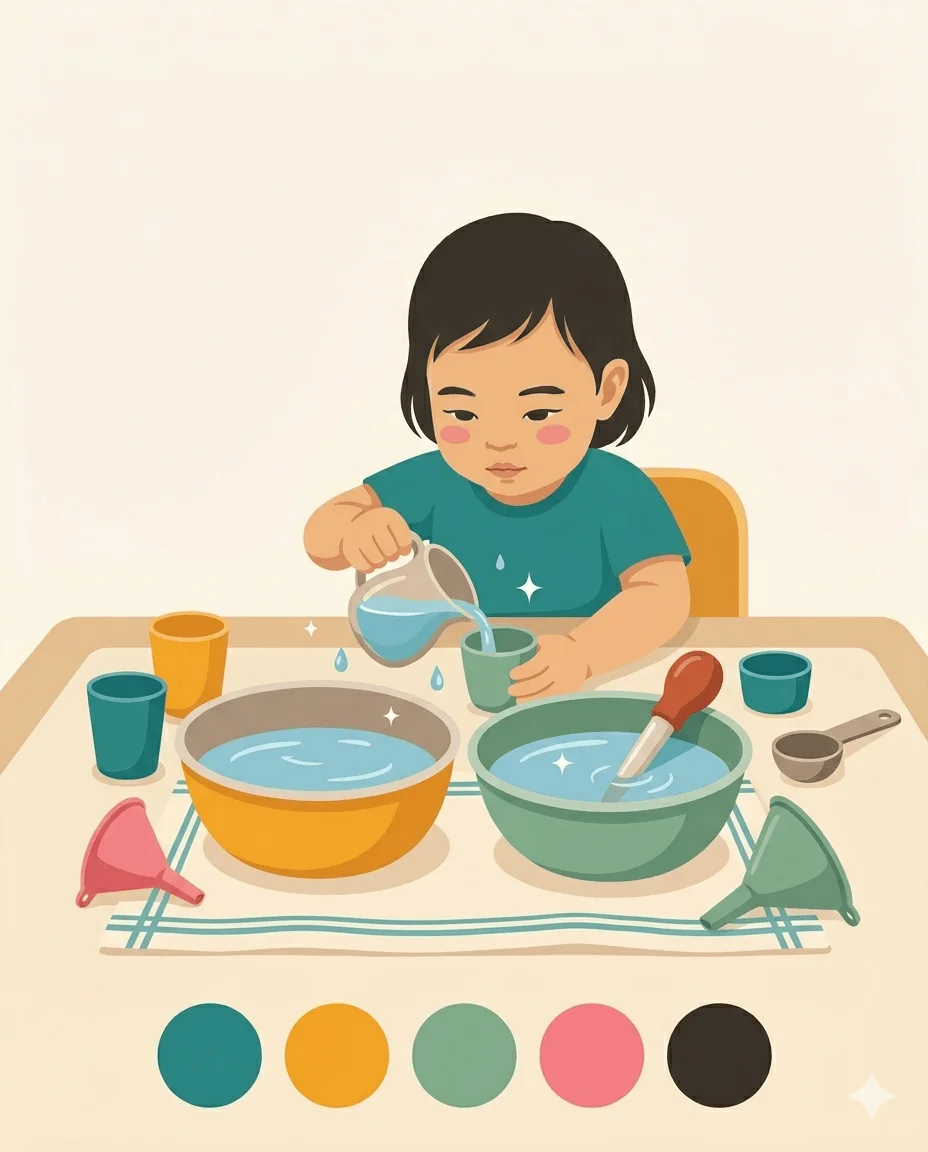
Show them how to scoop water into a cup, then pour it back — watch their face as the water splashes.
Drop a toy in and ask 'Does it float or sink?' — let them test different objects.
Introduce the colander and let them discover that water drains through the holes.
Pour water from a height so they can see and hear the splash — vary the height together.
When they are ready to finish, let them help tip the remaining water onto the grass.
Parent tip
Set out plastic containers and plastic cups before inviting your toddler in so the first minute feels smooth.
What success looks like
Watch for focused exploration — fingers digging in, pouring back and forth, or sorting by feel. Even a few minutes of this builds concentration.
Fill a shallow paddling pool and add cups, jugs, colanders, and floating toys. Your child experiments with scooping, pouring, and watching objects sink or float. There is no right way to play — they are learning about volume, gravity, and water flow through pure hands-on exploration. This is sensory-rich, calming, and endlessly repeatable.
Why it helps
Water play is one of the richest sensory experiences available to young children. Scooping and pouring develop hand-eye coordination and early maths concepts like full, empty, more, and less. The repetitive, self-directed nature of water play also supports emotional regulation and sustained attention. The EYFS framework encourages sensory-rich play as a natural way for children to explore the world and make sense of new textures, sounds, and sensations.
Variations
Add food colouring to the water for a colour-mixing exploration — pour red into yellow and watch orange appear.
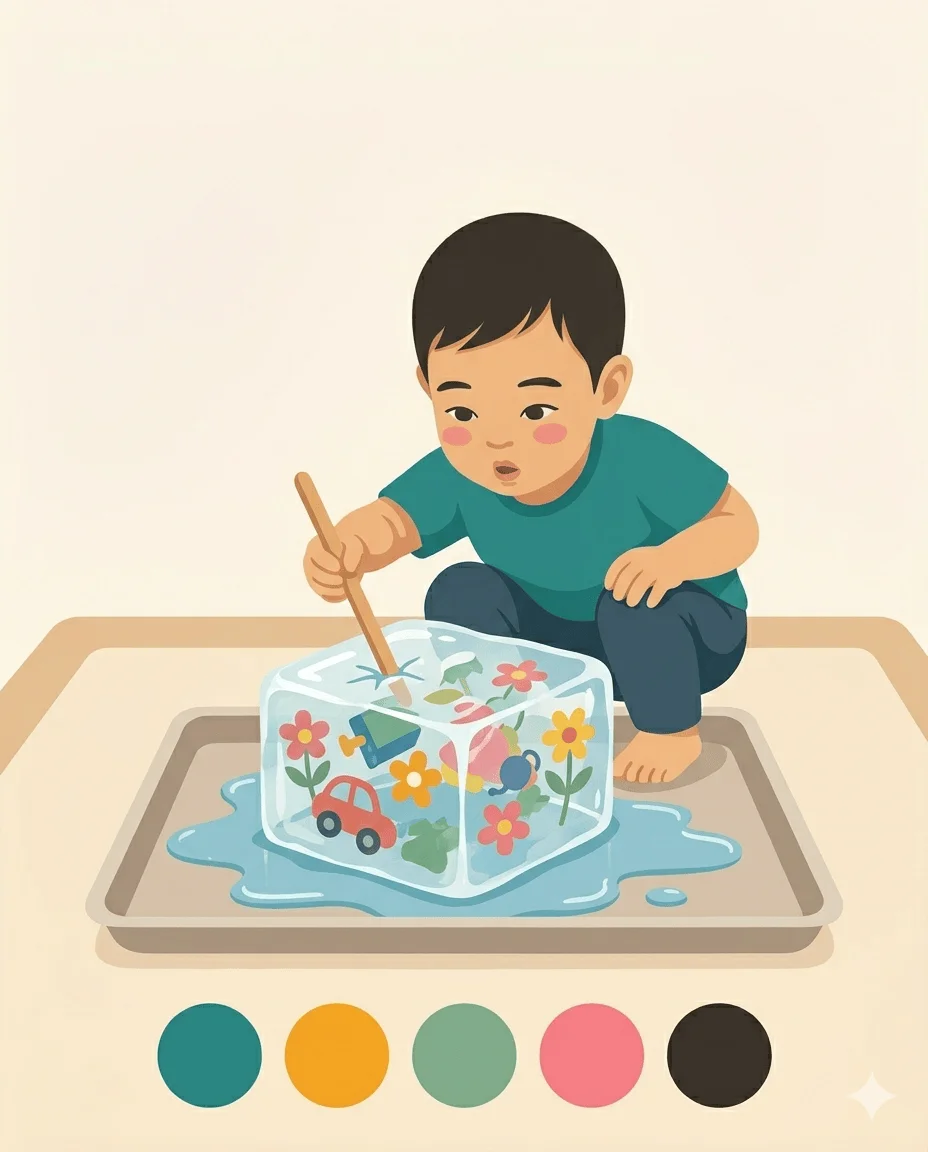
Freeze small toys in ice cubes and drop them in the warm water — your child watches them slowly free themselves.
Float corks or ping-pong balls and give your child a spoon to scoop them out — a fine motor fishing game.
Safety tips
Never leave a child unattended near water, even shallow paddling pools.
Empty the pool immediately after play to prevent drowning risk.
Check water temperature before play — cold water can cause shock.
Try one of these next
A few connected ideas chosen by theme, energy, set-up, and age fit.