The day before, fill a large plastic container or ice cream tub with water.
Drop in small waterproof toys — plastic animals, cars, buttons, beads — and freeze overnight.
1/4
The day before, fill a large plastic container or ice cream tub with water.
Drop in small waterproof toys — plastic animals, cars, buttons, beads — and freeze overnight.
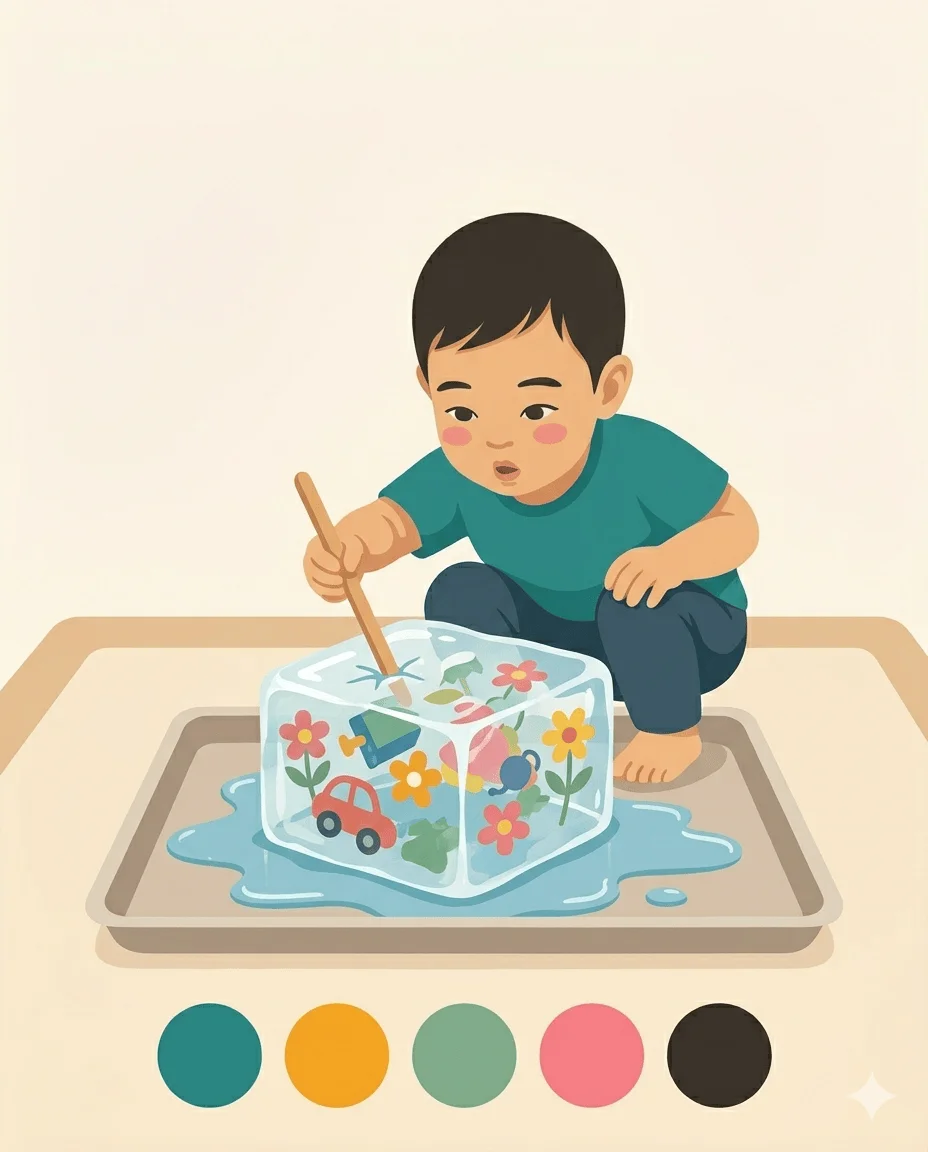
Turn the frozen block out onto a tray or baking sheet in the garden.
Give your child warm water in a jug or squeezy bottle to pour over the ice.
Sprinkle a little salt on the surface and watch the cracks form — let them touch and feel the changes.
Offer a spoon or blunt stick for gentle tapping and chipping at the ice.
As toys emerge, name them together — 'You found the dinosaur! What else is hiding?'
Let the final pieces melt naturally in the sun and collect all the rescued toys together.
Parent tip
Set out plastic containers and salt before inviting your toddler in so the first minute feels smooth.
What success looks like
Watch for focused exploration — fingers digging in, pouring back and forth, or sorting by feel. Even a few minutes of this builds concentration.
Fill a large container with water, drop in small plastic toys, and freeze it overnight. The next day, turn the ice block out into a tray outdoors and give your child warm water, salt, spoons, and squeezy bottles to excavate the trapped treasures. Watching the ice crack, melt, and slowly release each toy is endlessly absorbing — part science experiment, part treasure hunt.
Why it helps
Ice excavation teaches patience, cause and effect, and early scientific thinking about states of matter. The combination of pouring, squeezing, and tapping strengthens fine motor skills, while the suspense of discovering hidden objects sustains focus and attention far longer than most structured activities. NHS guidance highlights that sensory play supports brain development by building new connections every time a child explores an unfamiliar material.
Variations
Add food colouring to the water before freezing for a colourful, stained-glass effect as it melts.
Freeze layers with different colours — pour, freeze, add more water, freeze again — for a rainbow excavation.
Hide letters or numbers in the ice and call them out as they appear — sneaky early literacy.
Safety tips
Supervise closely to ensure small frozen objects are not put in mouths.
Encourage using tools rather than bare hands for extended ice contact — it can be very cold.
Ensure all small toys retrieved are age-appropriate and not choking hazards.
Try one of these next
A few connected ideas chosen by theme, energy, set-up, and age fit.