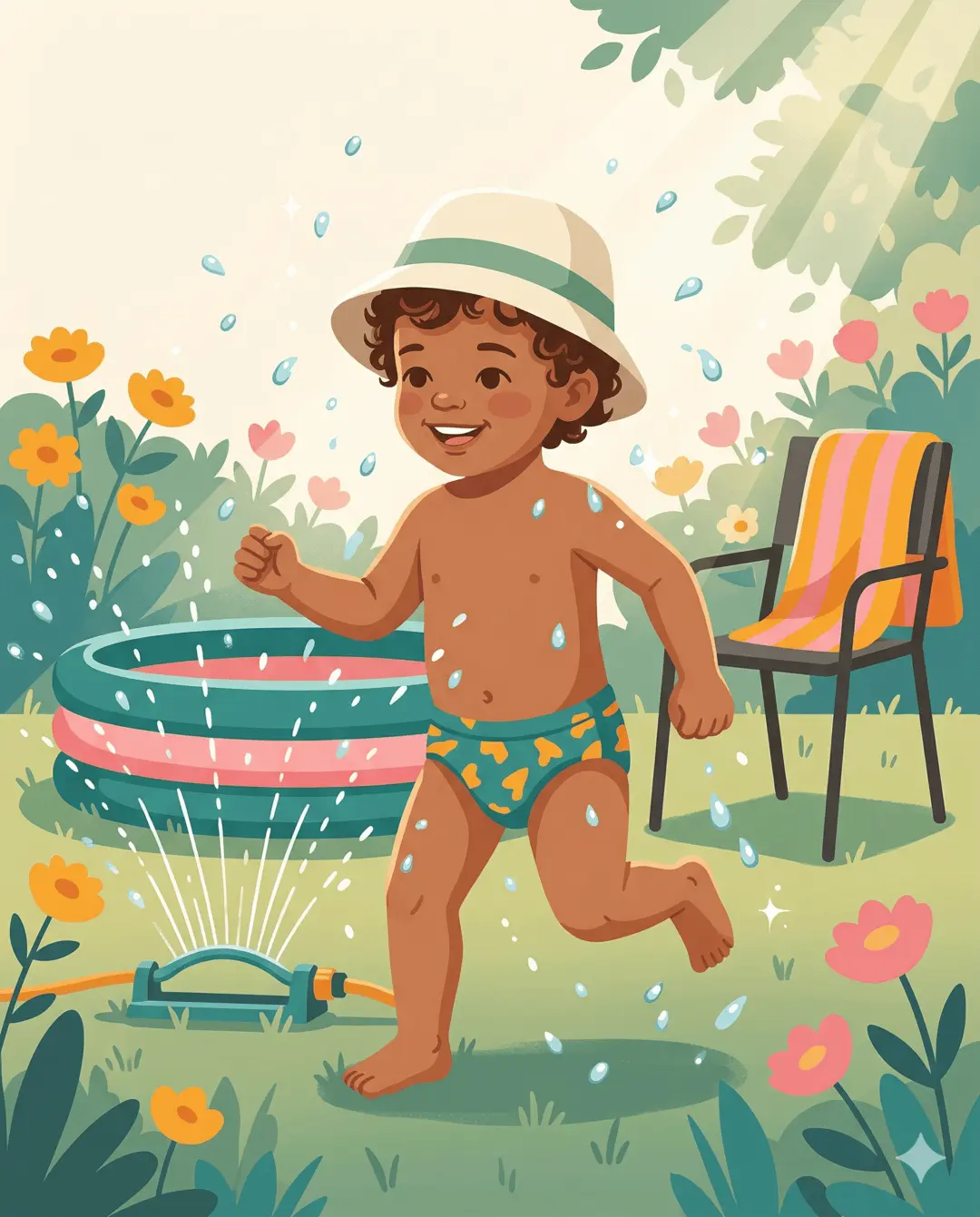
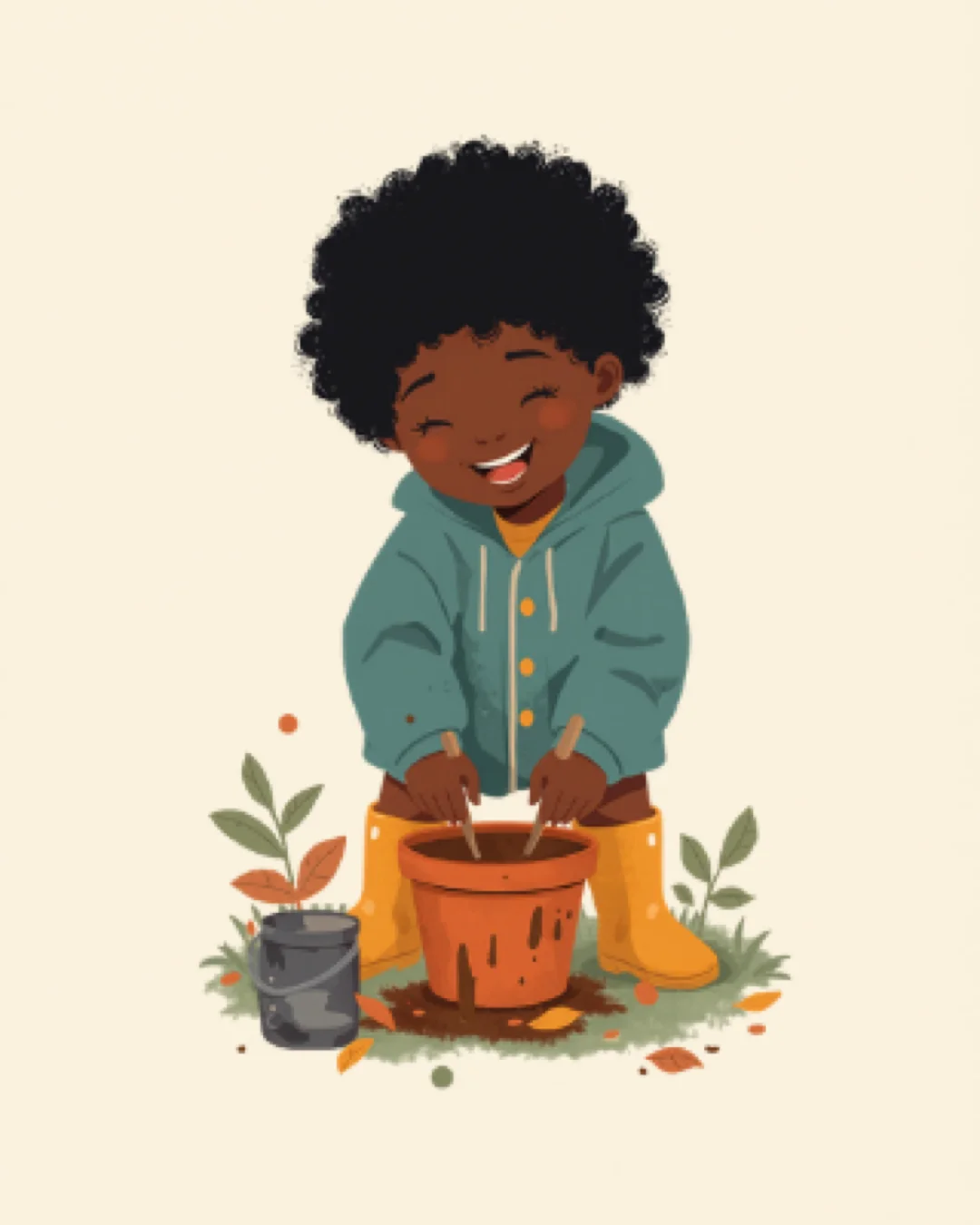
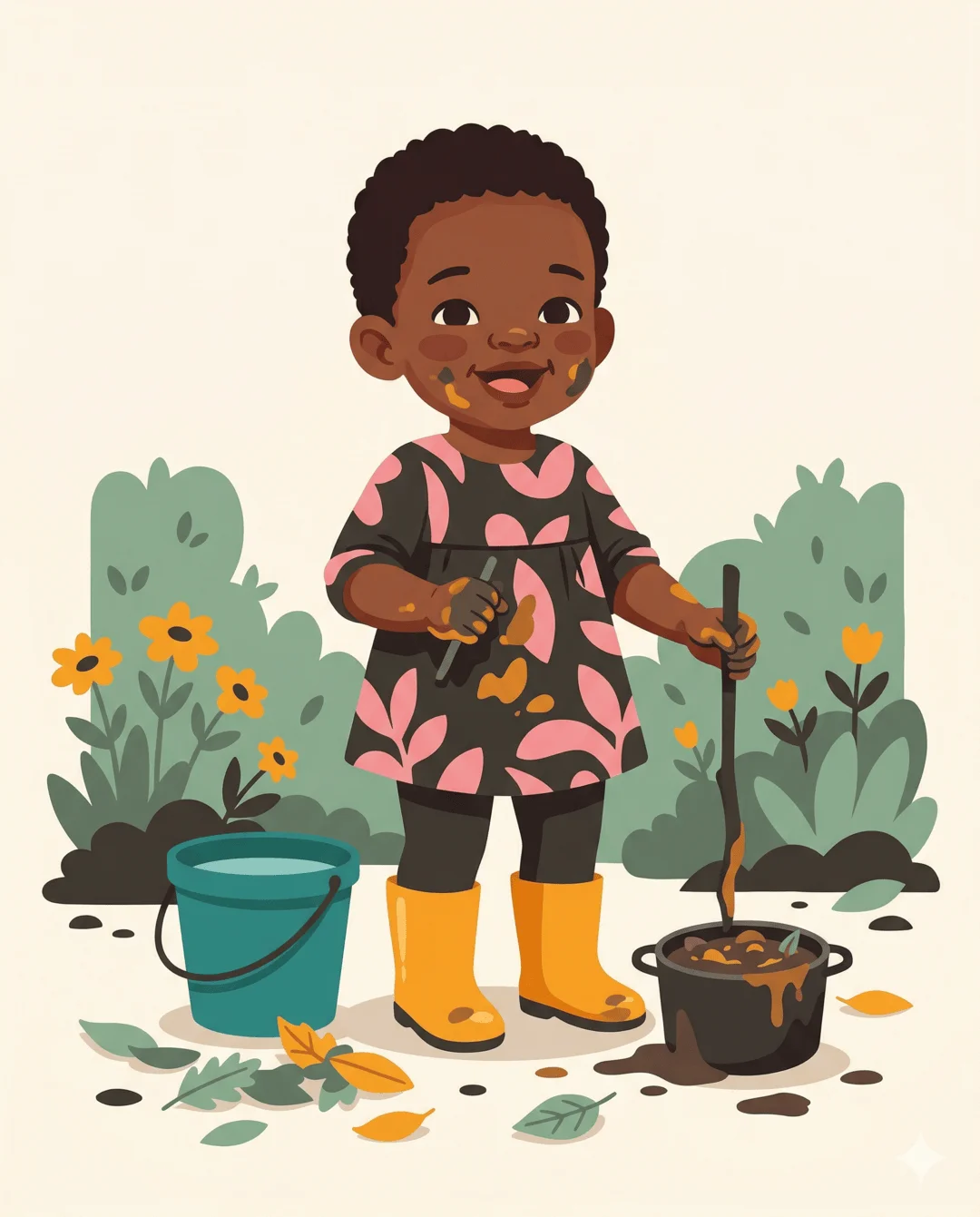
Find a patch of soft ground — a flower bed edge, a sandy area, or a muddy section of the garden after rain.
Give your toddler a garden trowel or sturdy spoon and dig a shallow channel together, about 30 cm long to start.
1/4
Find a patch of soft ground — a flower bed edge, a sandy area, or a muddy section of the garden after rain.
Give your toddler a garden trowel or sturdy spoon and dig a shallow channel together, about 30 cm long to start.
Fill a bucket or jug with water and pour it slowly at one end: 'Look! The water is flowing!'
Watch together as the water follows the channel. Point out what happens: 'It is going around the bend!'
Build a small dam across the middle using pebbles or a mound of mud: 'Can we stop the water?'
Pour more water and see if the dam holds or overflows: 'Oh! The water found a way over the top!'
Dig a side channel branching off the main one: 'Where will the water go — left or right?'
Keep extending, damming, and pouring — the activity evolves naturally as your child experiments with flow and blockage.
Parent tip
Set out bucket and garden trowel before inviting your toddler in so the first minute feels smooth.
What success looks like
Curiosity in action — pointing, collecting, asking ‘what’s that?’ A child engaged with nature is learning without knowing it.
Give your toddler a trowel and help them dig a shallow channel in soft ground — a flower bed, a sandy patch, or a muddy corner of the garden. Pour water from a jug at one end and watch it flow along the channel. Block it with a pebble dam. Dig a side channel. Make a pond at the end. This slow, absorbing activity combines gross motor digging with the fascination of watching water find its path. Every dam that breaks teaches cause and effect; every new channel is an experiment in physics. It is engineering at its most primal and satisfying.
Why it helps
Channel-digging develops gross motor strength through sustained effort, while the experimental nature of damming and redirecting water exercises causal reasoning and spatial planning. The EYFS Understanding the World area highlights that hands-on exploration of how materials and forces behave is the foundation of scientific thinking. The extended, self-directed nature of the play builds sustained attention — children will return to a waterway project for 30 minutes or more because each pour reveals something new.
Variations
Add leaves or small twigs as boats and race them down the channel — the current carries them along.
On a sandy beach or in a sandpit, build a larger system with multiple branches and a reservoir pool at the end.
For older toddlers, introduce the word 'dam' and talk about how real dams work — this seeds early science vocabulary.
Safety tips
Check the digging area for sharp stones, glass, or animal waste before play begins.
Wash hands and scrub under fingernails thoroughly after playing in soil or mud.
Supervise closely near any collected water — even shallow puddles can fascinate toddlers into lying face-down.
Try one of these next
A few connected ideas chosen by theme, energy, set-up, and age fit.