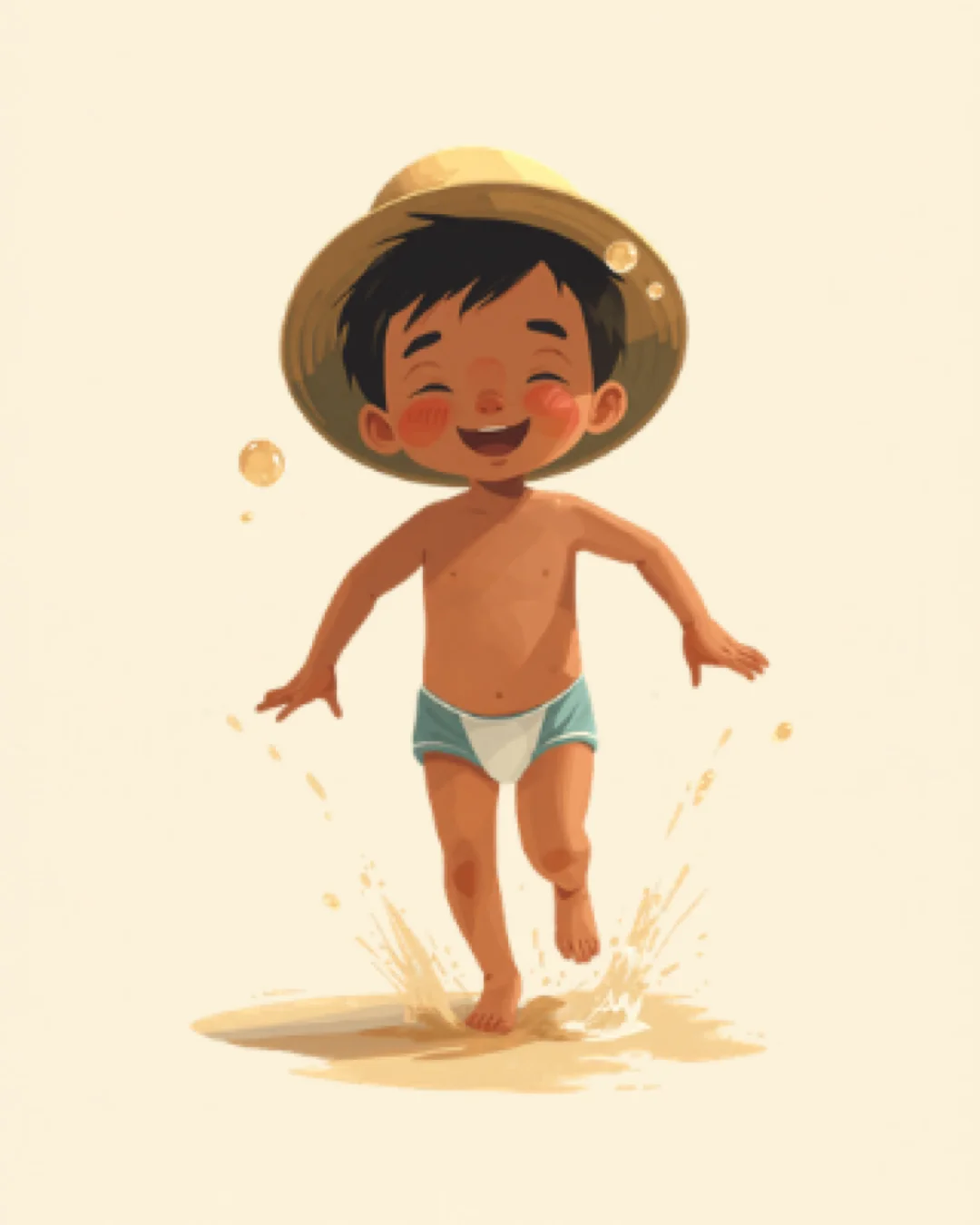
Drop a leaf each into a slow puddle or kerb-side stream and watch whose floats further — the gentlest outdoor cause-and-effect there is.
Activity details
19m–4y10 minslowoutdoorNo prepLeaves
Instructions
Tiny Steps
Get ready
After rain, find a puddle with gentle movement — a slow kerb-side stream or a still garden puddle both work.
Help your toddler pick two fallen leaves — one each for the first race.
1/4
After rain, find a puddle with gentle movement — a slow kerb-side stream or a still garden puddle both work.
Help your toddler pick two fallen leaves — one each for the first race.
Kneel down at the same edge of the water.
Say 'ready, steady, drop' — release the leaves together.
Watch without interfering. Narrate: 'yours is moving... mine is stuck... look, yours is spinning.'
When one leaf clearly wins or both stop, celebrate the water, not the winner.
Pick two more leaves and try again. Toddlers love the repetition — they're testing whether the puddle is reliable.
Stop when the interest fades. Walk off with a leaf in each pocket for the path home.
Parent tip
Start before you overthink it. No-prep activities work best when you begin while the moment is still recoverable.
What success looks like
Curiosity in action — pointing, collecting, asking ‘what’s that?’ A child engaged with nature is learning without knowing it.
Find a shallow, slow-moving puddle along a kerb after rain, or a still puddle in the garden. You each pick a fallen leaf. You drop them at the same time on one edge and watch them drift. Whose leaf moves? Whose stops? Whose spins? The answers are not up to you or your toddler — they're up to the water. That's the lesson: the puddle decides, and your child gets to spend ten unhurried minutes watching cause-and-effect play out without anyone winning or losing.
Why it helps
NHS Start4Life play guidance for toddlers recommends simple outdoor cause-and-effect experiments — 'using paint brushes and a pot of water to do mark-making outdoors' is one example — as natural early-science play. A leaf race is the same cause-and-effect in its purest form: an action produces a result the child can observe and predict without adult explanation. The competitive frame is light — the water wins, not a person — so there's no winner or loser to regulate, only the gentle discovery that pouring, dropping, and floating all behave in patterns worth watching.
Variations
Add a stick race alongside the leaf race for older toddlers — different shapes float differently, a genuine physics observation.
In the garden with a watering can, pour a thin stream next to the puddle and race leaves on that instead.
For siblings, each child gets their own colour leaf — no shared ownership, no competition, just parallel play with the same puddle.
Safety tips
Stay away from fast-moving water — kerb streams that could pull a leaf out of sight are also strong enough to pull a small hand in.
Don't do this next to drain covers — leaves disappearing into grates teaches the wrong lesson about safe exploration.
Wash hands the moment you're home — kerb puddles can carry grit, oil, and bacteria that nothing on the surface suggests.
Try one of these next
A few connected ideas chosen by theme, energy, set-up, and age fit.