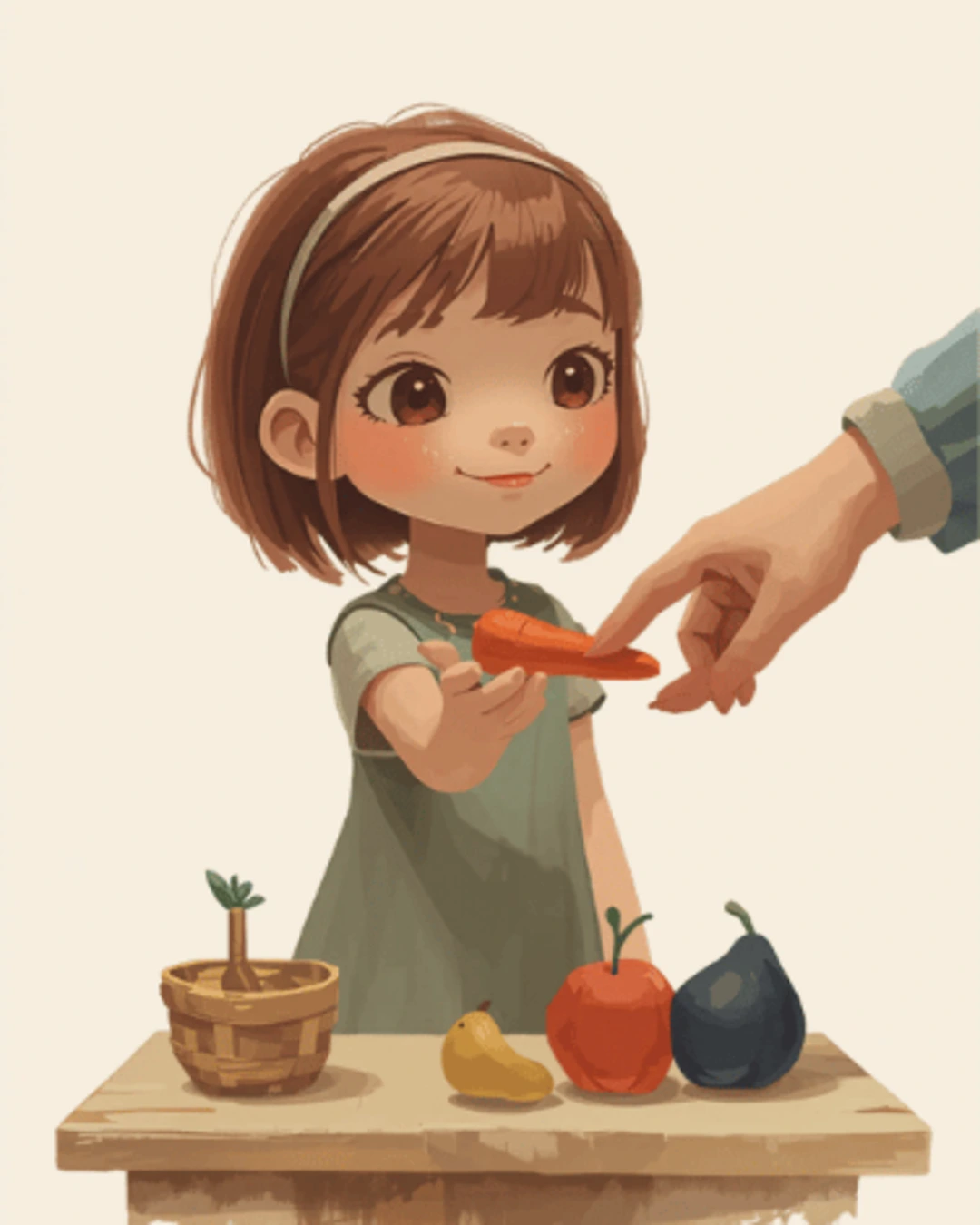
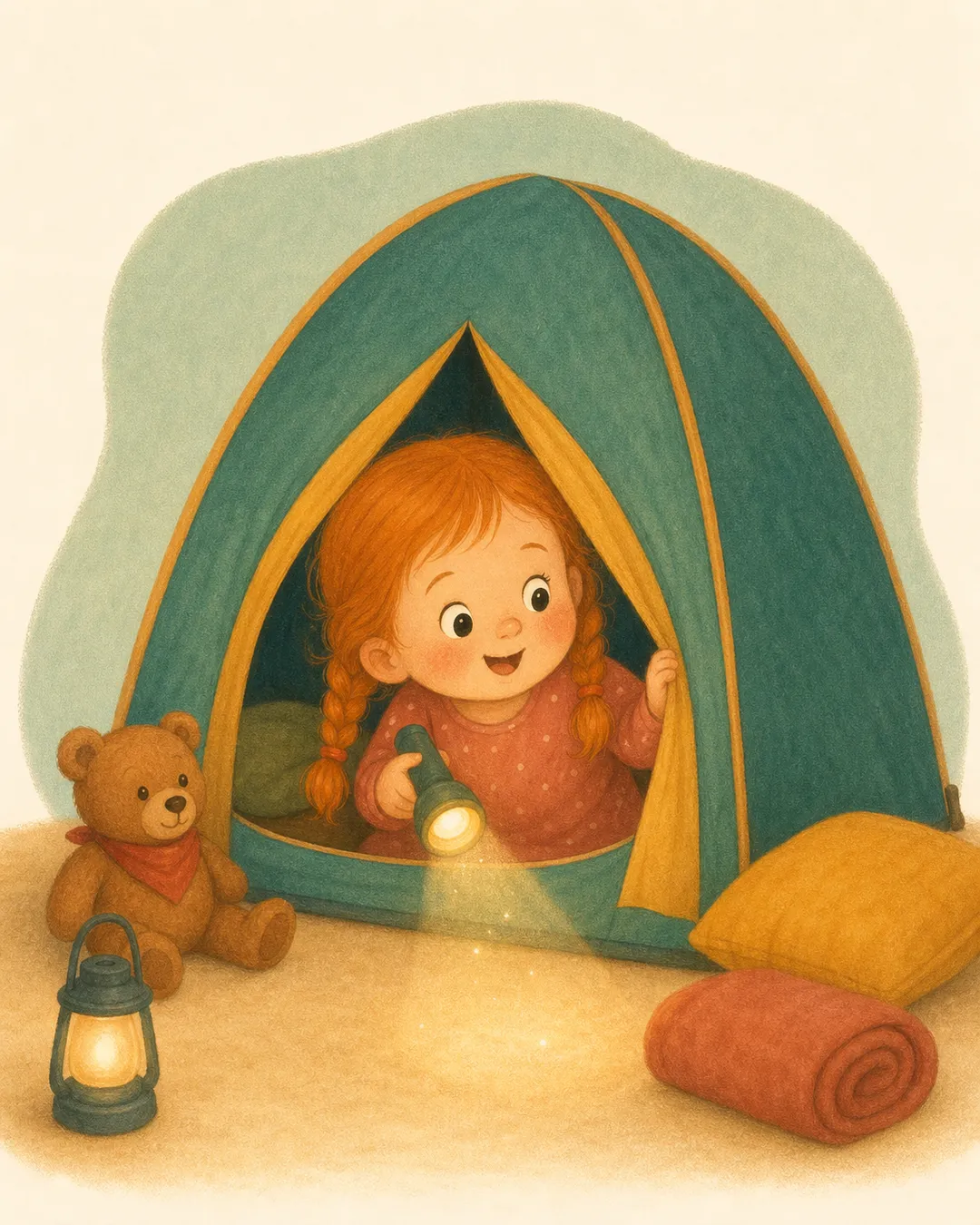
Create a personal courage chant together that your toddler can sing when facing scary moments — from dark rooms to nursery drop-offs.
Activity details
2y–4y10 minslowbothNo prep
Instructions
Tiny Steps
Get ready
Sit together somewhere cosy and calm — this is a collaborative creation moment.
Pick a familiar tune your toddler loves — Twinkle Twinkle, Row Row Row Your Boat, or Frère Jacques all work.
1/5
Sit together somewhere cosy and calm — this is a collaborative creation moment.
Pick a familiar tune your toddler loves — Twinkle Twinkle, Row Row Row Your Boat, or Frère Jacques all work.
Talk about being brave: 'Sometimes things feel a bit scary. Shall we make a special brave song?'
Start with a simple first line: 'I am brave, I am strong' set to the melody.
Ask your toddler to add a word — their name, something they love, a favourite animal: 'I am brave like a lion.'
Sing the whole brave song through together, keeping it short — four lines is plenty.
Practise it a few times until it feels natural and your toddler joins in confidently.
Try using it straight away in a low-stakes moment — turning off a light, walking into a new room.
Remind them: 'Remember, you can sing your brave song whenever you need it.'
Parent tip
Start before you overthink it. No-prep activities work best when you begin while the moment is still recoverable.
What success looks like
Back-and-forth between you — words, gestures, shared pretend. Connection is the real outcome here.
Every superhero has a theme tune, and now your toddler does too. Together, you create a short, simple courage song set to a familiar melody — something they can sing (or you can sing to them) when things feel overwhelming. Whether it is a dark hallway, saying goodbye at nursery, or meeting new people, having their own brave song gives your child a portable coping strategy they control. The act of creating it together makes it genuinely theirs.
Why it helps
Research from the NSPCC shows that children who can name and manage their emotions experience fewer behavioural outbursts. A personal brave song gives toddlers an active coping tool rather than relying solely on adult reassurance — building the emotional self-regulation that the EYFS framework identifies as a key goal within Personal, Social, and Emotional Development.
Variations
Add actions to the song — fists on hips for 'I am strong', arms wide for 'I am brave.'
Record it on your phone so they can hear it played back at nursery drop-off or bedtime.
Create different brave songs for different situations — a goodbye song, a dark-room song, a new-place song.
Safety tips
Never force your toddler to face a fear just because they have a brave song — the song supports, it does not replace, gradual confidence building.
If your toddler finds the topic of scary things distressing, keep it light and return to it another day.
Avoid using the brave song as a dismissal — 'just sing your song' can feel invalidating if they are genuinely upset.
Try one of these next
A few connected ideas chosen by theme, energy, set-up, and age fit.