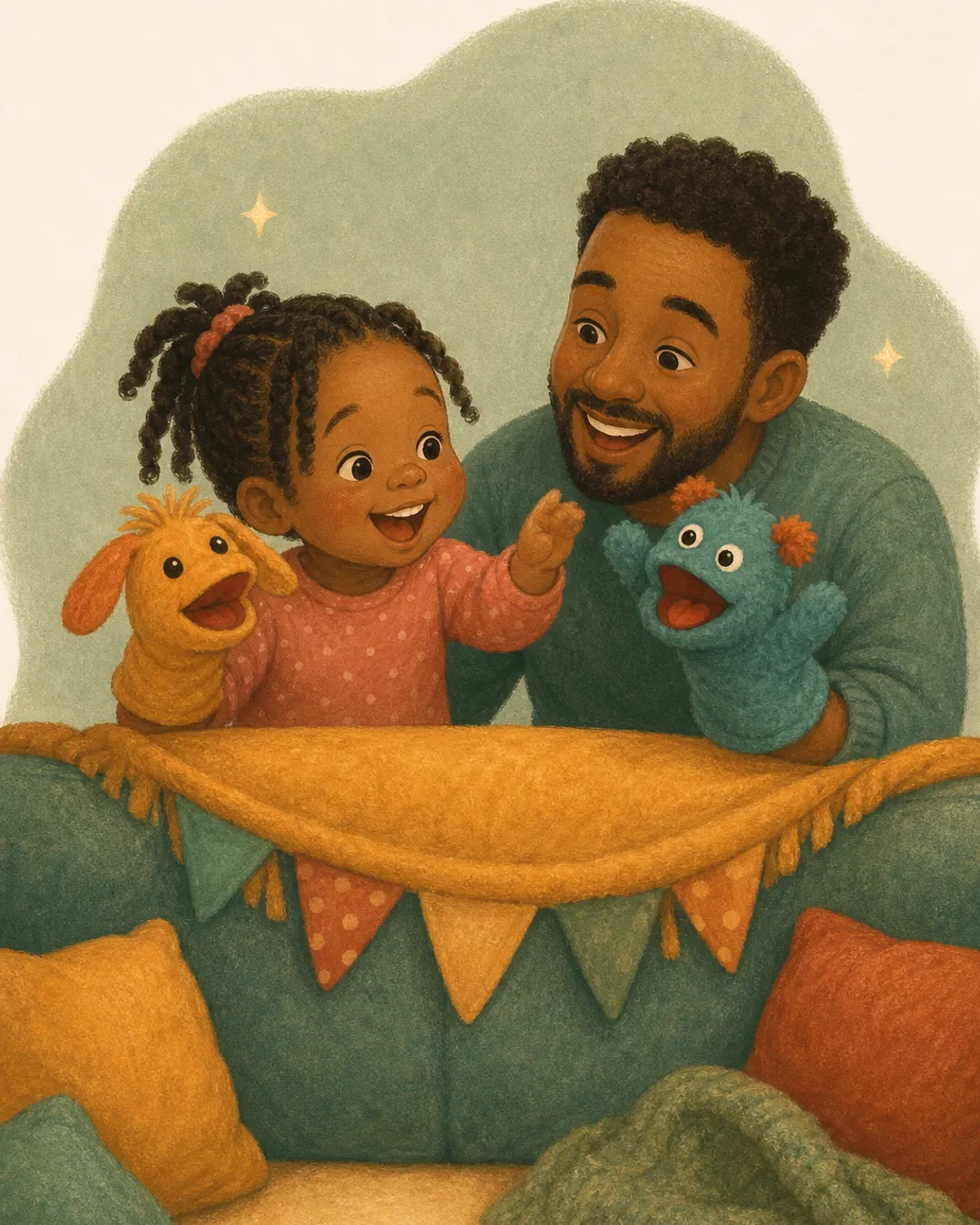
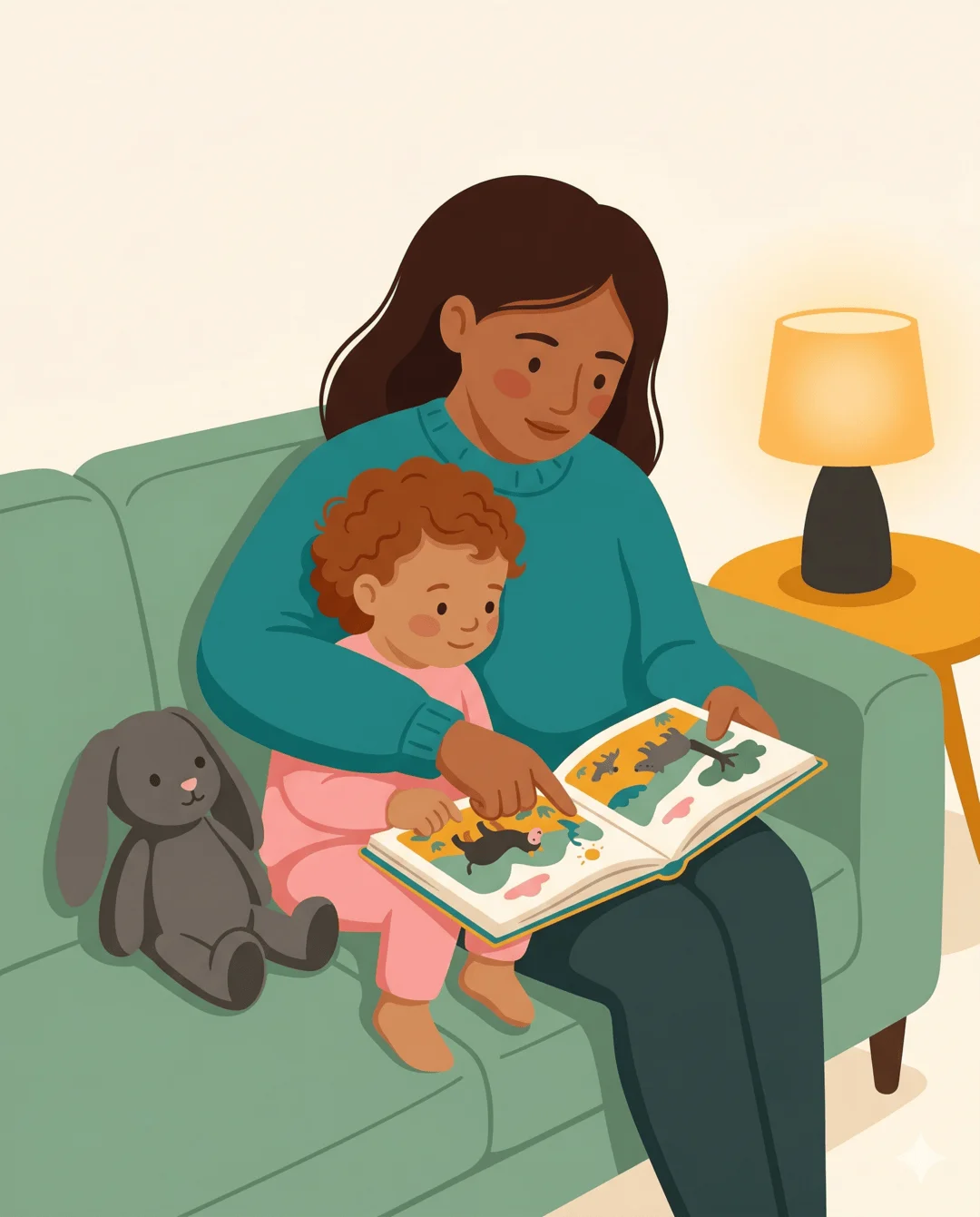
Replace the whining tone with a familiar counting song.
Activity details
18m–3y5 minslowbothNo prep
Instructions
Tiny Steps
Get ready
When whining begins, do not address the whine directly.
Start singing a familiar counting song quietly: 'One, two, three, four, five...'
1/4
When whining begins, do not address the whine directly.
Start singing a familiar counting song quietly: 'One, two, three, four, five...'
Sing slowly and clearly, making eye contact.
Hold up fingers to match the numbers — the visual cue draws their attention.
Pause at the key moment: 'Six, seven, eight, nine...' and wait for them to join in with 'TEN!'
When they sing the number, smile and continue together.
At the end, ask the original question in a calm voice: 'Now — what did you need?'
Respond warmly to whatever they say in their talking voice.
Parent tip
Start before you overthink it. No-prep activities work best when you begin while the moment is still recoverable.
What success looks like
Back-and-forth between you — words, gestures, shared pretend. Connection is the real outcome here.
When the whining tone starts, begin singing a simple counting song instead of addressing the whine directly. 'One, two, three, four, five — once I caught a fish alive...' The melody physically displaces the whining tone because the child's mouth and brain cannot produce both at once. It is distraction and de-escalation wrapped in something your child already loves. Over time, the song becomes a self-soothing tool they reach for themselves.
Why it helps
NHS Best Start in Life describes singing as 'a fun way to introduce your child to new words and sounds' and emphasises that 'singing together is a great way to connect.' Speech and Language UK confirms that singing helps children learn words through repetition and that 'listening or moving to music can help get them ready to notice sounds.' The melody physically displaces the whining tone because the child's mouth cannot produce both at once — it is distraction and connection wrapped in something the child already loves.
Variations
Use different songs for different moods: 'Twinkle Twinkle' for bedtime whining, 'Heads Shoulders Knees and Toes' for restless whining.
Let your child choose the song: 'Which song shall we sing to feel better?'
Add actions: clapping, tapping knees, or gentle swaying to engage the body alongside the voice.
Safety tips
Do not sing over a child who is genuinely distressed — singing is for low-level whining, not full meltdowns.
Avoid sarcastic or frustrated singing — the tone must be warm and inviting for the technique to work.
If your child covers their ears or protests, they may be overstimulated rather than whining — try quiet instead.
Try one of these next
A few connected ideas chosen by theme, energy, set-up, and age fit.