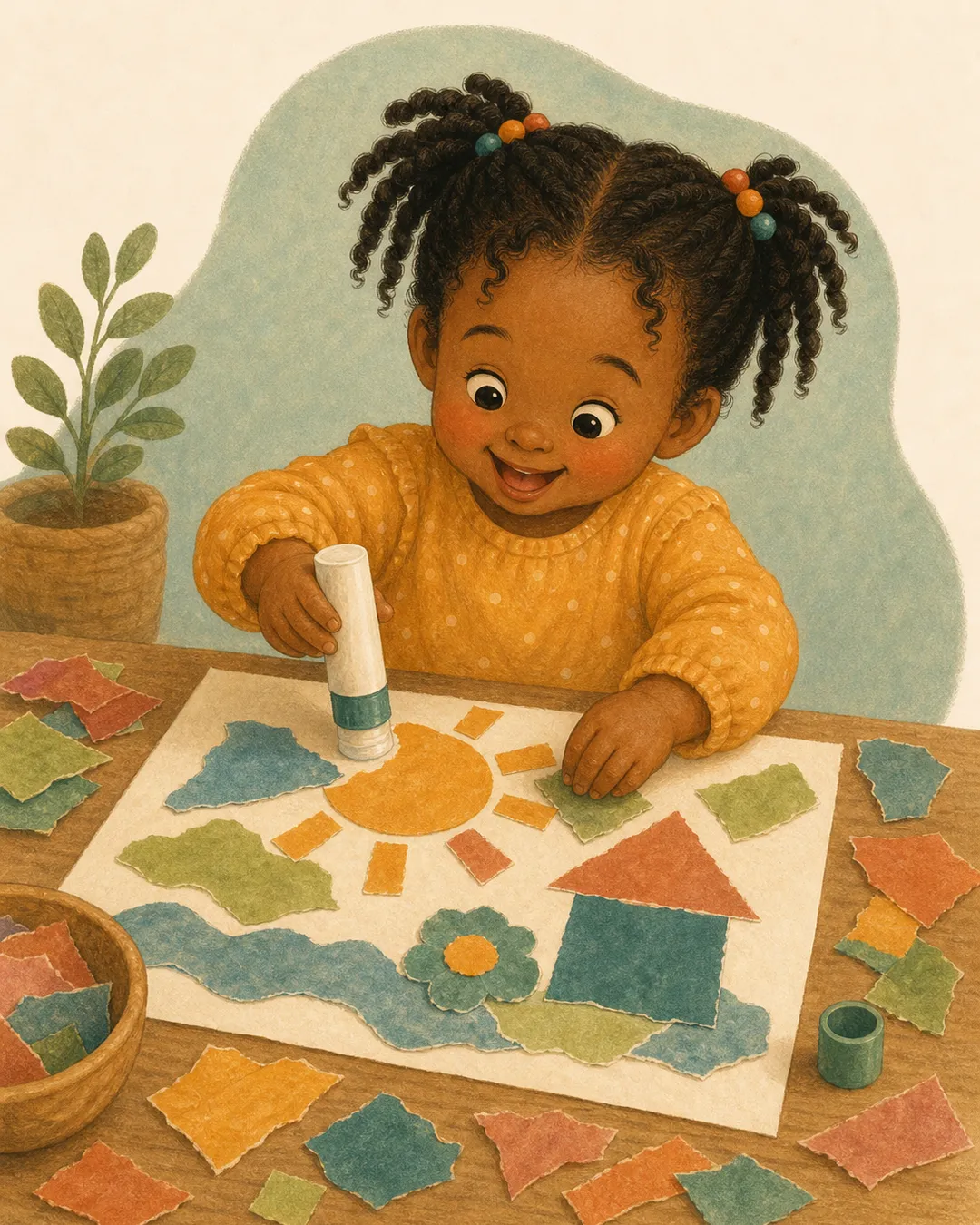
Parent tip
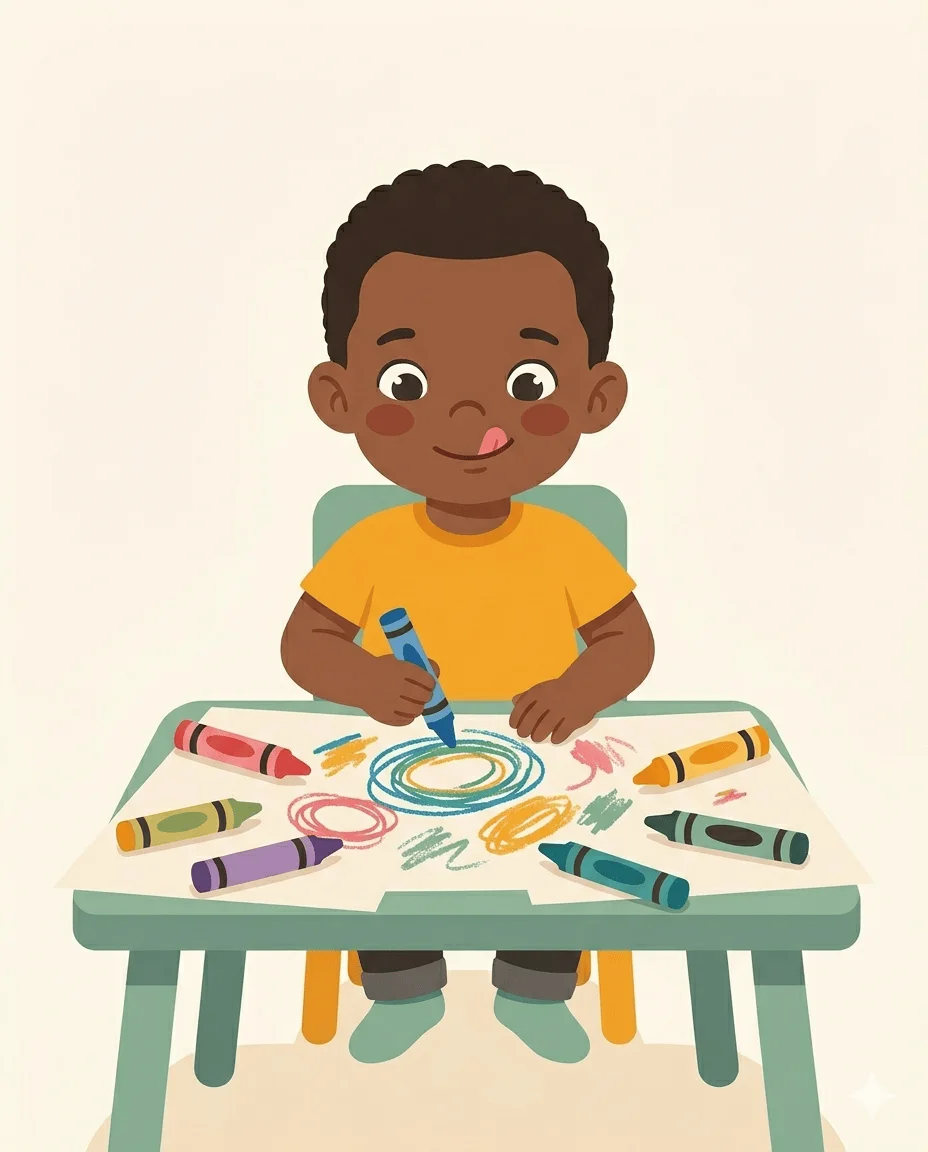
Set out crayons and markers before inviting your toddler in so the first minute feels smooth.
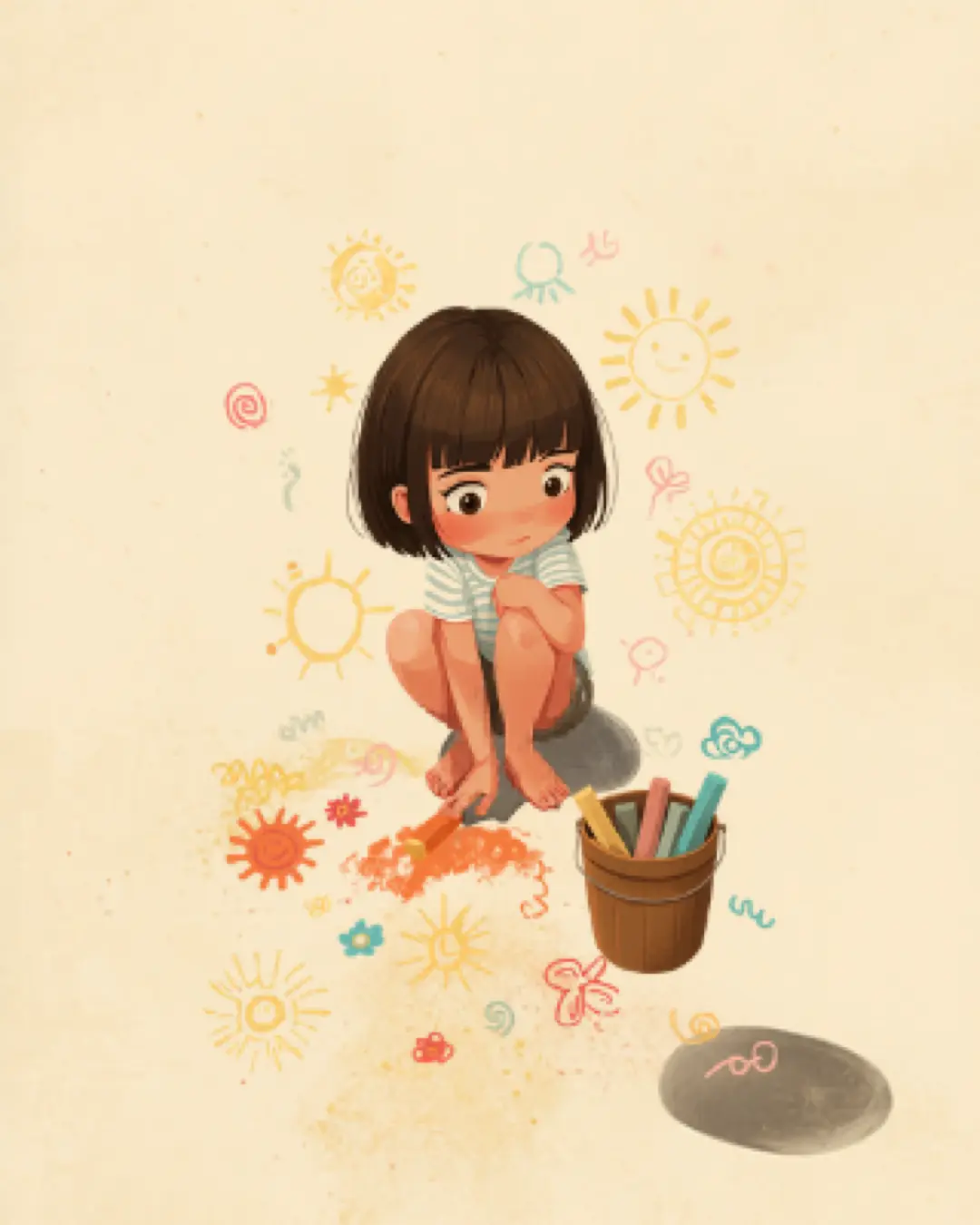
Draw a map of an imaginary land together, naming places and inventing the stories that go there.
Tiny Steps
Set out crayons and markers before inviting your toddler in so the first minute feels smooth.

Messy hands and a child who doesn’t want to stop. The artwork doesn’t need to look like anything — the process is the point.
Take a large sheet of paper and announce that you're going to draw a map of a completely made-up place. Begin by drawing the outline together — maybe an island, maybe a floating cloud kingdom. Add features: a volcano, a chocolate river, a sleeping giant's cave, a village of tiny people. Name each place and decide who lives there and what they do. This is geography, storytelling, and illustration combined — and because the world is entirely invented, every child's input shapes it.
Speech and Language UK recommends following a child's lead during play and narrating what they are doing as one of the most effective ways to build language skills. Spatial language and mapping activities in early childhood predict later mathematical and scientific reasoning, particularly geometry and measurement (Verdine et al., 2017). Creating an imaginary world also requires sustained narrative thinking — inventing characters, places, and cause-and-effect relationships — building the story grammar that underpins reading comprehension. The child's strong ownership over the invented content increases intrinsic motivation and deepens engagement with literacy and drawing tools.
One email a week with practical toddler activities, behaviour tips, and developmental insights. No spam, unsubscribe any time.