Parent tip
Set out paper and pencils before inviting your toddler in so the first minute feels smooth.
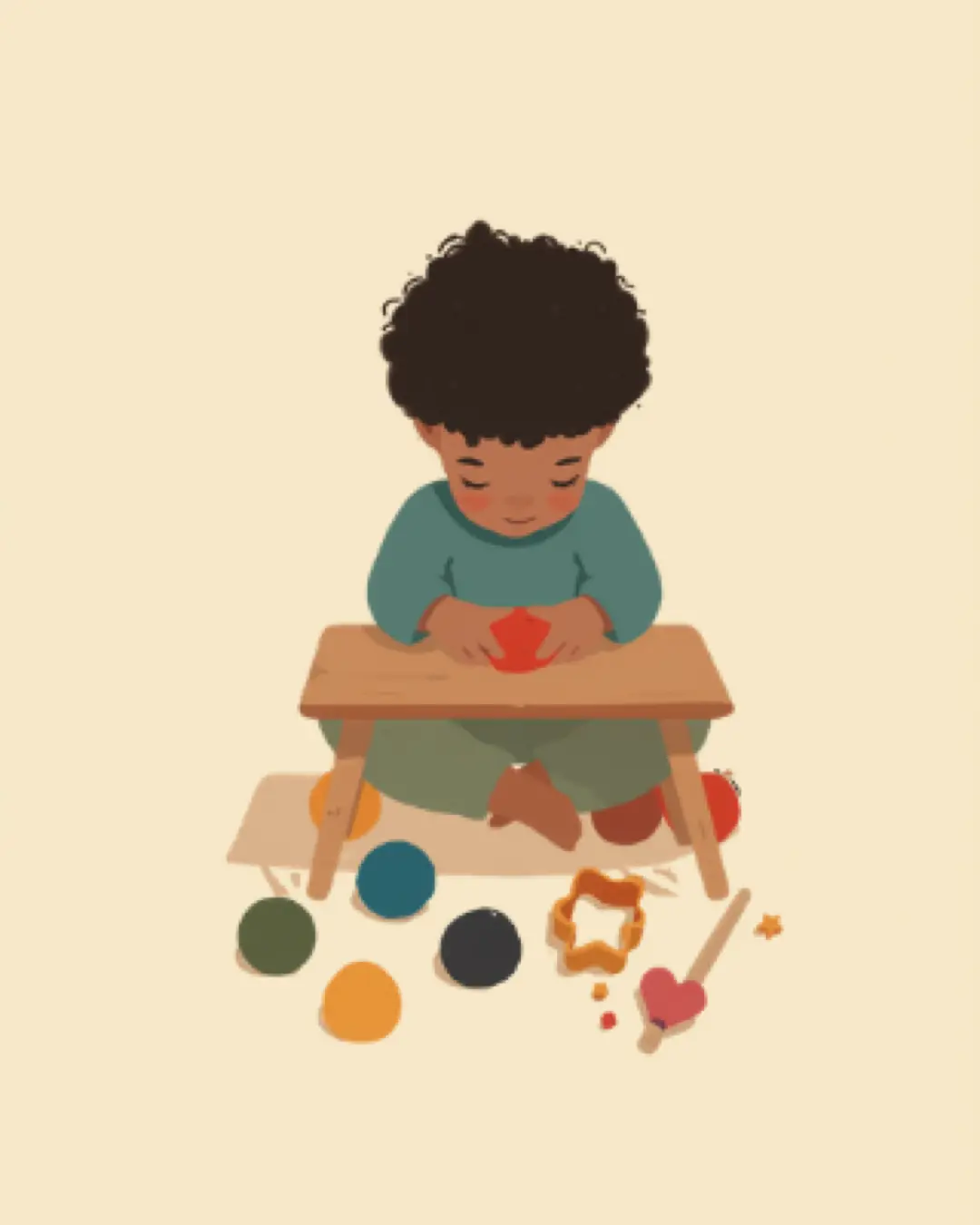
Roll and shape clay or playdough into letter forms to connect tactile experience with early literacy.
Tiny Steps
Set out paper and pencils before inviting your toddler in so the first minute feels smooth.

Messy hands and a child who doesn’t want to stop. The artwork doesn’t need to look like anything — the process is the point.
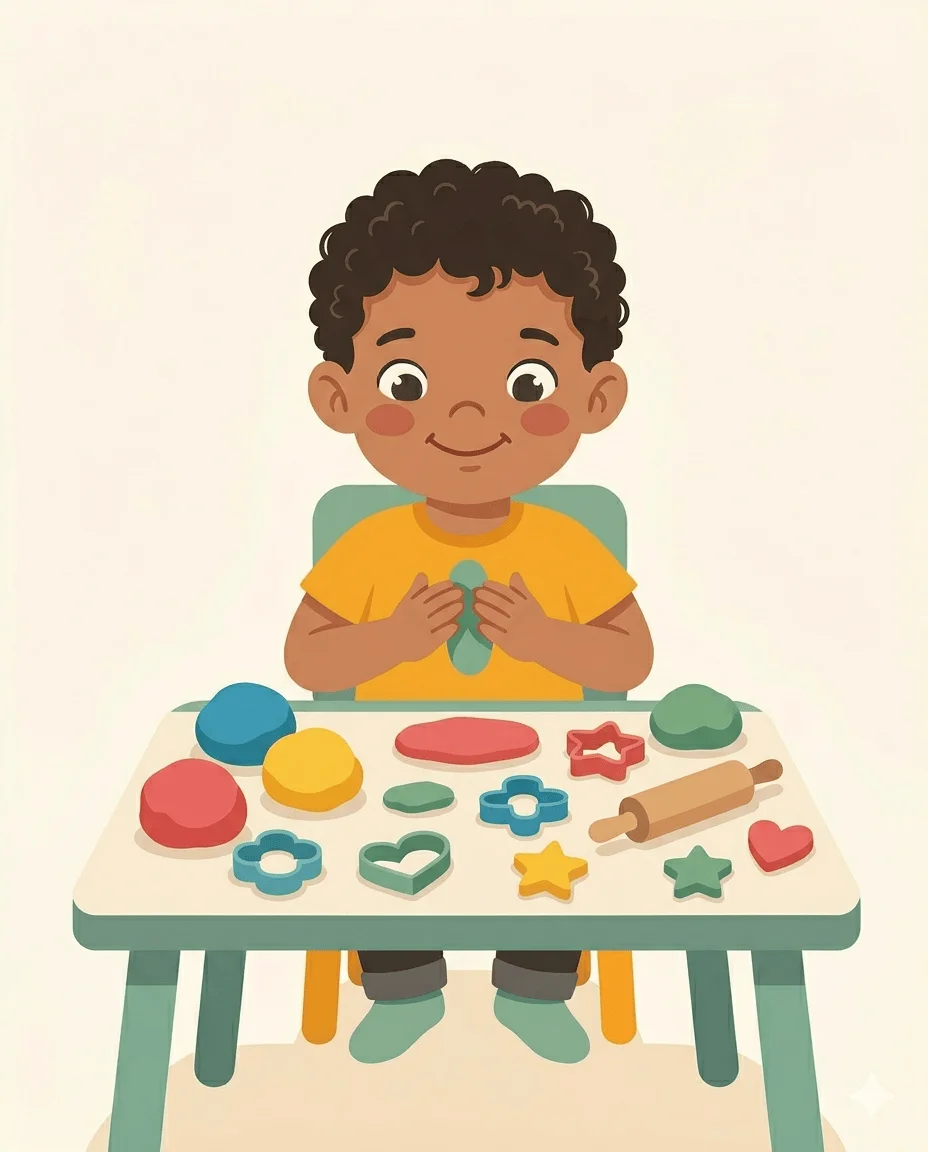
Take out a ball of playdough or air-dry clay and work together to roll long 'snakes' and shape them into simple letters — starting with the letters in your child's name. Model the letter on paper first so they have a visual guide, then use the clay to copy the form. The physical act of feeling the shape of a letter with their fingers encodes the visual symbol through a different sensory channel, making the connection between letter form and sound far more durable.
The DfE's EYFS guidance identifies fine motor control as working with the brain and nervous system to develop the precision and co-ordination later linked to early literacy. Multi-sensory letter learning — where children form letters by touch as well as sight — strengthens the letter-form memory needed for handwriting and reading (Longcamp et al., 2005). Haptic (touch-based) exploration of letter shapes activates additional neural pathways compared with visual-only exposure, leading to more robust recognition and recall. Starting with letters in the child's own name is highly motivating and builds on the self-concept connection to print that emerges in this developmental window.
One email a week with practical toddler activities, behaviour tips, and developmental insights. No spam, unsubscribe any time.