TinyStepper
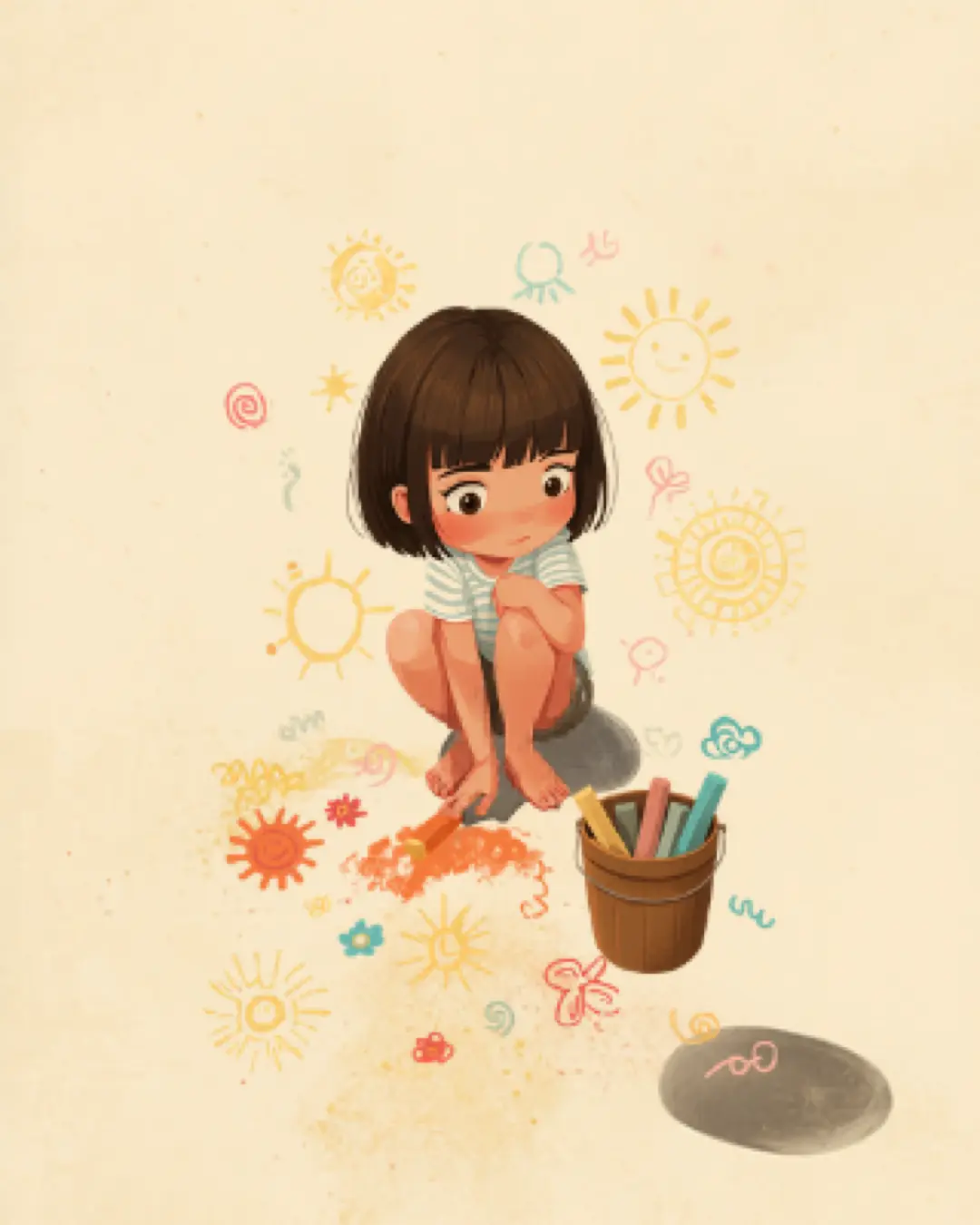
Brown-haired girl crouching outdoors drawing chalk suns and flowers on pavement

Story Stones Adventure

A storytelling craft — draw pictures on stones and use them to invent stories together.

Activity details

2y4y25 minslowbothCrayonsMarkersRocks

Instructions

Get ready
  • Find 6-8 smooth, flat-ish stones — from the garden, a walk, or a craft supply
  • Draw a simple picture on each stone with crayons or markers (sun, tree, cat, house, star, flower)
  1. Find 6-8 smooth, flat-ish stones — from the garden, a walk, or a craft supply
  2. Draw a simple picture on each stone with crayons or markers (sun, tree, cat, house, star, flower)
  3. Let your toddler help draw or choose what goes on each stone
  4. Place all stones face-down in a pile
  5. Pick a stone, turn it over, and start: 'Once upon a time, there was a big TREE...'
  6. Your toddler picks the next stone and adds to the story
  7. Alternate picks, building the narrative together — embrace the chaos
  8. End with the last stone and a satisfying 'and they all lived happily ever after'

Parent tip

Set out crayons and markers before inviting your toddler in so the first minute feels smooth.
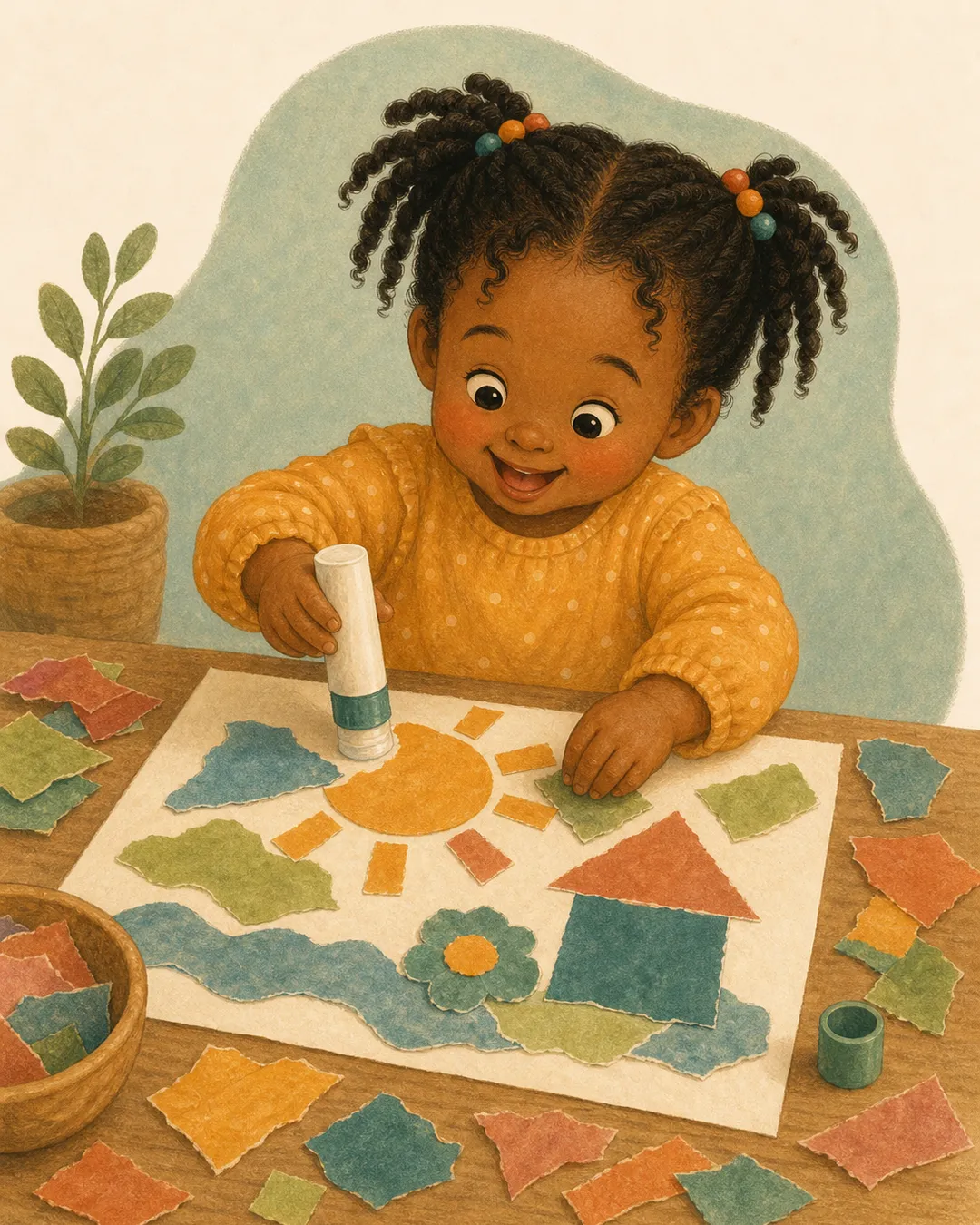
Proud child holding up a painted sheet covered in bright handprints and splatters

What success looks like

Messy hands and a child who doesn’t want to stop. The artwork doesn’t need to look like anything — the process is the point.

Collect 6-8 smooth stones and draw simple images on each — a sun, a tree, a cat, a house. Take turns picking a stone and weaving its picture into a shared story. The combination of crafting then storytelling creates a two-act activity that sustains engagement naturally. The physical stones give abstract narrative concepts a concrete, tangible anchor that helps toddlers hold and sequence ideas.

Why it helps

Speech and Language UK recommends following a child's lead during play and narrating what they are doing as one of the most effective ways to build language skills. Narrative construction develops sequential thinking and expressive language as toddlers must connect events in a logical chain. The physical stones serve as concrete scaffolding for abstract storytelling, reducing the cognitive load of holding a story in working memory. The drawing phase builds fine motor control while the collaborative storytelling practises social reciprocity and turn-taking.

Variations

  • Use the same stones another day — a familiar set becomes a comfort storytelling ritual.
  • Add emotion stones (happy face, sad face, surprised face) to practise emotional vocabulary.
  • For older toddlers, challenge them to tell the whole story alone using all the stones in order.

Safety tips

  • Ensure stones are too large to be a choking hazard — at least the size of a toddler's palm.
  • Supervise marker use closely and use washable, non-toxic markers only.
  • Smooth any rough edges on stones before giving them to younger toddlers.

Get weekly activity ideas for your toddler

One email a week with practical toddler activities, behaviour tips, and developmental insights. No spam, unsubscribe any time.