Parent tip
Set out construction paper and stuffed animals before inviting your toddler in so the first minute feels smooth.
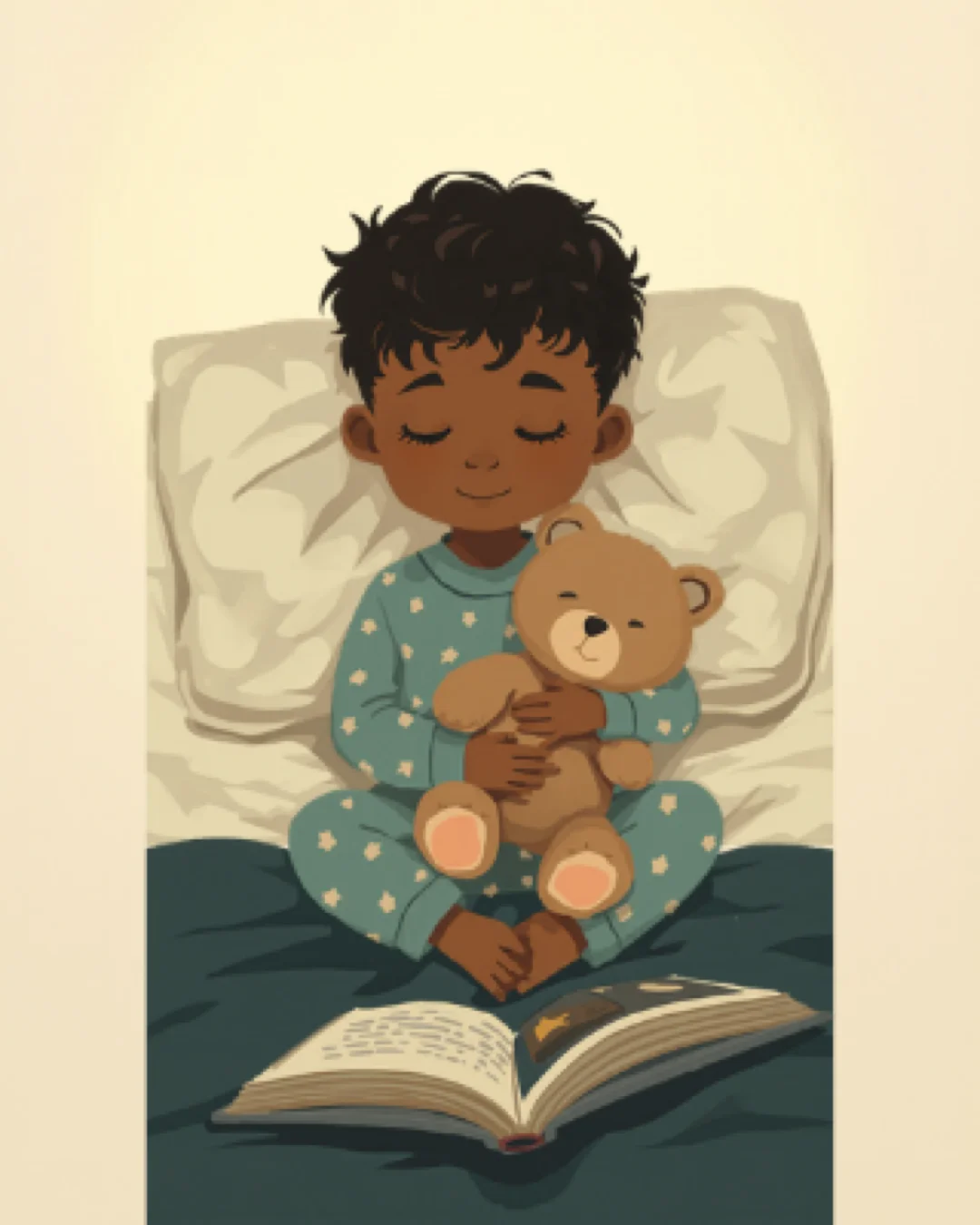
Show happy, sad, and angry faces — name each one and ask 'How does teddy feel?'
Tiny Steps
Set out construction paper and stuffed animals before inviting your toddler in so the first minute feels smooth.

A few quiet minutes together without pressure. If your child relaxes even slightly, that’s self-regulation building.
Draw or find pictures of simple emotion faces: happy, sad, angry, surprised. Show each one and name it with a matching expression on your own face: 'This face is SAD. Look — sad!' Then hold up a teddy: 'How does teddy feel? Is teddy happy... or sad?' Let toddler point or say the word. Naming emotions is one of the most valuable vocabulary sets for toddlers — it gives them words for feelings they already have.
Emotion vocabulary is crucial for self-regulation — children who can name their feelings are better able to manage them. This bridge between language development and emotional regulation is why behaviour guides often recommend naming emotions. The game format makes emotional vocabulary playful rather than serious. Zero to Three explains that toddlers need repeated, safe chances to practise handling big feelings before they can manage them on their own.
One email a week with practical toddler activities, behaviour tips, and developmental insights. No spam, unsubscribe any time.