Parent tip
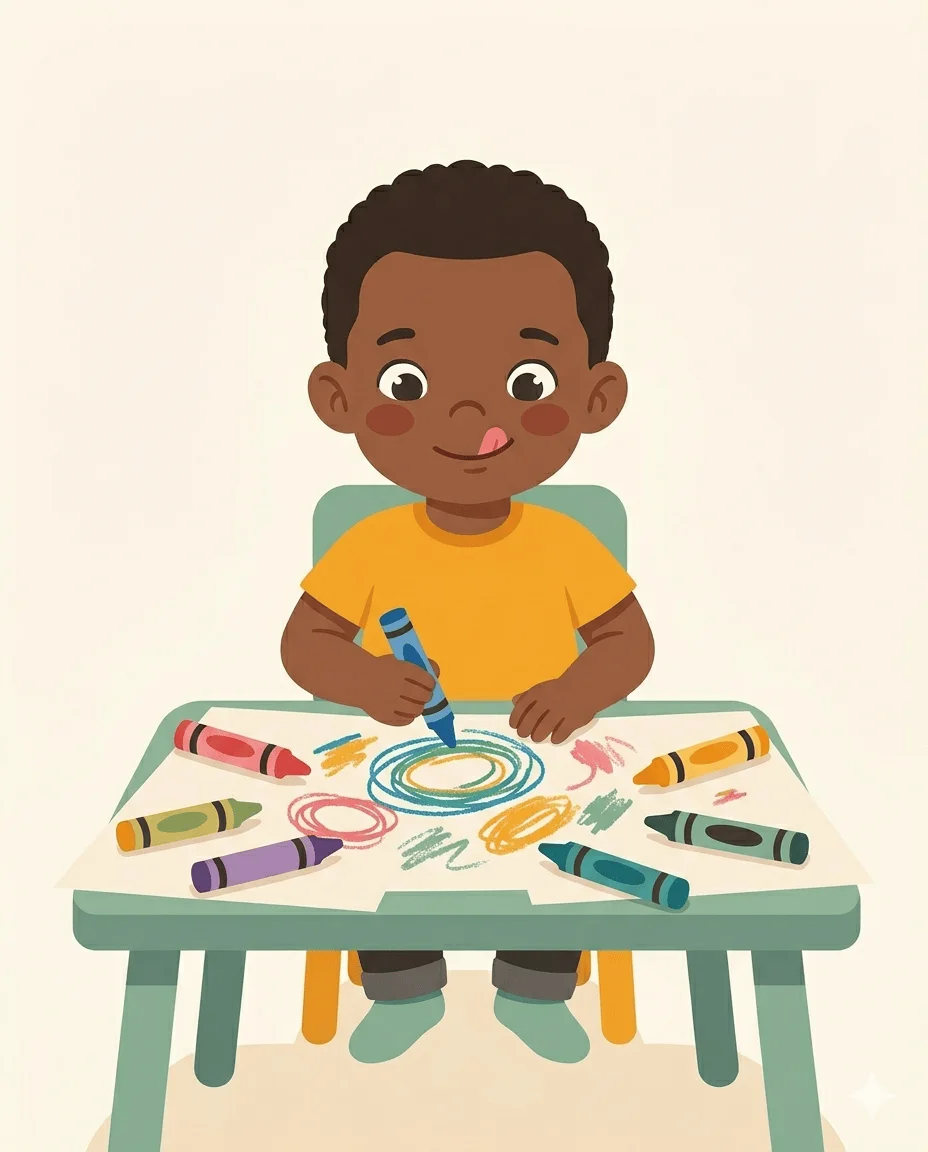
Set out construction paper and crayons before inviting your toddler in so the first minute feels smooth.
Draw simple emotion faces on cards and check in throughout the day — 'Which face matches how you feel right now?'
Tiny Steps
Set out construction paper and crayons before inviting your toddler in so the first minute feels smooth.

A few quiet minutes together without pressure. If your child relaxes even slightly, that’s self-regulation building.
Together, draw 4-5 simple faces on cards: happy, sad, cross, scared, tired. At key moments — morning, after lunch, before bed — lay out the cards and ask: 'Which face matches how you feel right now?' Your toddler points or picks up a card. Name the feeling: 'You're feeling cross. That's OK. What made you cross?' This daily ritual builds emotional vocabulary, self-awareness, and the habit of identifying feelings before they escalate into behaviour.
The Foundation Years programme emphasises that children need opportunities to learn the words to identify and name their emotions, which helps them communicate feelings more effectively and reduces frustration. Emotional granularity — the ability to distinguish between specific emotions rather than just 'good' or 'bad' — is a key predictor of effective emotional regulation. Children who can name their feelings are significantly less likely to express them through aggression or meltdowns. The visual cards provide a concrete bridge between internal states and language, engaging both hemispheres of the brain in the emotion-identification process. Zero to Three emphasises that co-regulation — where a calm adult helps a child through big emotions — is how toddlers gradually learn to manage feelings by themselves.
One email a week with practical toddler activities, behaviour tips, and developmental insights. No spam, unsubscribe any time.