Cut four pieces of construction paper and draw a simple weather icon on each: a sun (happy), a rain cloud (sad), a lightning bolt (angry), and a gentle breeze (calm).
Sit with your child and introduce each card: 'When I feel happy inside, it's like sunshine in my tummy! When I feel cross, it's like a storm.'
1/4
Cut four pieces of construction paper and draw a simple weather icon on each: a sun (happy), a rain cloud (sad), a lightning bolt (angry), and a gentle breeze (calm).
Sit with your child and introduce each card: 'When I feel happy inside, it's like sunshine in my tummy! When I feel cross, it's like a storm.'
Hold up each card and make the matching face together — big smile for sun, pouty lip for rain, scrunched face for storm, slow breath for breeze.
Ask your child: 'What's your weather right now?' Let them pick a card or point. Accept whatever they choose without correcting.
Share your own weather: 'Mummy feels a bit rainy today because I'm tired. But that's okay — rain doesn't last forever.'
Play a feelings guessing game — act out an emotion and let your child hold up the matching weather card.
Stick the cards on the fridge at child height and say: 'You can show me your weather any time you want.'
Practise using the cards at natural moments over the next few days — before meals, after naps, or when you notice a mood shift.
Parent tip
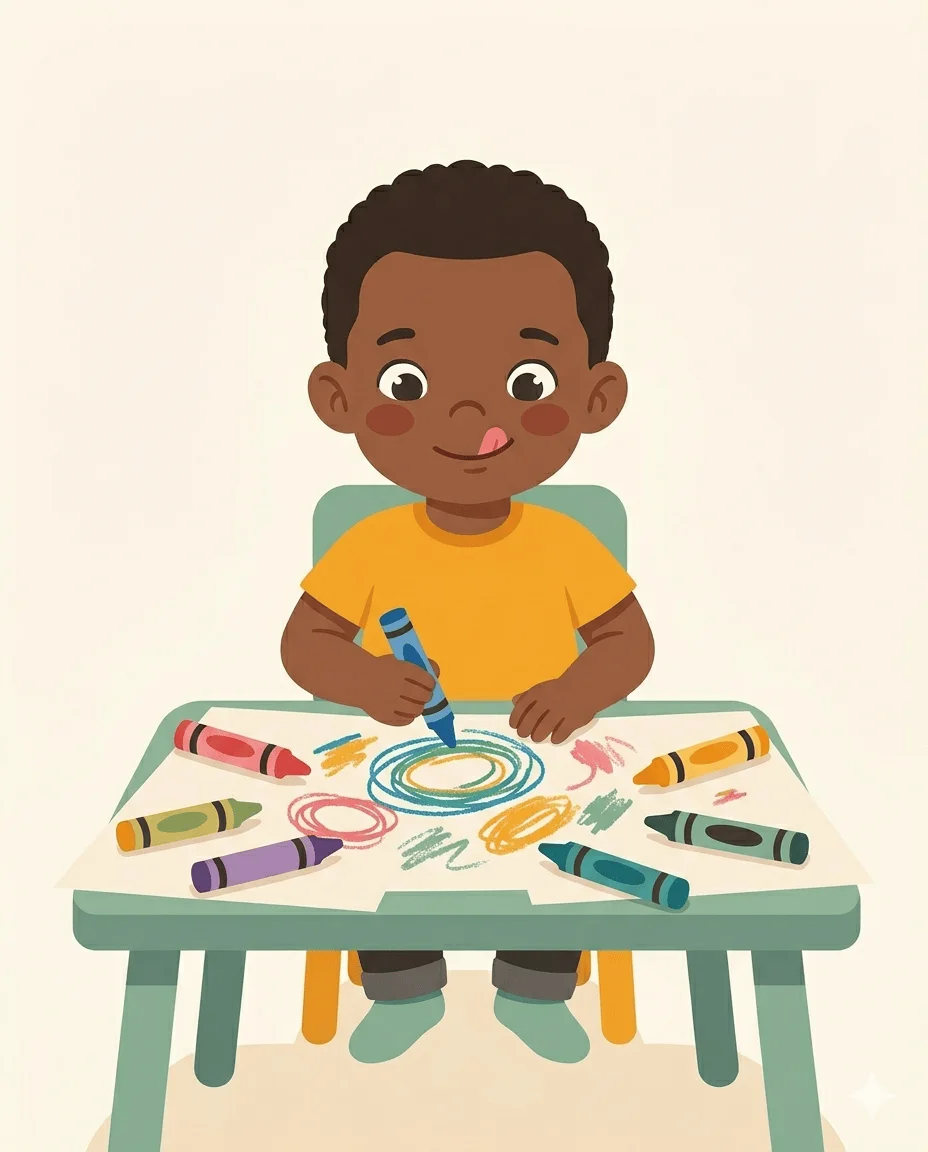
Set out construction paper and crayons before inviting your toddler in so the first minute feels smooth.
What success looks like
A few quiet minutes together without pressure. If your child relaxes even slightly, that’s self-regulation building.
Toddlers experience big emotions but rarely have the vocabulary to express them, which is why feelings so often come out as hitting, biting, or meltdowns. This activity uses weather as a concrete metaphor — something children can see and understand — to help them label internal states. By drawing simple weather icons and linking each one to a feeling, you give your child a visual shorthand they can point to when words fail. Over time, this builds emotional literacy, which research consistently identifies as the single most protective factor against aggressive behaviour in early childhood.
Why it helps
The Foundation Years programme emphasises that children need opportunities to learn the words to identify and name their emotions, which helps them communicate feelings more effectively and reduces frustration. Emotion labelling — also called 'affect labelling' — has been shown in neuroscience research to reduce amygdala activation, literally calming the brain's threat response. When a toddler can name their feeling, even by pointing to a picture, the prefrontal cortex engages and the emotional intensity decreases. Using weather as a metaphor makes abstract internal states concrete and visual, which matches how toddlers' brains process information at this developmental stage. Zero to Three explains that toddlers need repeated, safe chances to practise handling big feelings before they can manage them on their own.
Variations
Add a rainbow card for 'feeling better after something hard' — this teaches emotional recovery as a normal part of the cycle.
Let your child colour or decorate the weather cards themselves to increase ownership and engagement.
For older toddlers, add more nuanced weather: foggy for confused, windy for excited, snowy for quiet and peaceful.
Safety tips
Use child-safe scissors if your toddler helps with cutting, and supervise closely.
Avoid pressuring your child to choose a 'happy' card — all emotions are valid and the goal is honest expression, not performed cheerfulness.
If your child becomes upset during the activity, model calmness by pointing to the storm card and saying 'That's okay — storms pass.'
Try one of these next
A few connected ideas chosen by theme, energy, set-up, and age fit.