Set out two mixing bowls or plastic containers — label one 'wet' and one 'dry' (or use a blue cloth under one and a yellow cloth under the other).
Prepare pairs of items: two sponges (one wet, one dry), two cotton balls (one damp, one dry), two flannels (one soaked, one dry).
1/4
Set out two mixing bowls or plastic containers — label one 'wet' and one 'dry' (or use a blue cloth under one and a yellow cloth under the other).
Prepare pairs of items: two sponges (one wet, one dry), two cotton balls (one damp, one dry), two flannels (one soaked, one dry).
Lay all the items on a towel and say 'Some of these are wet and some are dry — can you feel the difference?'
Pick up a wet sponge and squeeze it: 'Ooh, this one is wet! Feel the water — let's put it in the wet bowl.'
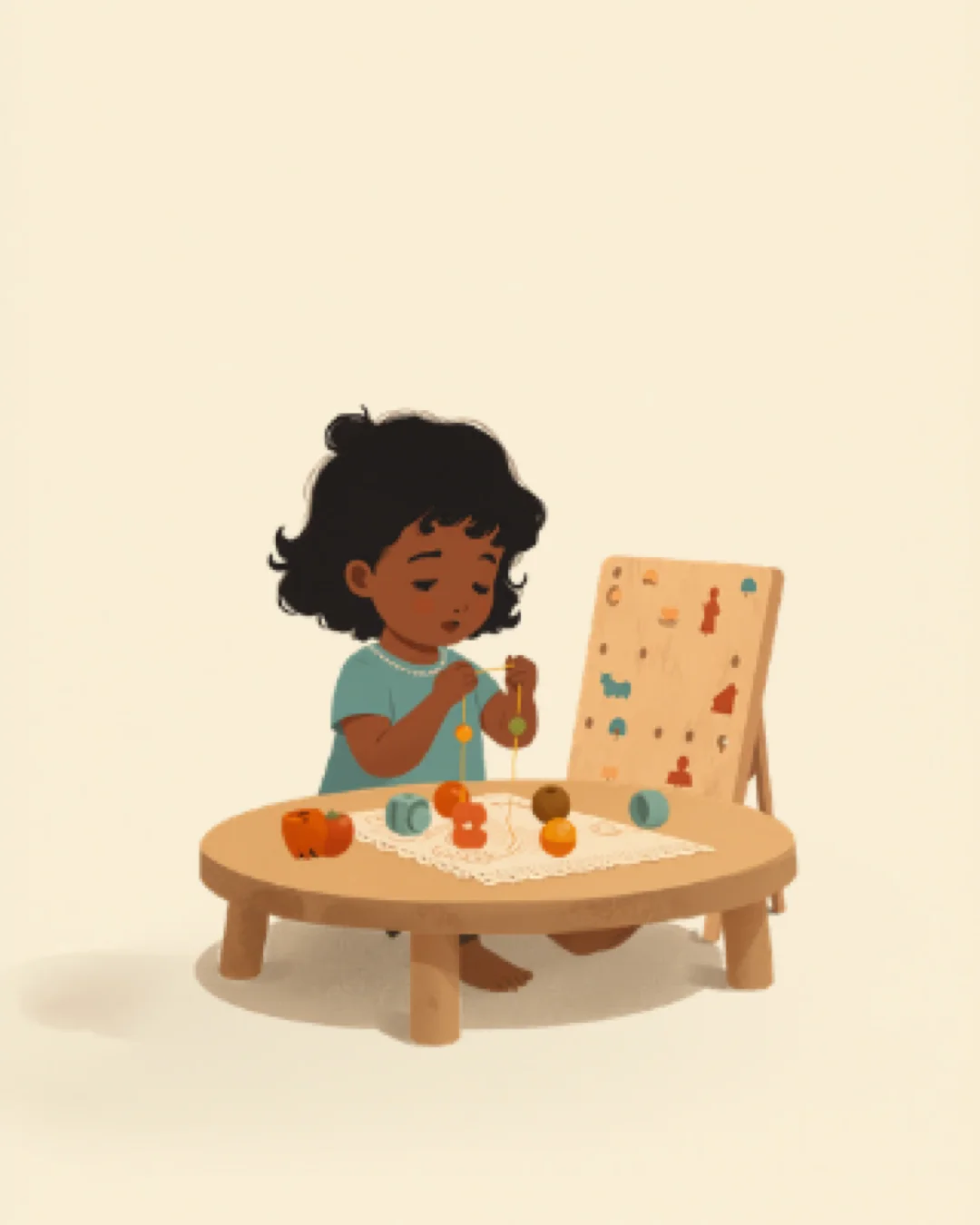
Invite your child to pick up an item, feel it, and decide which bowl it goes in.
Narrate the sensations: 'That cotton ball is dry — it feels soft and fluffy. This one is wet — it feels cold and heavy.'
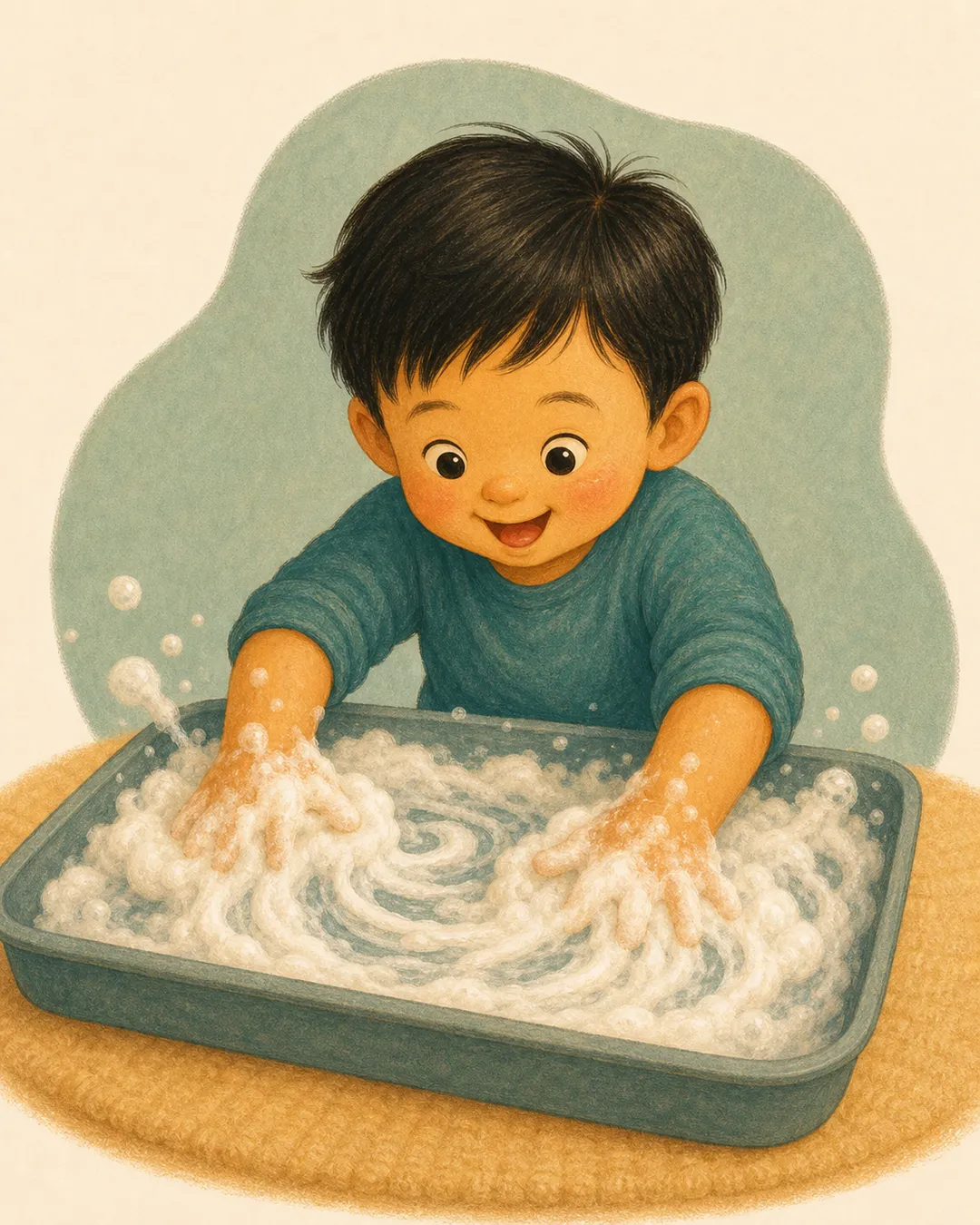
After sorting, let your child freely splash the wet items and explore the textures — sensory play reinforces the learning.
Finish by drying hands together with a towel, saying 'Now our hands are dry again — doesn't that feel different?'
Parent tip
Set out cotton balls and mixing bowls before inviting your toddler in so the first minute feels smooth.
What success looks like
Watch for focused exploration — fingers digging in, pouring back and forth, or sorting by feel. Even a few minutes of this builds concentration.
One reason toddlers resist the potty is that they haven't yet learned to distinguish between 'wet' and 'dry' sensations on their skin — a crucial prerequisite for recognising when they've had an accident and eventually anticipating it. This playful sorting game makes the wet/dry distinction concrete and fun by exploring different materials that are soaked or dry, building the sensory vocabulary needed for toileting conversations.
Why it helps
Distinguishing wet from dry is a core interoceptive and tactile skill that underpins toilet training readiness. NHS toilet training guidance highlights that children need to notice wetness in their nappy or pants before they can learn to anticipate and prevent it. This activity strengthens tactile discrimination and builds the descriptive vocabulary ('wet,' 'dry,' 'damp,' 'soaked') that children need to communicate their toileting needs to adults.
Variations
Add warm water to some items and cold water to others, introducing temperature as another sensory dimension to explore.
Use fabric strips from old clothes so your child learns to feel wet versus dry on material similar to their pants.
For older toddlers, make it a blindfold guessing game: 'Is this one wet or dry? How can you tell?'
Safety tips
Use lukewarm water to avoid any risk of scalding, and keep the activity area away from electrical outlets.
Ensure cotton balls are large enough not to pose a choking risk, and supervise closely with younger toddlers.
Dry the floor promptly after the activity to prevent slipping.
Try one of these next
A few connected ideas chosen by theme, energy, set-up, and age fit.