TinyStepper
Child holding a torch making shadow puppets on a wall in a dim room

Shoes and Coat Countdown

A cheerful five-step countdown song to get shoes and coat on — turning the leaving-the-house transition into a predictable game.

Activity details

19m4y5 minsmediumbothNo prep

Instructions

Get ready
  • Give a two-minute warning before the transition: 'In two minutes, we're going to do our Getting Ready Countdown!'
  • Start the countdown at five with a cheerful voice: 'Five — find your shoes! Where are they hiding?'
  1. Give a two-minute warning before the transition: 'In two minutes, we're going to do our Getting Ready Countdown!'
  2. Start the countdown at five with a cheerful voice: 'Five — find your shoes! Where are they hiding?'
  3. Continue: 'Four — sit on the step. Three — shoes on feet. Can you do the velcro?'
  4. Next: 'Two — arms in your coat! One arm in, other arm in.'
  5. Build to the finish: 'One — zip it up! Ready, steady...'
  6. Celebrate together: 'ZERO — we're ready! High five! Let's go!'
  7. Repeat the same sequence every time you leave the house so it becomes automatic and comforting.
  8. Once your child knows the countdown, let them lead it: 'You count us down today — what's number five?'

Parent tip

Start before you overthink it. No-prep activities work best when you begin while the moment is still recoverable.
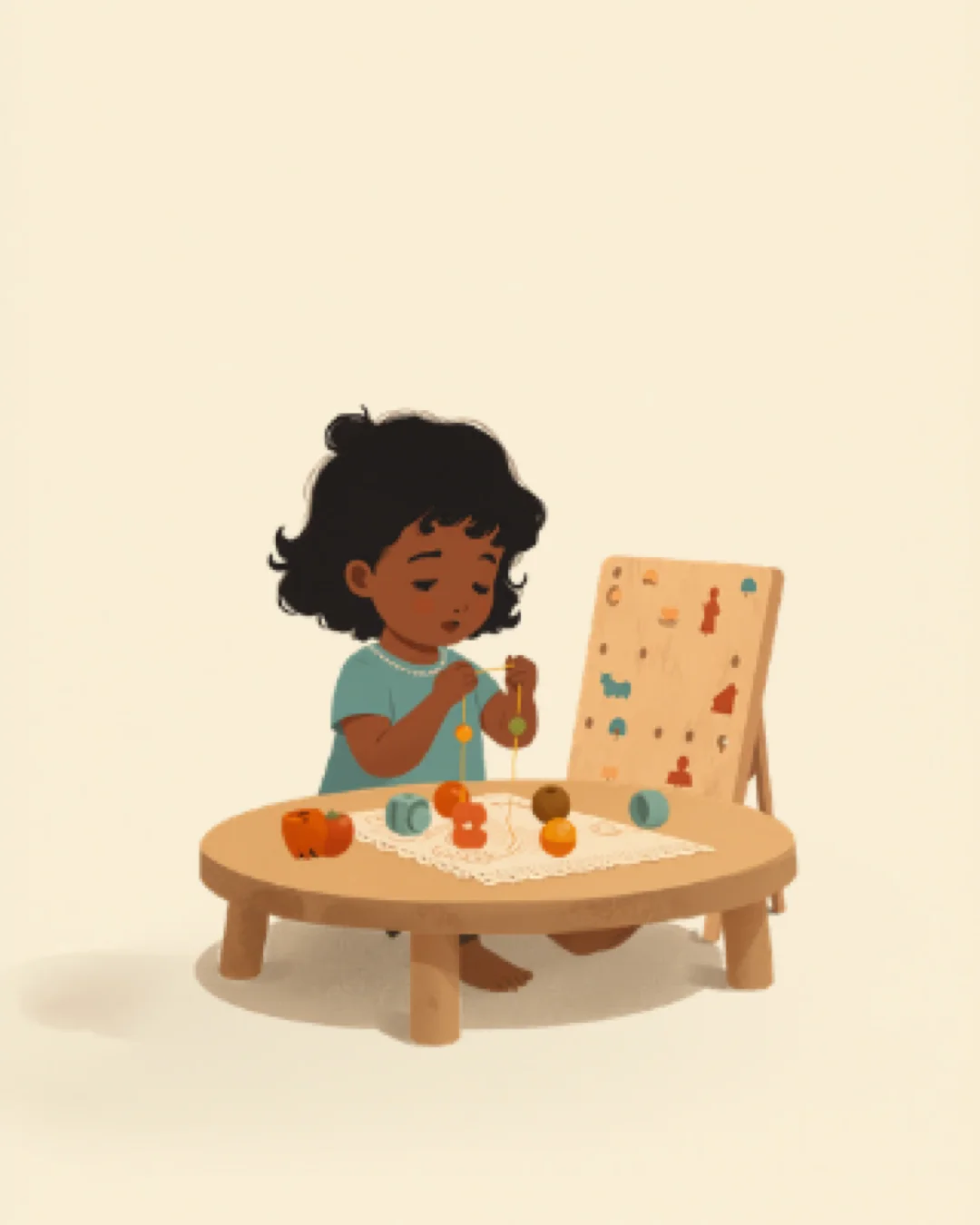
Toddler at a table with a completed puzzle and neatly sorted blocks in a bright aha moment

What success looks like

Intense focus, even briefly. Watch for the small ‘aha’ moment when they figure out how something works.

The transition from playing at home to getting ready to leave is one of the most common flashpoints in a toddler's day. This activity replaces nagging with a predictable, singable five-step countdown that your child can memorise and follow independently. Each step gets a number, a simple action, and a celebratory moment at the end. The predictability reduces anxiety about what comes next, while the counting and sequencing build early numeracy and executive function. Once the routine is established, many children begin initiating it themselves.

Why it helps

The EYFS framework identifies early mathematical experiences — including counting, pattern and spatial reasoning — as building blocks for later numeracy skills. Predictable routines reduce toddler anxiety about transitions because the child knows exactly what comes next. The countdown structure also practises sequential memory and early numeracy — counting backwards is a more complex cognitive task than counting forwards. Over time, the internalised routine builds executive function skills, particularly planning and task initiation, which research shows are among the strongest predictors of success in early education.

Variations

  • Add a rocket launch theme: 'Five, four, three, two, one — BLAST OFF!' and open the front door dramatically.
  • Use a visual countdown chart on the wall by the door with pictures for each step that your child can point to.
  • For younger toddlers, simplify to three steps: shoes, coat, go — and add more steps as they grow.

Safety tips

  • Ensure shoes fit well and have non-slip soles — rushing through a countdown in ill-fitting shoes increases trip risks.
  • Practise the countdown calmly at first; if your child becomes stressed, slow down and use fewer steps.
  • Never force the routine if your child is genuinely distressed — offer a cuddle first and try again.

Get weekly activity ideas for your toddler

One email a week with practical toddler activities, behaviour tips, and developmental insights. No spam, unsubscribe any time.