Stomp through crunchy autumn leaves, then gather and sort them by colour, size, or shape — a high-energy seasonal adventure.
Activity details
18m–4y20 minshighoutdoorNo prep
Instructions
Tiny Steps
Get ready
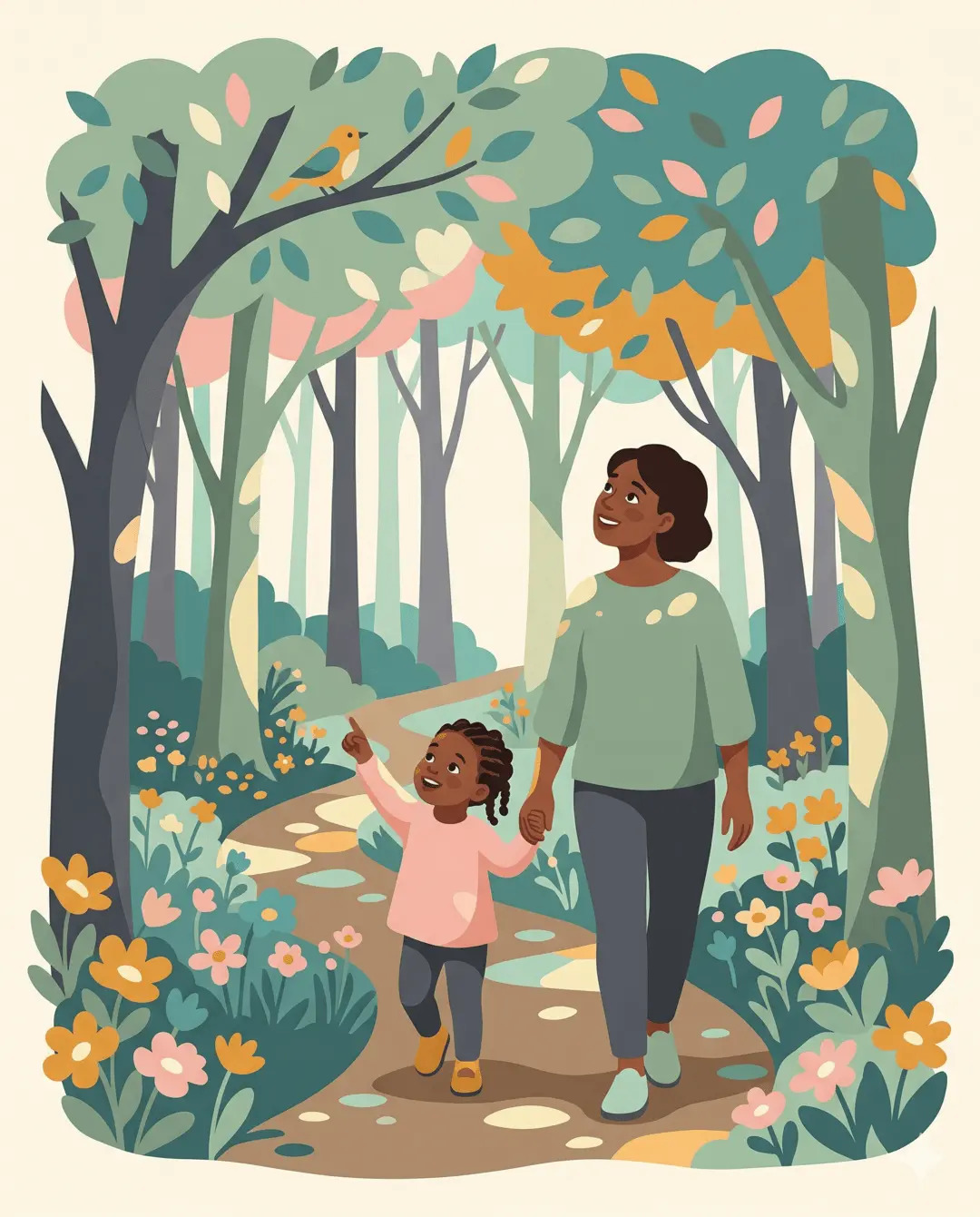
Head to a park, garden, or tree-lined street in October or November when fallen leaves are plentiful and crunchy.
Find a pile of dry leaves and demonstrate a big stomp: 'Listen to that CRUNCH! Your turn — stomp as hard as you can!'
1/4
Head to a park, garden, or tree-lined street in October or November when fallen leaves are plentiful and crunchy.
Find a pile of dry leaves and demonstrate a big stomp: 'Listen to that CRUNCH! Your turn — stomp as hard as you can!'
Kick through the leaves together, shuffle your feet, and throw armfuls into the air: 'It's a leaf storm!'
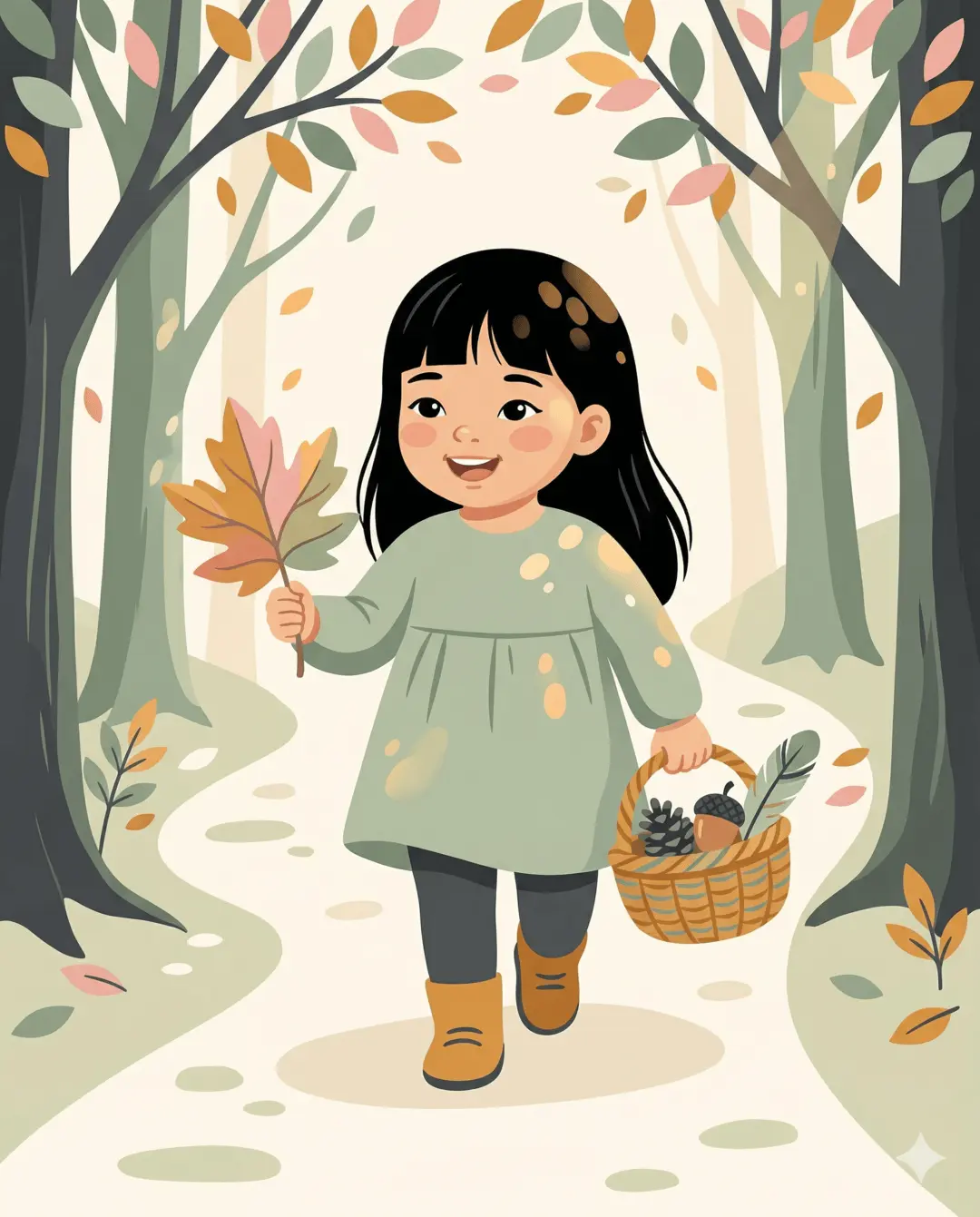
After the energy burst, shift gears: 'Now let's be leaf detectives. Can you find me the biggest leaf you can see?'
Gather a collection and lay them out on a bench or the ground. Sort by colour: 'All the red ones here, all the yellow ones there.'
Sort again by size: 'This one is enormous! This one is tiny — the tiniest leaf of all.'
Feel the textures together: 'This one is smooth. This one is crinkly and dry. Scrunch it — what does it sound like?'
Choose one favourite leaf each to take home and press in a book: 'This is our autumn treasure.'
Parent tip
Start before you overthink it. No-prep activities work best when you begin while the moment is still recoverable.
What success looks like
Curiosity in action — pointing, collecting, asking ‘what’s that?’ A child engaged with nature is learning without knowing it.
Autumn leaf piles are irresistible to toddlers, and this activity leans into that instinct with full permission to stomp, kick, throw, and crunch. After the high-energy phase, the pace shifts to gathering and sorting — big leaves and little leaves, red ones and yellow ones, smooth and crinkly. This energy arc from wild to calm mirrors the natural regulation cycle that toddlers need to practise, and the seasonal materials provide a rich sensory experience with sounds, textures, and colours that only exist for a few weeks each year.
Why it helps
The EYFS framework places sorting, matching and categorising at the heart of early mathematical thinking, building the foundations for number sense and logical reasoning. The stomp-then-sort structure mirrors the co-regulation cycle that toddlers need to practise — moving from high arousal to calm focus. This builds the ability to self-regulate energy levels, which is a critical skill for managing behaviour in everyday situations. The sorting phase exercises cognitive classification skills, and the seasonal framing introduces concepts of change and time passing that build early scientific understanding of the natural world.
Variations
Create a leaf crown by taping leaves to a strip of card — a quick seasonal craft that toddlers wear with pride.
Do leaf rubbings by placing leaves under paper and rubbing a crayon over the top to reveal the vein patterns.
Collect leaves in a bag and tip them out at home for an indoor sorting and counting activity on a rainy day.
Safety tips
Check leaf piles for hidden hazards — sticks, dog waste, broken glass, or conkers that could be a slip hazard.
Supervise closely if your child still mouths objects, as some leaves and berries are toxic — oak, yew, and laburnum are common in UK parks.
Wash hands thoroughly after play, especially before eating.
Try one of these next
A few connected ideas chosen by theme, energy, set-up, and age fit.