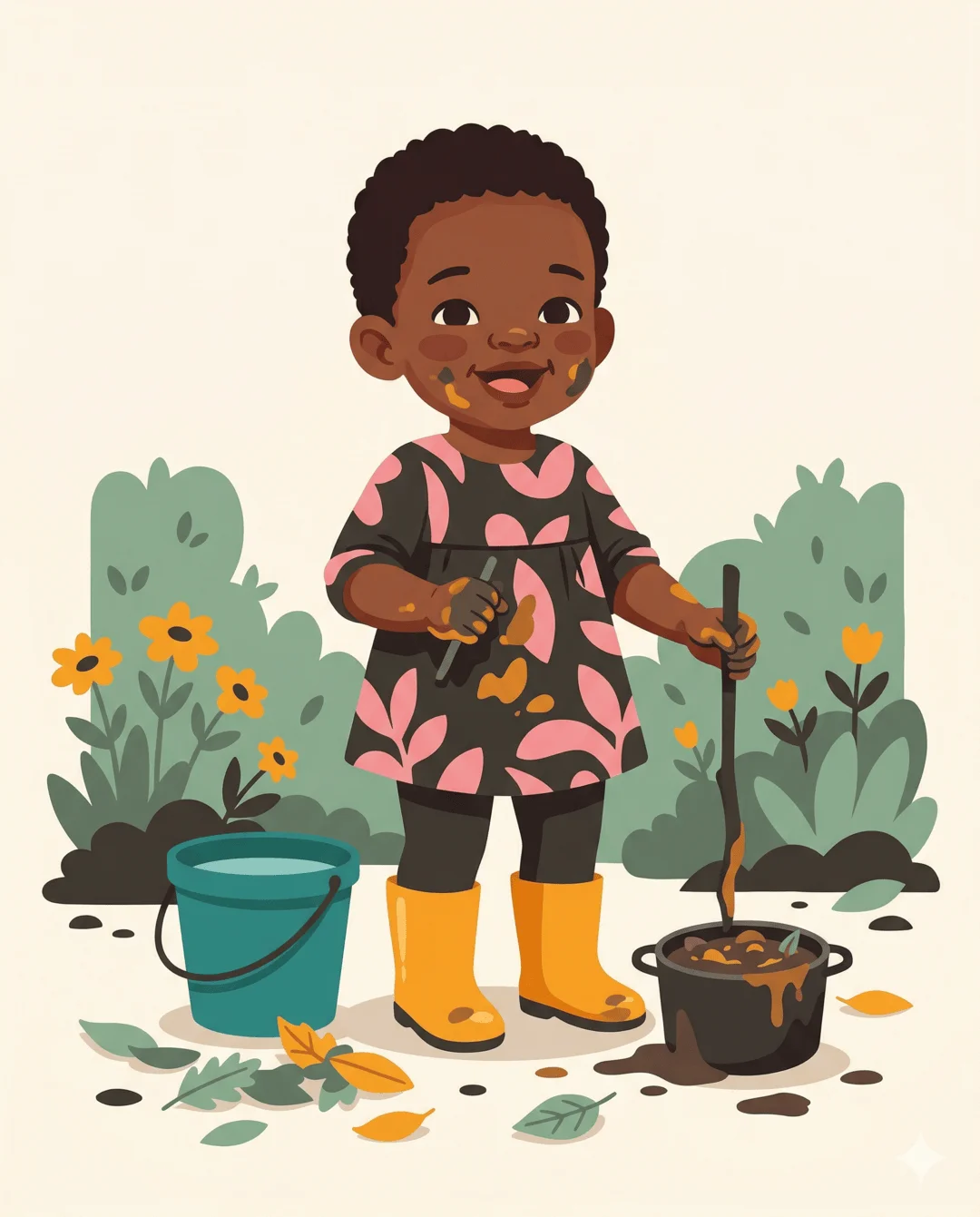
Choose a patch of garden soil or fill a large container with compost
While your toddler is not watching, bury 5-8 small toys just below the surface
1/4
Choose a patch of garden soil or fill a large container with compost
While your toddler is not watching, bury 5-8 small toys just below the surface
Give them a garden trowel, spoon, or their bare hands and say 'There is treasure buried here!'
Let them dig freely — resist the urge to direct where they search
Celebrate each discovery: 'You found the blue dinosaur! What else is hiding?'
Count the treasures together as they emerge
Ask: 'How many more do you think are still buried?'
Let your toddler bury the toys again for you to find — role reversal is always a hit
Parent tip
Set out bucket and garden trowel before inviting your toddler in so the first minute feels smooth.
What success looks like
Curiosity in action — pointing, collecting, asking ‘what’s that?’ A child engaged with nature is learning without knowing it.
Bury a handful of small toys, shells, or interesting objects in a patch of soil while your toddler is not looking, then hand them a trowel and let the excavation begin. Digging in real earth is deeply satisfying sensory work, and the anticipation of discovering hidden treasure keeps toddlers engaged far longer than most activities.
Why it helps
The DfE's EYFS guidance states that mixing, squeezing, pouring and spreading activities help develop fine motor and hand-eye coordination skills. Digging and scooping provide intense proprioceptive input through the hands and arms, which is calming and organising for the nervous system. The unpredictable moment of discovery — 'I found one!' — triggers a dopamine response that reinforces persistence, teaching toddlers that sustained effort leads to rewarding outcomes.
Variations
Bury ice cubes with small toys frozen inside for a melting treasure hunt.
Use a spray bottle to dampen the soil as they dig, making the earth easier to work.
Bury magnetic letters and have older toddlers spell their name with what they find.
Safety tips
Choose a digging area free from sharp objects, glass, or animal waste.
Ensure buried toys are too large to be a choking hazard for younger toddlers.
Wash hands and scrub under fingernails thoroughly after digging in soil.
Try one of these next
A few connected ideas chosen by theme, energy, set-up, and age fit.