Parent tip
Start before you overthink it. No-prep activities work best when you begin while the moment is still recoverable.
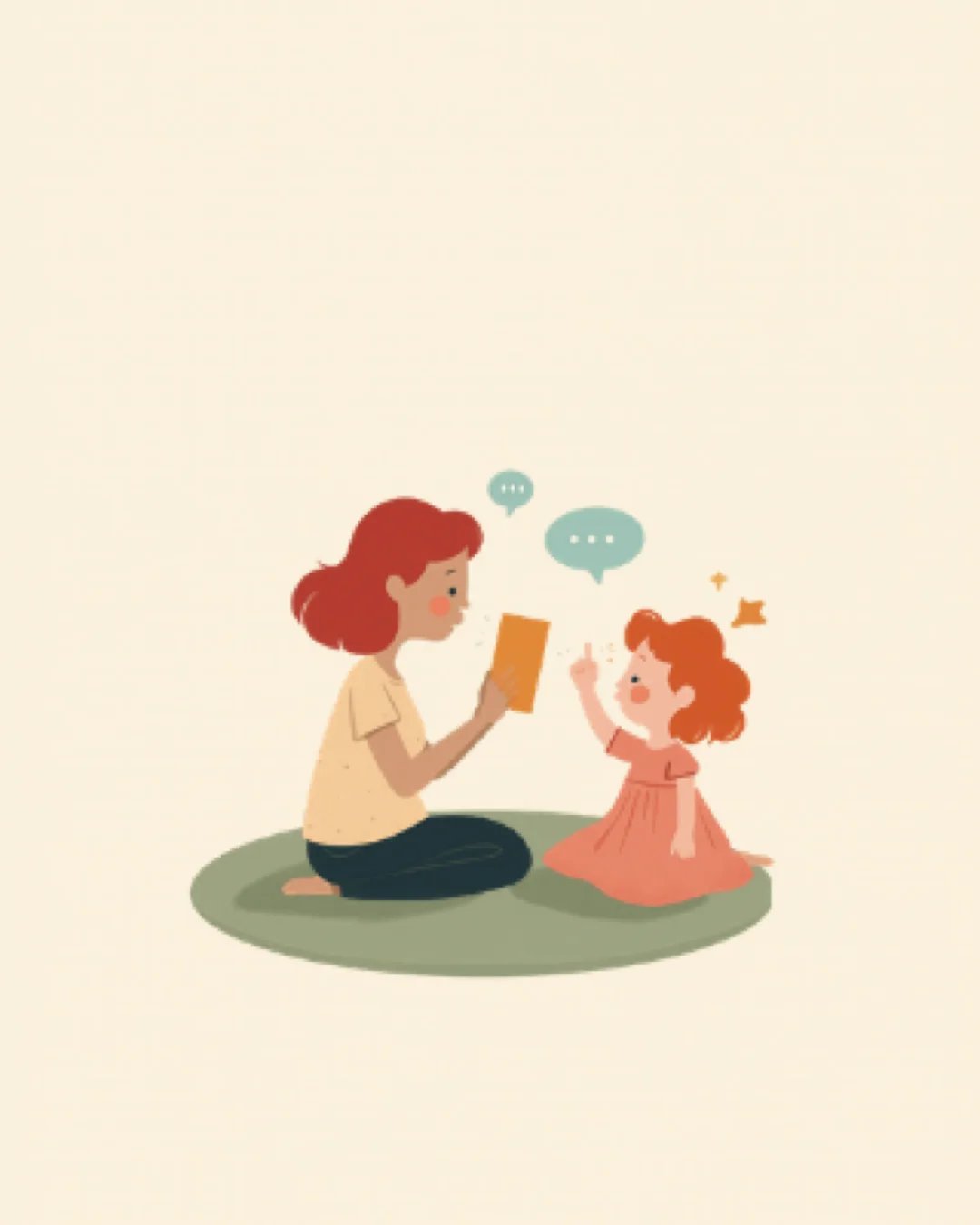
Practise waving at things that disappear — ball rolls away, 'bye-bye ball!' — connecting gesture to words.
Tiny Steps
Start before you overthink it. No-prep activities work best when you begin while the moment is still recoverable.

Back-and-forth between you — words, gestures, shared pretend. Connection is the real outcome here.
Roll a ball away from baby and wave at it: 'Bye-bye ball!' Put a toy behind your back: 'Bye-bye teddy!' Close a cupboard door: 'Bye-bye cups!' Wave every time something disappears. 'Bye-bye' is one of the most universal first gestures AND first words. Pairing the wave with the word repeatedly helps baby connect the gesture to language.
Waving is one of the earliest intentional communicative gestures. Pairing the gesture with the word 'bye-bye' in repeated, predictable contexts helps baby understand that words and gestures work together. When baby eventually waves independently, they're demonstrating they understand the concept of communication. Speech and Language UK identify gesture as one of the earliest forms of intentional communication in babies.
One email a week with practical toddler activities, behaviour tips, and developmental insights. No spam, unsubscribe any time.