TinyStepper

Babble Echo Game

At a glance: Copy every sound your baby makes and add a word — the simplest way to teach turn-taking and early speech. A 5-minute, low-energy indoor activity for ages 12m18m. No prep needed.

Built by a parent of toddlersBest for 12m-18m

Field-tested ideas shaped by direct parenting experience and advice from reputable sources, including NHS Best Start in Life and NSPCC child development research.

12m18m5 minslow energyindoornone messNo prep

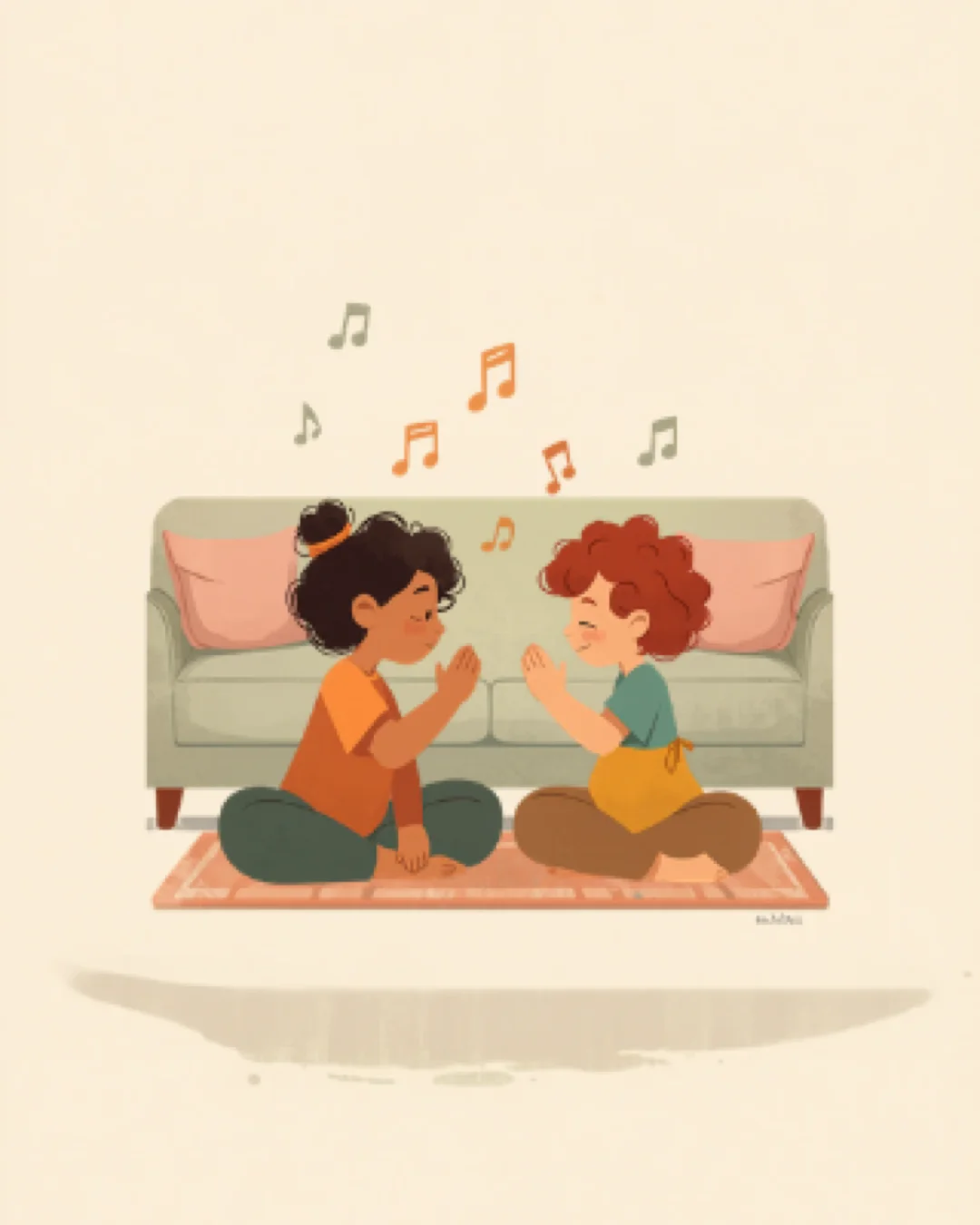
Sit face-to-face with your baby and wait for them to make a sound. When they do — 'ba', 'ga', 'da' — copy it back immediately with a smile. Then add a real word: 'ba ba — ball!' This teaches your baby that sounds have meaning, and that communication is a back-and-forth exchange. Speech and Language UK recommend copying sounds as one of the most effective ways to support early communication.

Best for this moment

for calmer, lower-pressure moments, especially when you need an indoor option.

Parent tip

Start before you overthink it. No-prep activities work best when you begin while the moment is still recoverable.
What success looks like

A good outcome is a few minutes of engaged play, some back-and-forth with you, and a small sign of progress in language development.

More help for this situation

Instructions

Get ready
  • Sit face-to-face with your baby at their eye level
  • Wait quietly and watch — let them make the first sound
  1. Sit face-to-face with your baby at their eye level
  2. Wait quietly and watch — let them make the first sound
  3. When they say something ('ga', 'ba', 'da'), copy it back immediately
  4. Smile and make eye contact as you echo their sound
  5. Add one real word: 'ga ga — car!' or 'ba ba — ball!'
  6. Wait again — give them 5 seconds to respond
  7. Celebrate any response — a sound, a smile, a reach

Why it helps

Copying sounds teaches turn-taking — the fundamental structure of conversation. When you echo and extend ('ba' → 'ba — ball!'), you show that sounds represent real things. Speech and Language UK highlight this as a core technique for supporting babies' early communication skills.
Variations

  • Try copying facial expressions too — open mouth wide, stick out tongue, scrunch nose.
  • Echo their sounds at different volumes — whisper it back, say it in a silly voice.
  • If they make a sound while holding a toy, name the toy: 'da da — duck!'

Safety tips

  • Keep your face at baby's level for eye contact.
  • Let baby lead — don't overwhelm with too many words.
  • Stop if baby looks away or seems overstimulated.

When to pause and seek extra support

Stop if your child becomes distressed, unsafe, or consistently frustrated by the activity. If play, behaviour, or development worries keep showing up across settings, check in with a qualified professional.

Get weekly activity ideas for your toddler

One email a week with practical toddler activities, behaviour tips, and developmental insights. No spam, unsubscribe any time.