TinyStepper

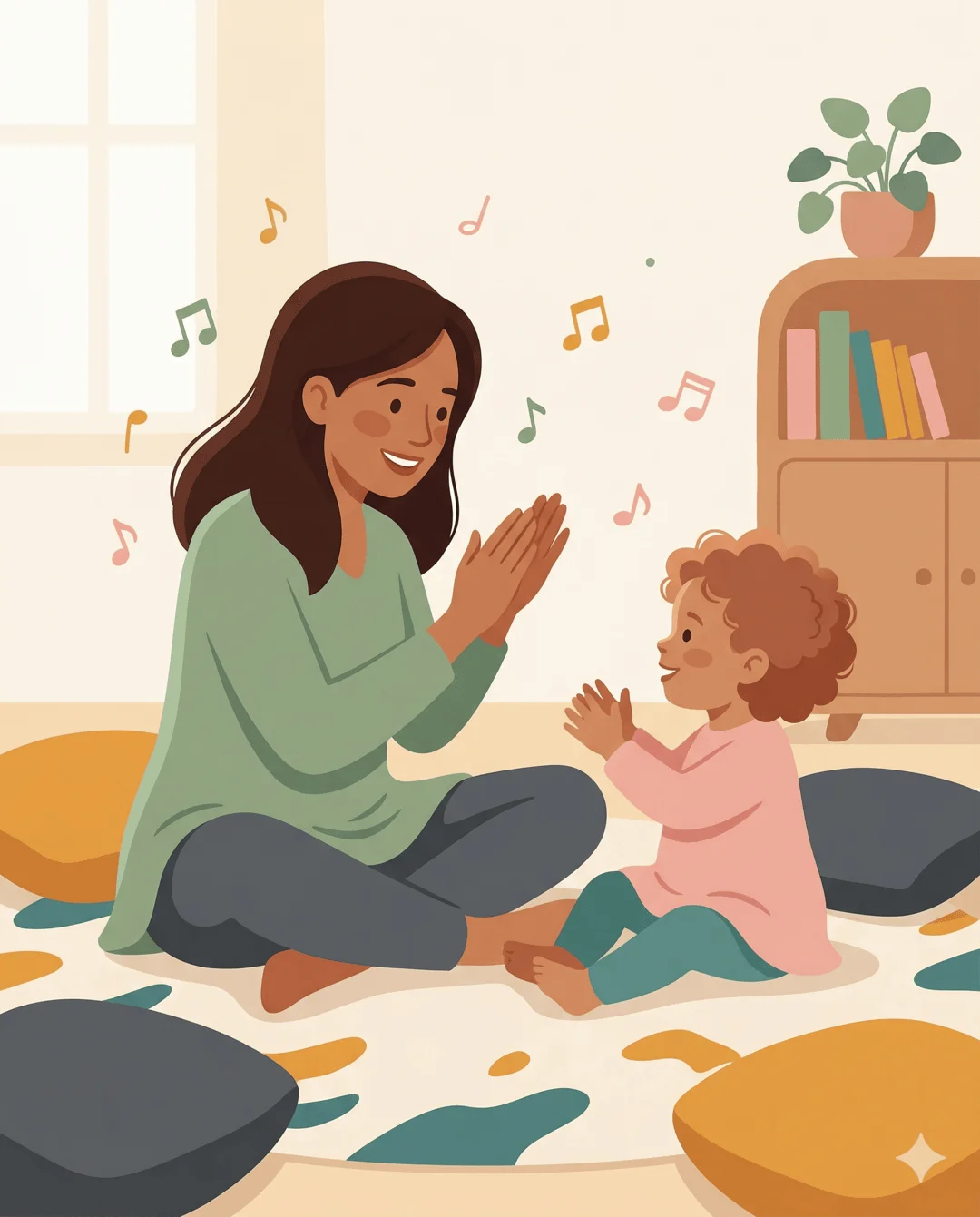
Copy Cat Clapping

At a glance: Clap a simple pattern and wait for baby to copy — building imitation, rhythm, and turn-taking. A 5-minute, low-energy indoor activity for ages 12m20m. No prep needed.

Built by a parent of toddlersBest for 12m-20m

Field-tested ideas shaped by direct parenting experience and advice from reputable sources, including NHS Best Start in Life and NSPCC child development research.

12m20m5 minslow energyindoornone messNo prep

Sit facing your baby and clap twice. Wait. Smile. See if they clap back. If they do — any version of it — celebrate wildly. Then clap three times. Wait again. This is turn-taking at its simplest: I do something, you do something. Imitation is how babies learn everything, and clapping is one of the easiest actions to copy.

Best for this moment

for calmer, lower-pressure moments, especially when you need an indoor option.

Parent tip

Start before you overthink it. No-prep activities work best when you begin while the moment is still recoverable.
What success looks like

A good outcome is a few minutes of engaged play, some back-and-forth with you, and a small sign of progress in gross motor.

More help for this situation

Instructions

Get ready
  • Sit face-to-face with your baby
  • Get their attention with a smile
  1. Sit face-to-face with your baby
  2. Get their attention with a smile
  3. Clap your hands twice slowly: CLAP... CLAP
  4. Wait 5 seconds — look expectant, smile
  5. If baby claps — celebrate! 'You did it! Clap clap!'
  6. If not, gently take their hands and help them clap together
  7. Try again: CLAP CLAP CLAP — wait — see what happens

Why it helps

Imitation is the foundation of all learning. When your baby copies your clap, they're practising motor planning AND turn-taking — the same back-and-forth structure that conversations use. Speech and Language UK recommend copying your baby's actions as a way to build early communication.

Variations

  • Try stomping feet instead of clapping.
  • Add 'pat-a-cake' with hand-to-hand contact.
  • Clap high, clap low, clap behind your back — vary the position.

Safety tips

  • Keep the pace slow — baby needs time to process and respond.
  • Celebrate ALL attempts, even if the clap is more of a hand wave.
  • Stop if baby seems frustrated or disinterested.

When to pause and seek extra support

Stop if your child becomes distressed, unsafe, or consistently frustrated by the activity. If play, behaviour, or development worries keep showing up across settings, check in with a qualified professional.

Get weekly activity ideas for your toddler

One email a week with practical toddler activities, behaviour tips, and developmental insights. No spam, unsubscribe any time.