Fill a basket with treats and toys, then practise the back-and-forth of giving and receiving — making sharing feel rewarding.
Activity details
12m–3y10 minslowindoorBallsBasket or BinBuilding BlocksToy Cars
Instructions
Tiny Steps
Get ready
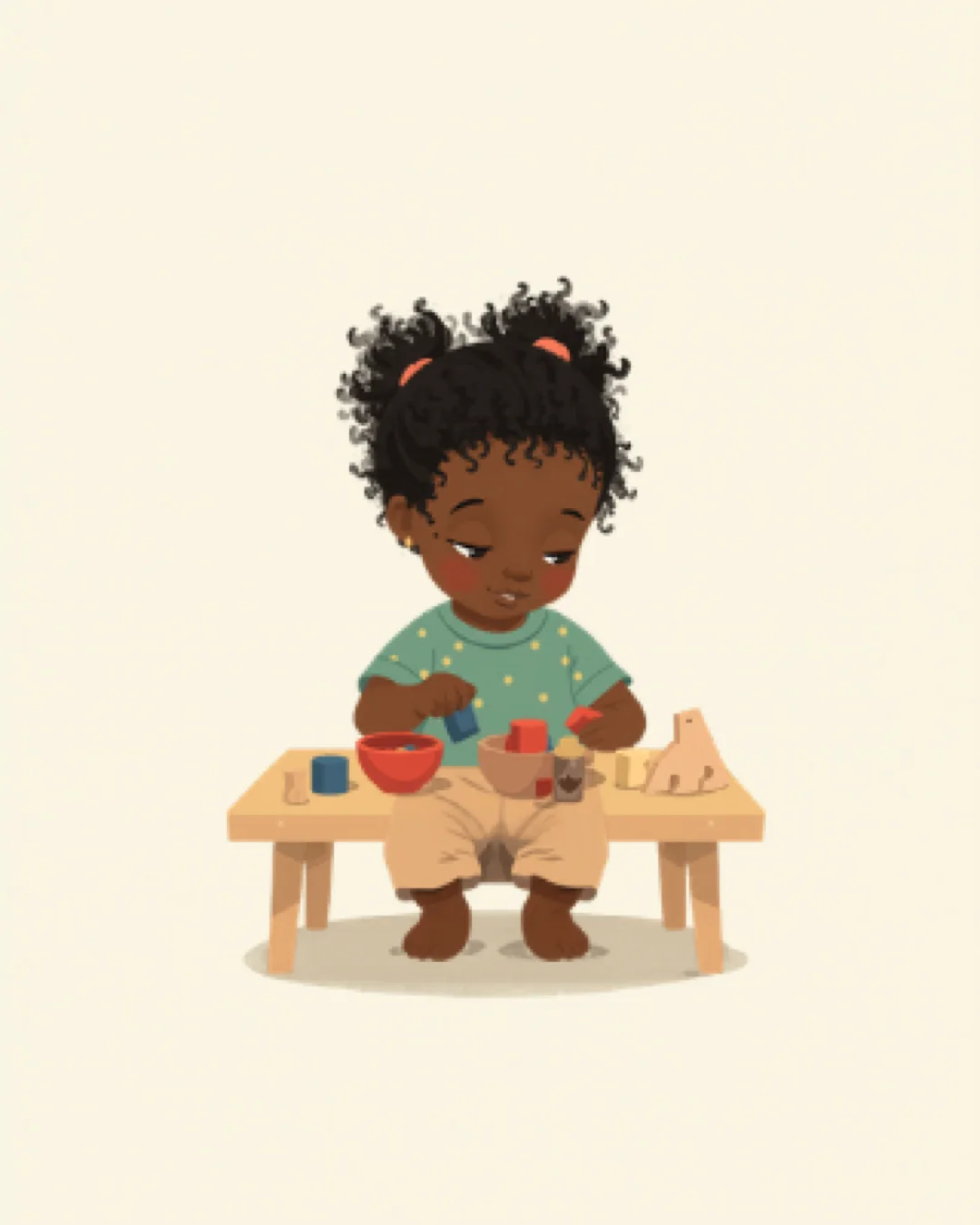
Fill a basket or bin with six to eight small, appealing items — a ball, a toy car, a sticker sheet, some building blocks, a few cotton balls.
Sit opposite your child with the basket between you. Say: 'This is our sharing basket! Everything in here is for both of us.'
1/4
Fill a basket or bin with six to eight small, appealing items — a ball, a toy car, a sticker sheet, some building blocks, a few cotton balls.
Sit opposite your child with the basket between you. Say: 'This is our sharing basket! Everything in here is for both of us.'
Pick up one item and offer it to your child with both hands: 'I'm sharing the ball with you! Here you go.'
Let them hold it and explore, then gently ask: 'Can you share something with me from the basket?'
If they hand you something, react with exaggerated delight: 'Oh, you shared with me! That makes me so happy! Thank you!'
If they hesitate, that is fine — model again by sharing a second item, narrating your feelings: 'I love sharing because it makes you smile.'
Once you each have a few items, swap them back: 'Shall we swap? You give me yours, I give you mine. Ready? Swap!'
End by putting everything back in the basket together and saying: 'We are such good sharers. Sharing means everyone gets a turn.'
Parent tip
Set out balls and basket or bin before inviting your toddler in so the first minute feels smooth.
What success looks like
Intense focus, even briefly. Watch for the small ‘aha’ moment when they figure out how something works.
Sharing is one of the hardest social skills for toddlers because it requires understanding another person's desire, inhibiting the impulse to keep everything, and trusting that the item will come back. This activity makes sharing concrete and predictable by using a basket of small items that you pass back and forth. Each exchange is narrated ('I'm giving you the ball — now you give me one!'), which builds the language of sharing and helps your child see it as a reciprocal game rather than a loss. The basket provides a visual boundary — everything in it is 'for sharing' — which feels safer than being asked to give up a prized possession.
Why it helps
The NHS Best Start in Life programme acknowledges that separation anxiety is a normal developmental stage, and recommends consistent, reassuring routines to help toddlers build confidence that their carer will return. True sharing requires theory of mind — the understanding that other people have desires and feelings separate from your own. This capacity is still emerging between 12 and 36 months, which is why forced sharing often backfires. By making sharing a game with immediate positive reinforcement (your delighted reaction), you activate the brain's reward circuitry and associate generosity with pleasure. The predictable back-and-forth structure also builds trust that given items will return, reducing the anxiety that drives possessiveness.
Variations
Play with a sibling or friend, passing items around a small circle — this introduces group sharing dynamics.
Use snack items like raisins or crackers so the sharing has a tangible, edible reward.
For older toddlers, introduce a timer: 'You hold the car for ten seconds, then it's my turn' — this adds the concept of timed turns.
Safety tips
Ensure all items in the basket are age-appropriate — no small parts that could be a choking hazard for younger toddlers.
Never force your child to share — if they refuse, try again later and keep the mood light.
If playing with siblings, have enough items so that neither child feels there is 'not enough' — scarcity triggers conflict.
Try one of these next
A few connected ideas chosen by theme, energy, set-up, and age fit.