TinyStepper

Busy Board Discovery

At a glance: Explore latches, zippers, switches, and buttons on a busy board. A 15-minute, low-energy indoor activity for ages 12m2y.

Built by a parent of toddlersBest for 12m-2y

Field-tested ideas shaped by direct parenting experience and advice from reputable sources, including NHS Best Start in Life and NSPCC child development research.

12m2y15 minslow energyindoornone mess

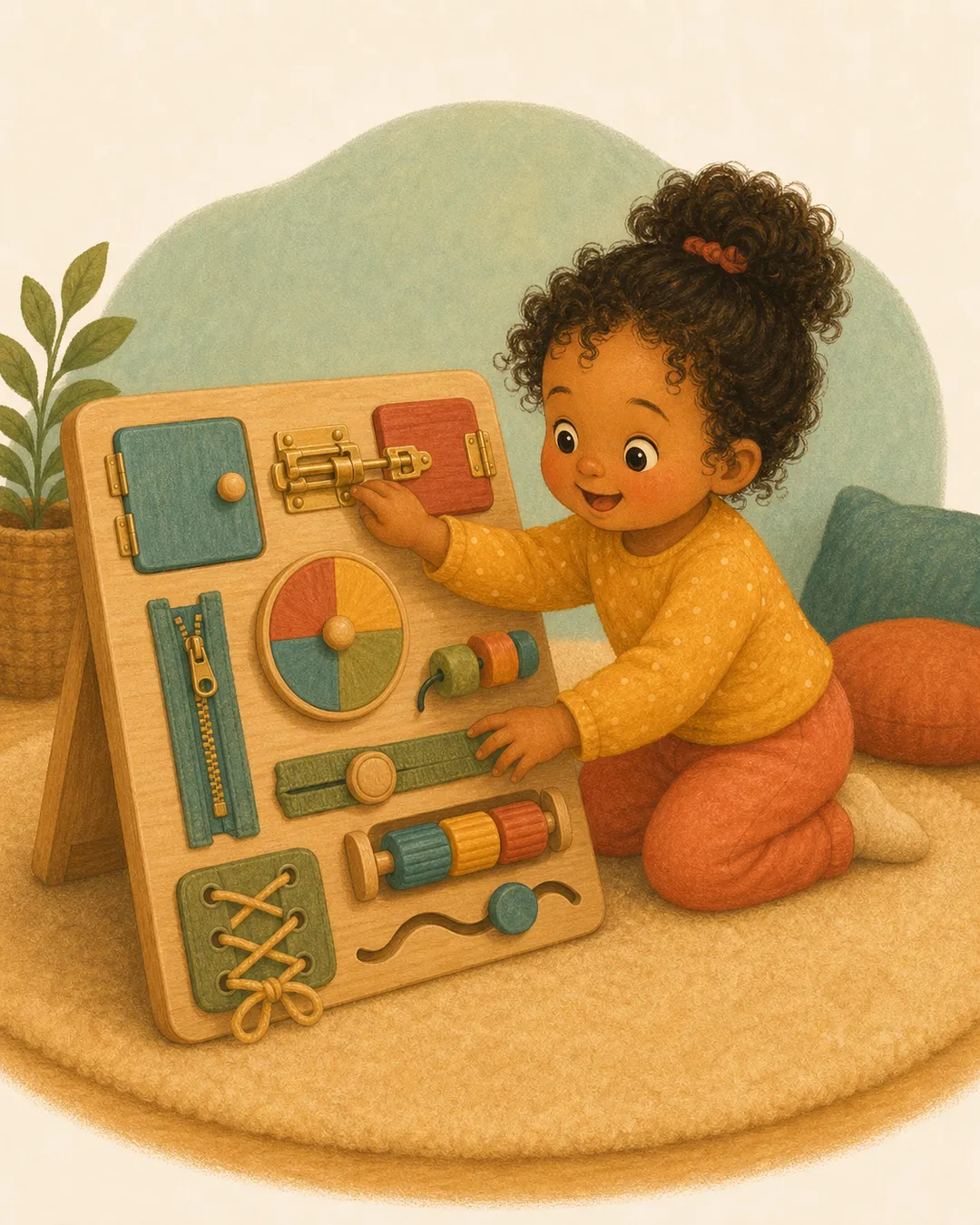
Busy boards concentrate many fine motor challenges into one activity, keeping young toddlers engaged through the satisfaction of figuring out each mechanism. Flipping switches, turning locks, and pulling zippers strengthens hand muscles needed for dressing and eating with utensils. The cause-and-effect nature builds cognitive skills and rewards persistence.

Best for this moment

for calmer, lower-pressure moments, especially when you need an indoor option.

Parent tip

Set out the materials before inviting your toddler in so the first minute feels smooth.

What success looks like

A good outcome is a few minutes of engaged play, some back-and-forth with you, and a small sign of progress in cognitive skills.

More help for this situation

Instructions

Get ready
  • Set up a busy board or gather household items with latches, zippers, and buttons
  • Place it on the floor or secure it at your child's height
  1. Set up a busy board or gather household items with latches, zippers, and buttons
  2. Place it on the floor or secure it at your child's height
  3. Sit nearby and let them explore each element freely
  4. Name the actions: 'You opened the latch! You zipped it up!'
  5. Demonstrate any tricky mechanisms slowly
  6. Resist the urge to do it for them — let them problem-solve
  7. Rotate items periodically to maintain novelty
  8. Celebrate their persistence when they figure something out

Why it helps

Flipping switches, turning locks, and pulling zippers strengthens the hand muscles needed for dressing and eating with utensils. The cause-and-effect nature of each mechanism builds cognitive skills and rewards persistence, keeping toddlers engaged for extended periods.

Variations

  • Create a DIY busy board by attaching latches, door chains, and light switches to a piece of wood.
  • Add a zip, button, and Velcro strip for dressing-skills practice.
  • Rotate the items on the board every few weeks to maintain interest.

Safety tips

  • Ensure all items are securely attached and cannot come loose.
  • Sand any rough wooden edges to prevent splinters.
  • Check regularly for wear and tear, especially on small parts.

When to pause and seek extra support

Stop if your child becomes distressed, unsafe, or consistently frustrated by the activity. If play, behaviour, or development worries keep showing up across settings, check in with a qualified professional.

Get weekly activity ideas for your toddler

One email a week with practical toddler activities, behaviour tips, and developmental insights. No spam, unsubscribe any time.