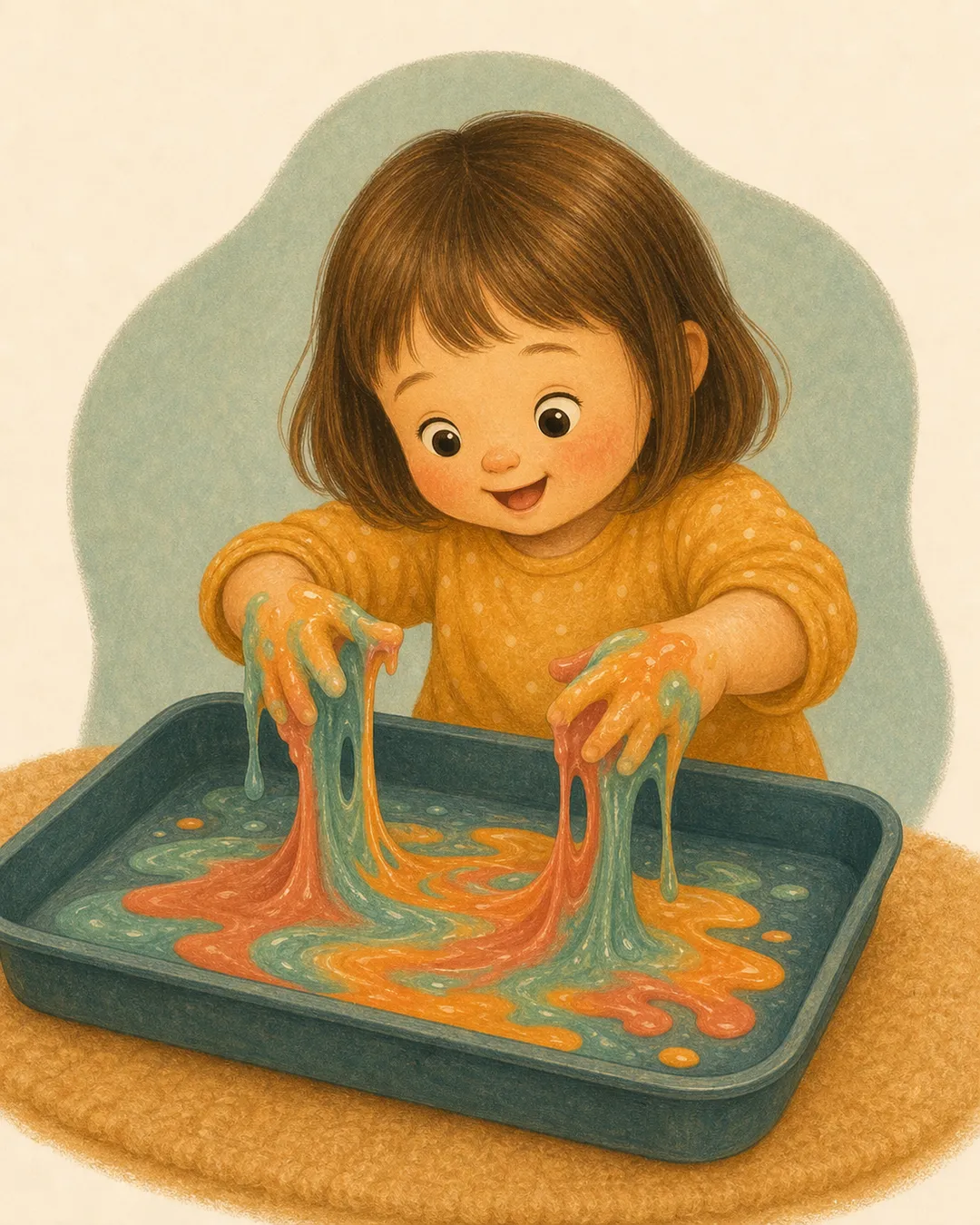
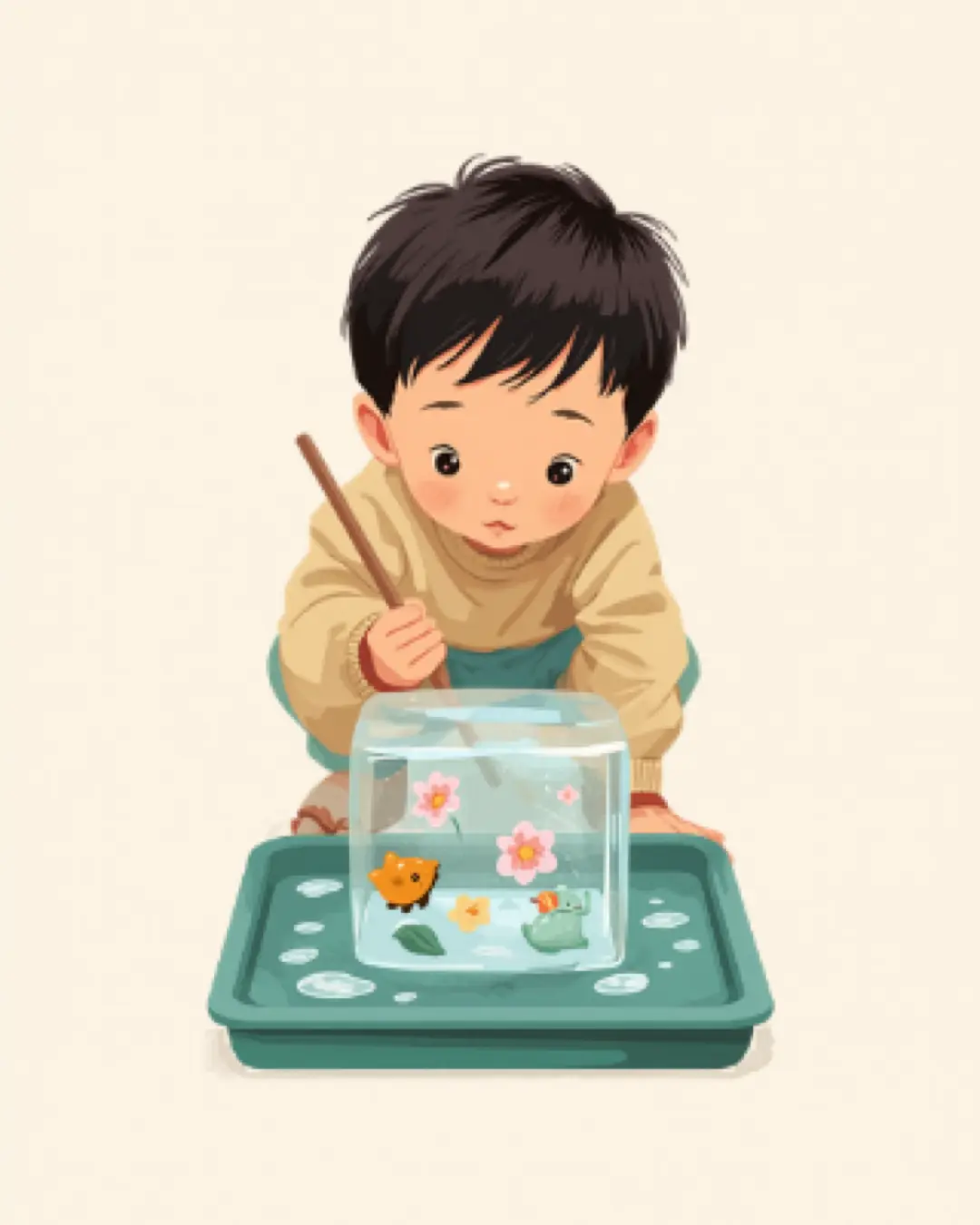
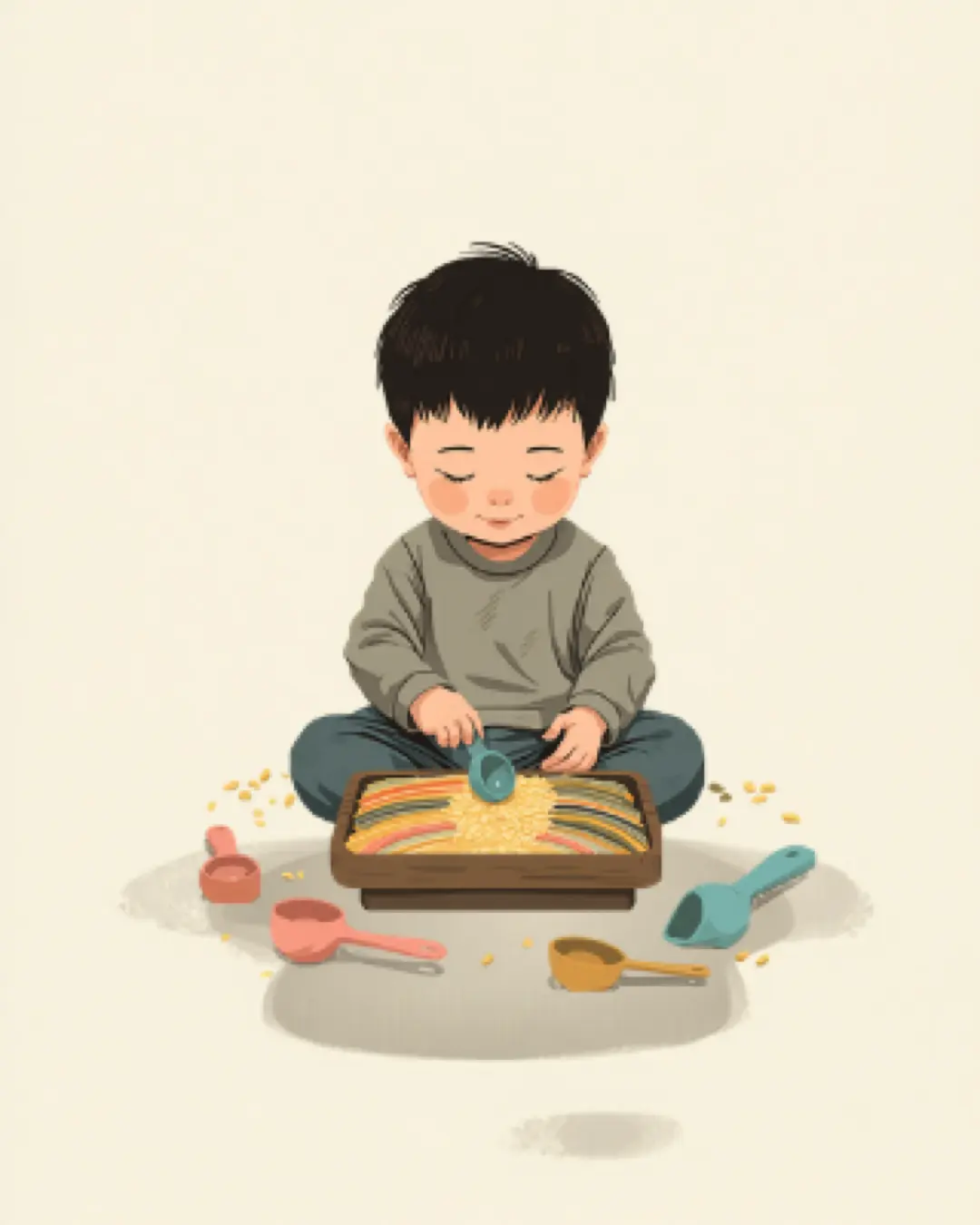
Explore different textures together while naming what you feel — rough, smooth, bumpy, squishy — building vocabulary through touch.
Activity details
12m–2y8 minslowbothFoilScarves or FabricSpongesWooden Spoons
Instructions
Tiny Steps
Get ready
Collect 5-6 objects with different textures: a wooden spoon (smooth, hard), a sponge (soft, squishy), foil (crinkly, cold), a flannel (fuzzy, warm), a pine cone or stone (rough, bumpy), a scarf (silky, light).
Sit together on the floor with the objects spread out.
1/4
Collect 5-6 objects with different textures: a wooden spoon (smooth, hard), a sponge (soft, squishy), foil (crinkly, cold), a flannel (fuzzy, warm), a pine cone or stone (rough, bumpy), a scarf (silky, light).
Sit together on the floor with the objects spread out.
Pick up the first object and model exploration: rub it on your cheek, your hand, your arm. Say: 'Ooh, this is rough! Feel the bumps!'
Hand it to your child and let them explore freely — mouth, squeeze, bang, whatever they choose.
Name the texture again as they handle it: 'Bumpy! It feels bumpy on your fingers!'
Move to the next object: 'Now this one — oh, this is soft! So soft!'
After exploring all objects, hold up two contrasting ones: 'Which one is soft? Can you find the soft one?'
Let them choose and celebrate: 'Yes! The scarf is soft! Clever you!'
Parent tip
Set out foil and scarves or fabric before inviting your toddler in so the first minute feels smooth.
What success looks like
Watch for focused exploration — fingers digging in, pouring back and forth, or sorting by feel. Even a few minutes of this builds concentration.
Gather a few household objects with contrasting textures — a wooden spoon, a sponge, a piece of foil, a soft scarf — and let your child explore each one while you narrate what they are feeling. The pairing of a tactile sensation with a descriptive word creates a multi-sensory memory trace that is far more powerful than hearing the word alone. This is vocabulary building through the body, not just the ears.
Why it helps
Multi-sensory vocabulary learning engages both the somatosensory cortex (touch processing) and the language centres simultaneously, creating dual-coded memories that are easier to retrieve. The EYFS Communication and Language framework identifies 'building vocabulary around events and experiences' as a key milestone for this age. By pairing adjectives with physical sensations, you give abstract words a concrete anchor that makes them stick.
Variations
Create a texture board by glueing different materials (fabric, sandpaper, bubble wrap, cotton wool) onto cardboard — a permanent touch-and-name resource.
Take it outdoors and find natural textures: tree bark (rough), grass (tickly), pebbles (smooth), mud (squishy).
Add a 'mystery bag' element — put one object in a bag and ask your child to feel it without looking: 'Is it rough or smooth?'
Safety tips
Check all objects for sharp edges, loose parts, or choking-sized pieces before offering them.
Supervise closely if using natural objects like pine cones or stones — young toddlers will mouth everything.
Avoid materials that shed fibres (raw wool, loose cotton) which could be inhaled or choked on.
Try one of these next
A few connected ideas chosen by theme, energy, set-up, and age fit.