Parent tip
Set out plastic cups and spoons (metal) before inviting your toddler in so the first minute feels smooth.

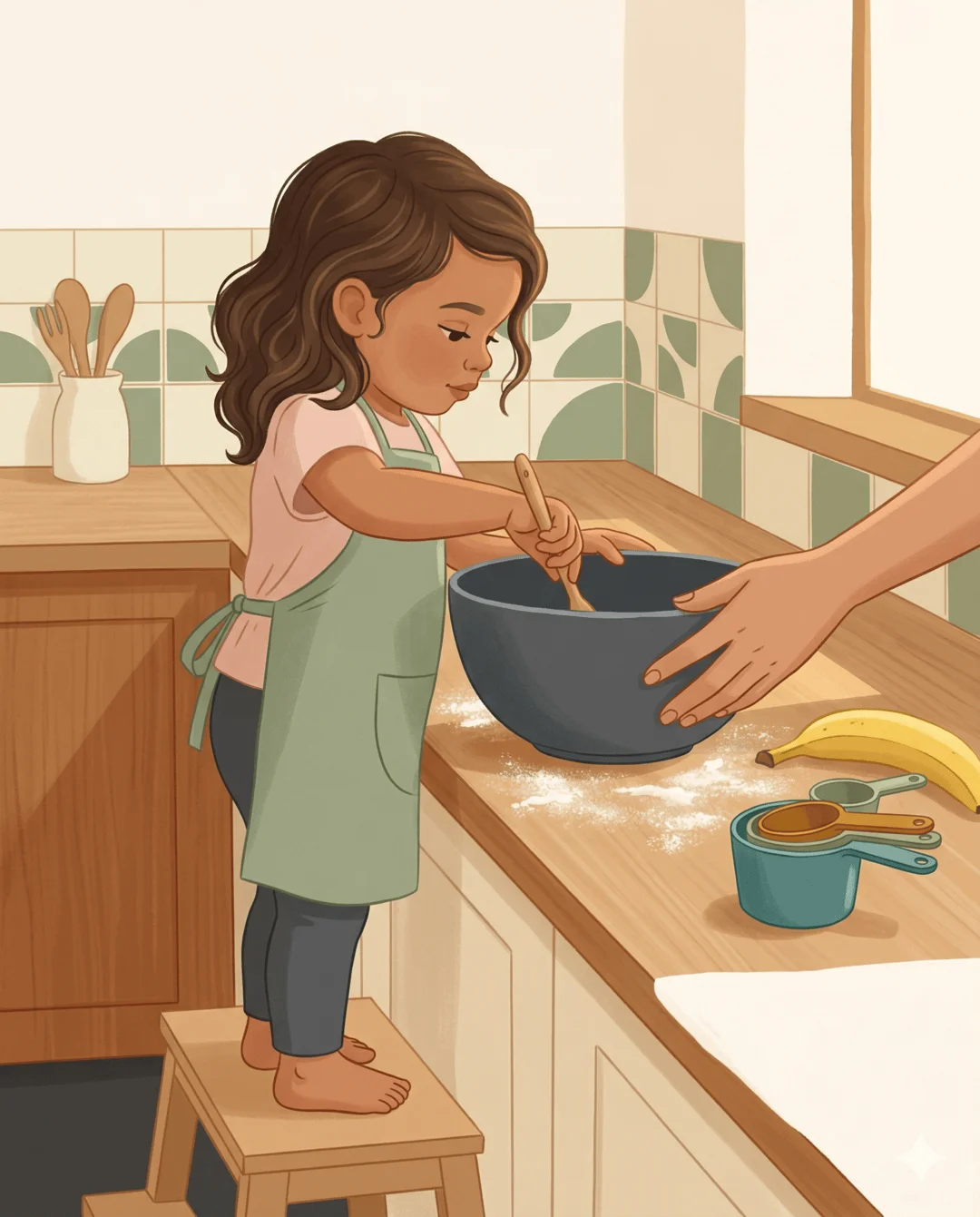
Give your clingy toddler a real kitchen job so closeness becomes contribution.
Tiny Steps
Set out plastic cups and spoons (metal) before inviting your toddler in so the first minute feels smooth.

Back-and-forth between you — words, gestures, shared pretend. Connection is the real outcome here.
Instead of cooking while your clingy toddler wraps around your legs, give them a real job. They stir, they pour measured ingredients, they wash vegetables in a bowl of water, they lay cutlery on placemats. Being a kitchen partner transforms clinging from passive need into active contribution. The child is close to you — which is what they wanted — but they are also doing something that matters, which builds the sense of capability that eventually replaces the need to cling.
The EYFS framework's Managing Self strand expects children to 'be confident to try new activities and show independence, resilience and perseverance in the face of challenge' and to 'manage their own basic hygiene and personal needs.' Giving a clingy toddler a real kitchen job channels the attachment need into contribution — the child is close to you, which is what they wanted, but they are also doing something that builds capability. The NHS identifies hunger and tiredness as tantrum triggers, and involving the child in meal preparation addresses the hunger while transforming passive waiting into active participation.
One email a week with practical toddler activities, behaviour tips, and developmental insights. No spam, unsubscribe any time.