Follow a simple picture recipe card together — reading each step to make a real snack, proving that reading has delicious real-world purpose.
Activity details
2y–4y15 minsmediumindoorConstruction PaperCrayons
Instructions
Tiny Steps
Get ready
Draw a simple recipe card with 4-5 steps. Use big, clear pictures with one word per step: BREAD, SPREAD, JAM, CUT, EAT.
Show your child the recipe card: 'This tells us how to make jam on toast! Let us read it together.'
1/4
Draw a simple recipe card with 4-5 steps. Use big, clear pictures with one word per step: BREAD, SPREAD, JAM, CUT, EAT.
Show your child the recipe card: 'This tells us how to make jam on toast! Let us read it together.'
Point to step one: 'What is this? Bread! So first we need bread.' Get the bread out together.
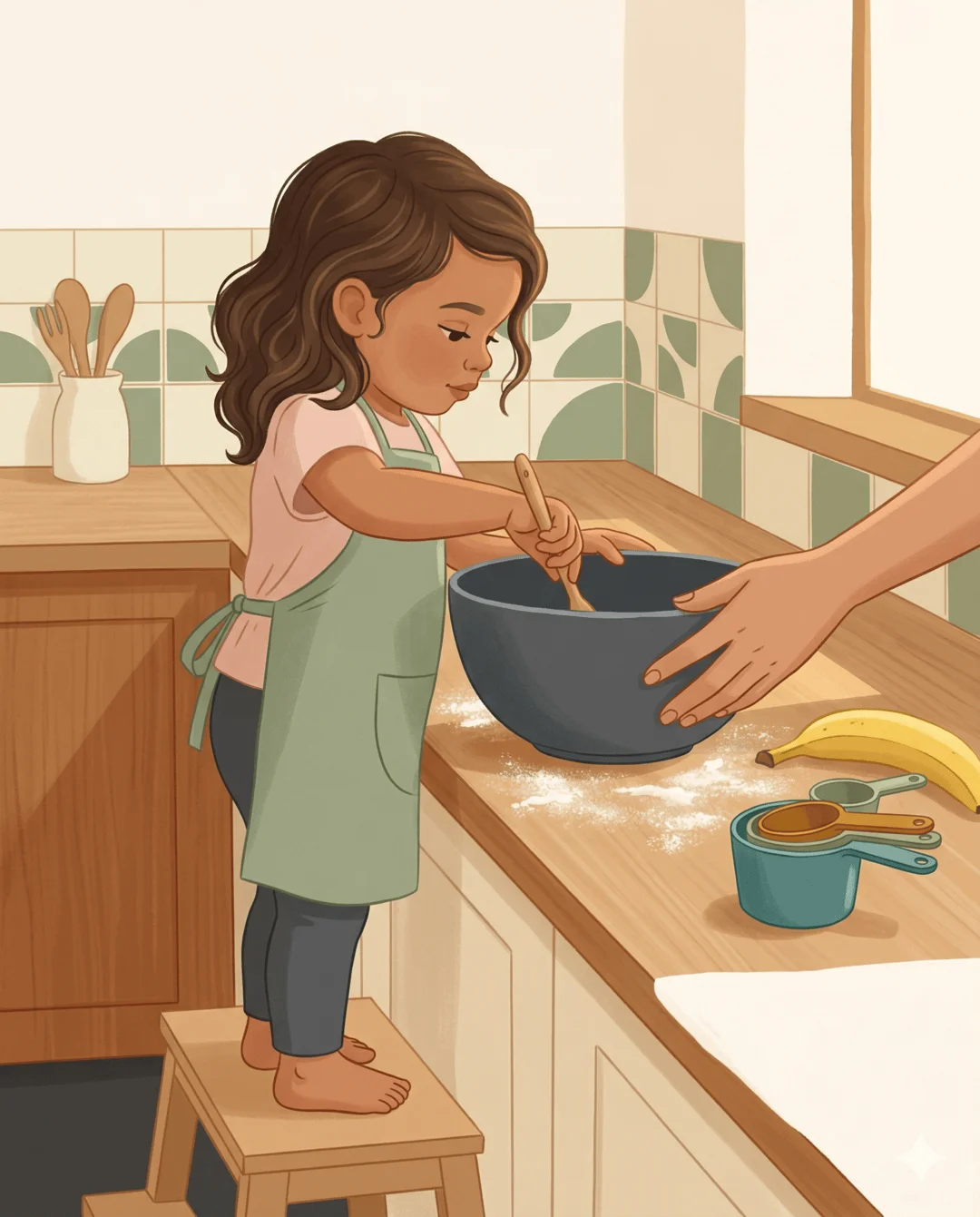
Point to step two: 'What does this say? Spread! We need to spread the butter.' Let them do as much as they safely can.
Continue through each step, always returning to the card: 'What does the recipe say next? Let us check!'
At each step, run your finger under the word as you say it — modelling left-to-right reading direction.
When the snack is ready: 'We read the recipe and made jam on toast! Reading helped us make real food!'
Eat the snack together. Pin the recipe card on the fridge for next time.
Parent tip
Set out construction paper and crayons before inviting your toddler in so the first minute feels smooth.
What success looks like
Back-and-forth between you — words, gestures, shared pretend. Connection is the real outcome here.
Draw or print a simple 4-5 step picture recipe (jam on toast, fruit salad, cheese on crackers) and let your child follow each step by reading the pictures. Point to step one: bread. Step two: spread. Step three: jam. The child sees that those marks and pictures on paper translate into real-world actions — the same conceptual leap they will need to make when learning to read. And they get a snack at the end, which is rather motivating.
Why it helps
The concept that printed marks carry instructions (informational text) is a key pre-reading milestone that the EYFS Literacy framework identifies as 'understanding that print carries meaning'. By following a recipe card, children experience reading as a functional, real-world skill — not an abstract classroom exercise. The left-to-right tracking of steps also models reading directionality, and the multi-step sequencing builds working memory alongside literacy.
Variations
Let your child draw their own recipe card for a snack they know how to make — even scribbled steps count as writing a recipe.
Make recipe cards for non-food activities too: 'How to wash your hands' (tap on, soap, rub, rinse, dry) — functional literacy.
Use real cookbooks with photos — point to each picture and let your child identify ingredients from the supermarket or fridge.
Safety tips
Handle all knives and hot surfaces yourself — your child should only touch safe ingredients and utensils.
Check for food allergies before choosing a recipe — nut-free and common-allergen-free options are safest for group settings.
Wash hands together before and after — narrate the handwashing steps as another recipe to read.
Try one of these next
A few connected ideas chosen by theme, energy, set-up, and age fit.