Parent tip
Start before you overthink it. No-prep activities work best when you begin while the moment is still recoverable.
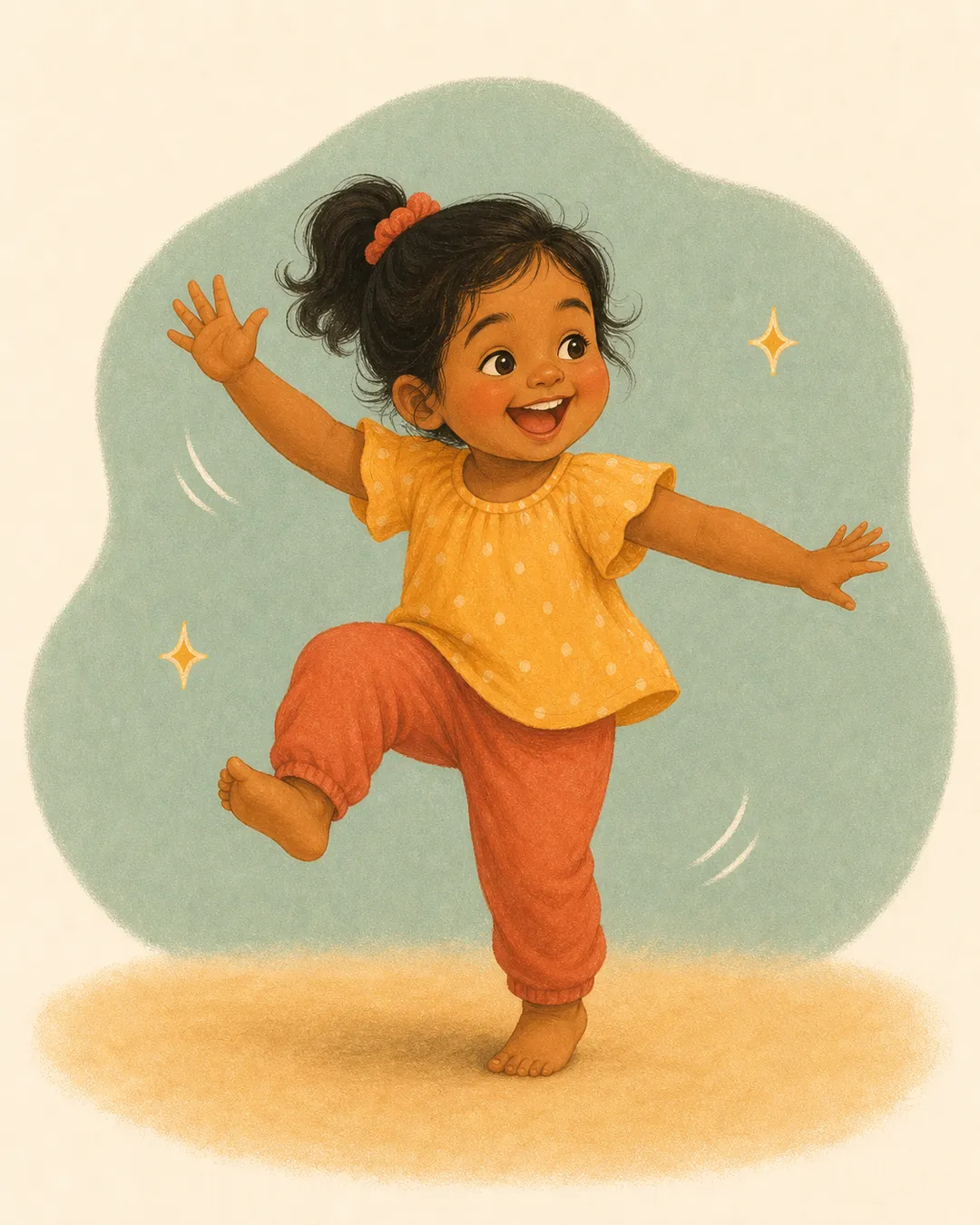
Siblings take turns being the leader with silly actions — the other copies. No competition, just laughter.
Tiny Steps
Start before you overthink it. No-prep activities work best when you begin while the moment is still recoverable.

Flushed cheeks, big smiles, and a calmer child afterwards. If they want to do it again, you’ve found a winner.
One sibling is the 'leader' and does a silly action — a funny walk, a weird face, an animal sound. The other sibling copies as closely as they can. Then they swap. There are no winners, no scoring, and no competition. The only goal is to make each other laugh. The turn-taking structure gives both children equal time in the spotlight, which reduces the rivalry that often sparks sibling conflict.
The EYFS framework identifies sharing and cooperative play as key social development milestones that children build through guided play experiences. Cooperative games without winners or losers reduce the competitive tension that triggers sibling conflict. Turn-taking in a fun context builds the social skill of waiting while also ensuring each child feels seen. Mirroring another person's actions activates empathy circuits in the brain, and shared laughter releases oxytocin — the bonding hormone — strengthening the sibling relationship.
One email a week with practical toddler activities, behaviour tips, and developmental insights. No spam, unsubscribe any time.