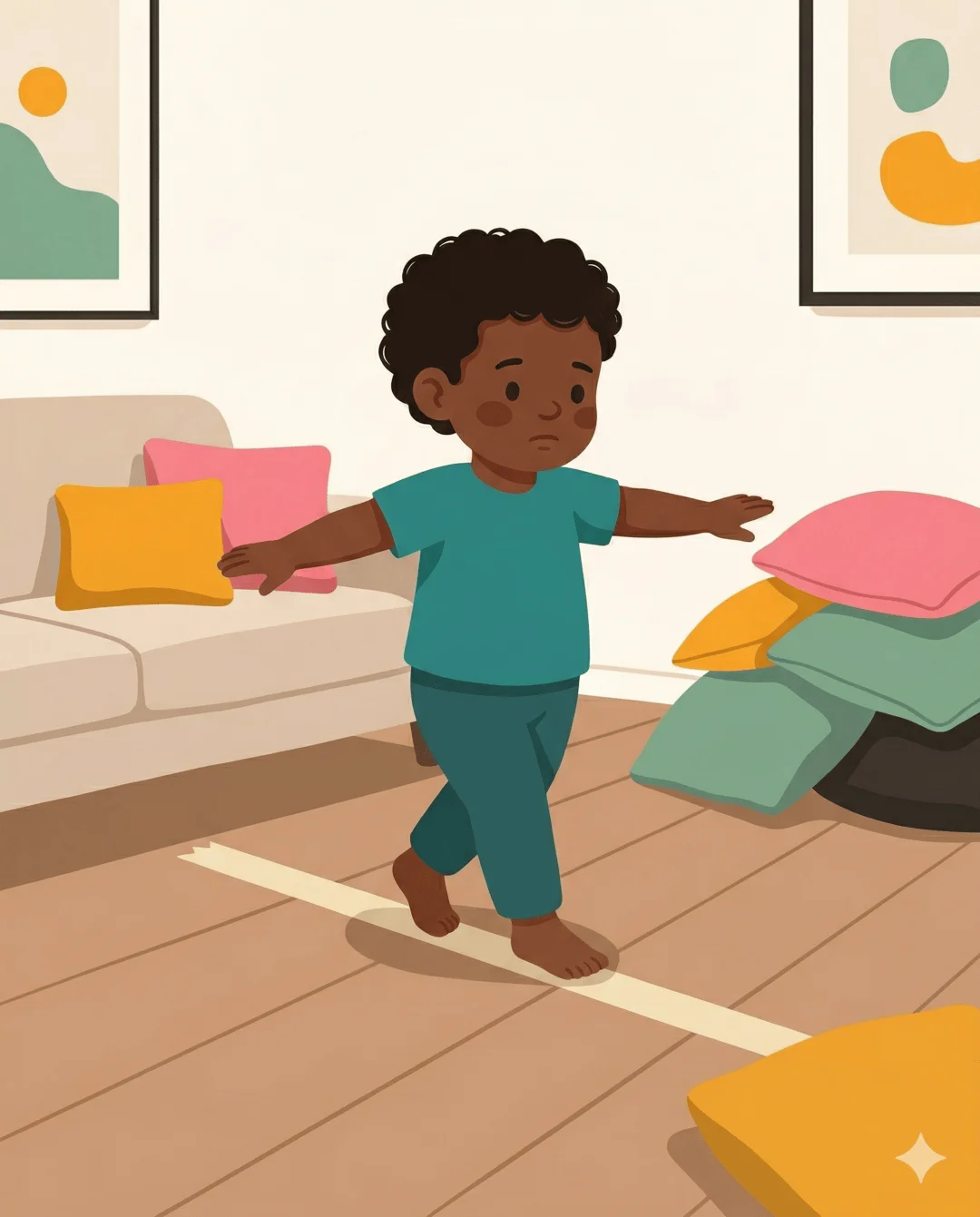
Parent tip
Start before you overthink it. No-prep activities work best when you begin while the moment is still recoverable.
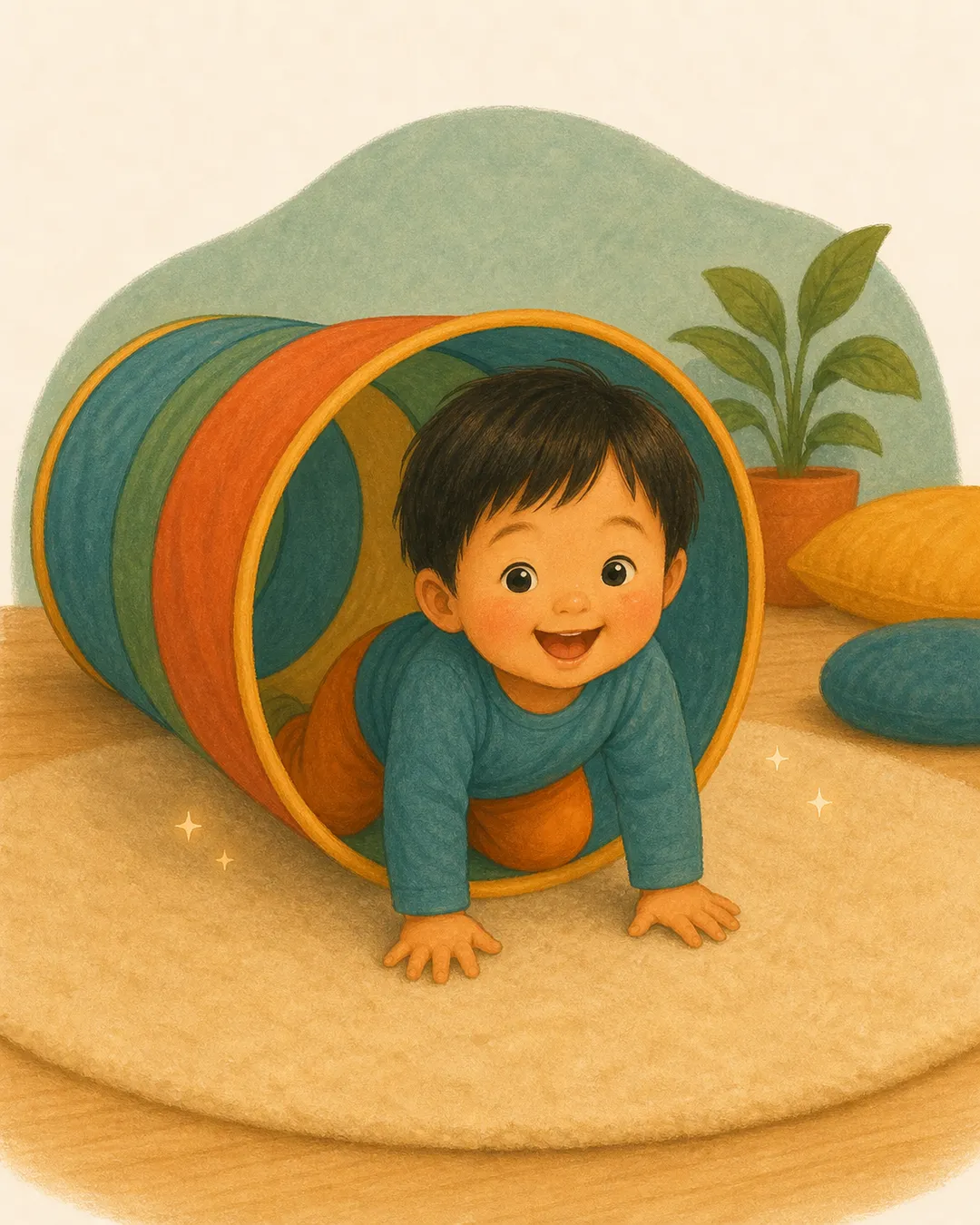
Drop a ball down a ramp or slope and let your early walker chase after it — a high-energy game that combines cause and effect with walking practice.
Tiny Steps
Start before you overthink it. No-prep activities work best when you begin while the moment is still recoverable.

Flushed cheeks, big smiles, and a calmer child afterwards. If they want to do it again, you’ve found a winner.
There is nothing quite as motivating for a new walker as a ball rolling away from them. This activity uses a simple ramp — a propped-up book, a tilted tray, or a garden slope — to send a ball rolling, and your toddler's job is to toddle after it, pick it up, and bring it back. The cause-and-effect loop of 'I release the ball, it rolls, I chase it' is endlessly fascinating to children in the 12-18 month window, and the chasing provides purposeful walking practice with a built-in incentive to keep going.
Cause-and-effect understanding is a cornerstone cognitive milestone in the first 18 months. Releasing a ball and watching it roll builds the predictive thinking that underlies all later scientific reasoning: 'If I do this, that will happen.' The chasing component transforms passive observation into active participation, and the bending-to-pick-up movement strengthens core muscles and practises the squat-to-stand transition that early walkers are still mastering. NHS physical activity guidance highlights that the best exercise for toddlers is the kind they do not even notice — running, climbing, and playing hard because it is fun.
One email a week with practical toddler activities, behaviour tips, and developmental insights. No spam, unsubscribe any time.