Parent tip
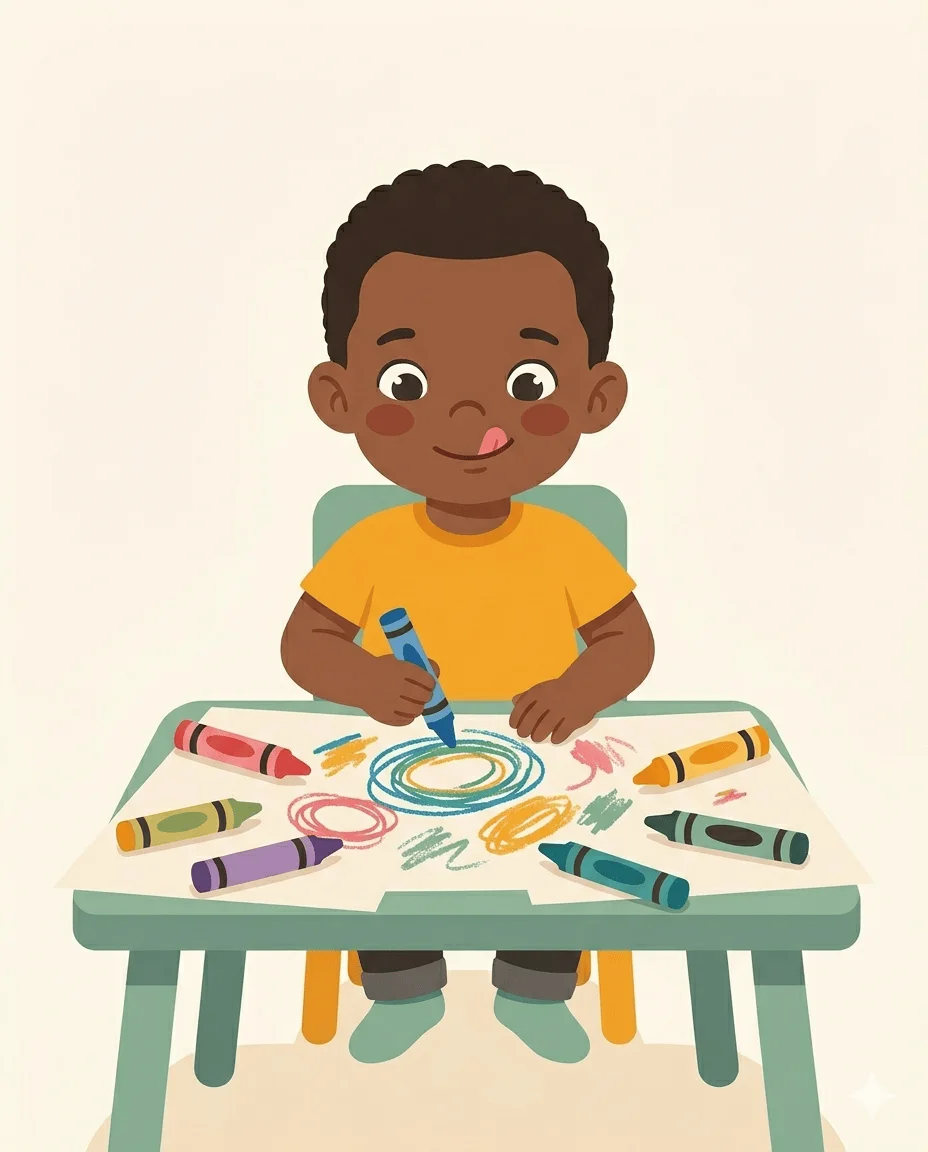
Set out crayons and paper before inviting your toddler in so the first minute feels smooth.
Sit back-to-back and draw separately — physical touch maintained, focus independent.
Tiny Steps
Set out crayons and paper before inviting your toddler in so the first minute feels smooth.

Messy hands and a child who doesn’t want to stop. The artwork doesn’t need to look like anything — the process is the point.
Sit on the floor back-to-back with your child, each with your own paper and crayons. Draw at the same time. The physical contact through the back satisfies the touch need, but the orientation means your child is looking at their own work, not at you. When you both turn around to show your drawings, the reveal is the reward. This gentle arrangement teaches that being connected and being independent can happen at the same time — the most important lesson a clingy toddler needs to learn.
Zero to Three emphasises that 'when caregivers are consistently attuned and engaged,' children learn they can explore safely. The back-to-back position delivers continuous physical contact — which is what the clingy child is asking for — while naturally orienting the child's attention toward their own work rather than toward you. The NHS describes clingy toddler behaviour as a phase where they 'whimper, whine or cling to you' and recommends reassurance over scolding. The back-to-back arrangement maintains reassuring contact through touch while introducing the experience of separate, independent activity.
One email a week with practical toddler activities, behaviour tips, and developmental insights. No spam, unsubscribe any time.