TinyStepper

Guided Drawing Relay

At a glance: Take turns adding one line or shape each to a collaborative drawing, building fine motor precision and creativity. A 15-minute, low-energy indoor activity for ages 2y4y.

Built by a parent of toddlersBest for 2y-4y

Field-tested ideas shaped by direct parenting experience and advice from reputable sources, including NHS Best Start in Life and NSPCC child development research.

2y4y15 minslow energyindoornone mess

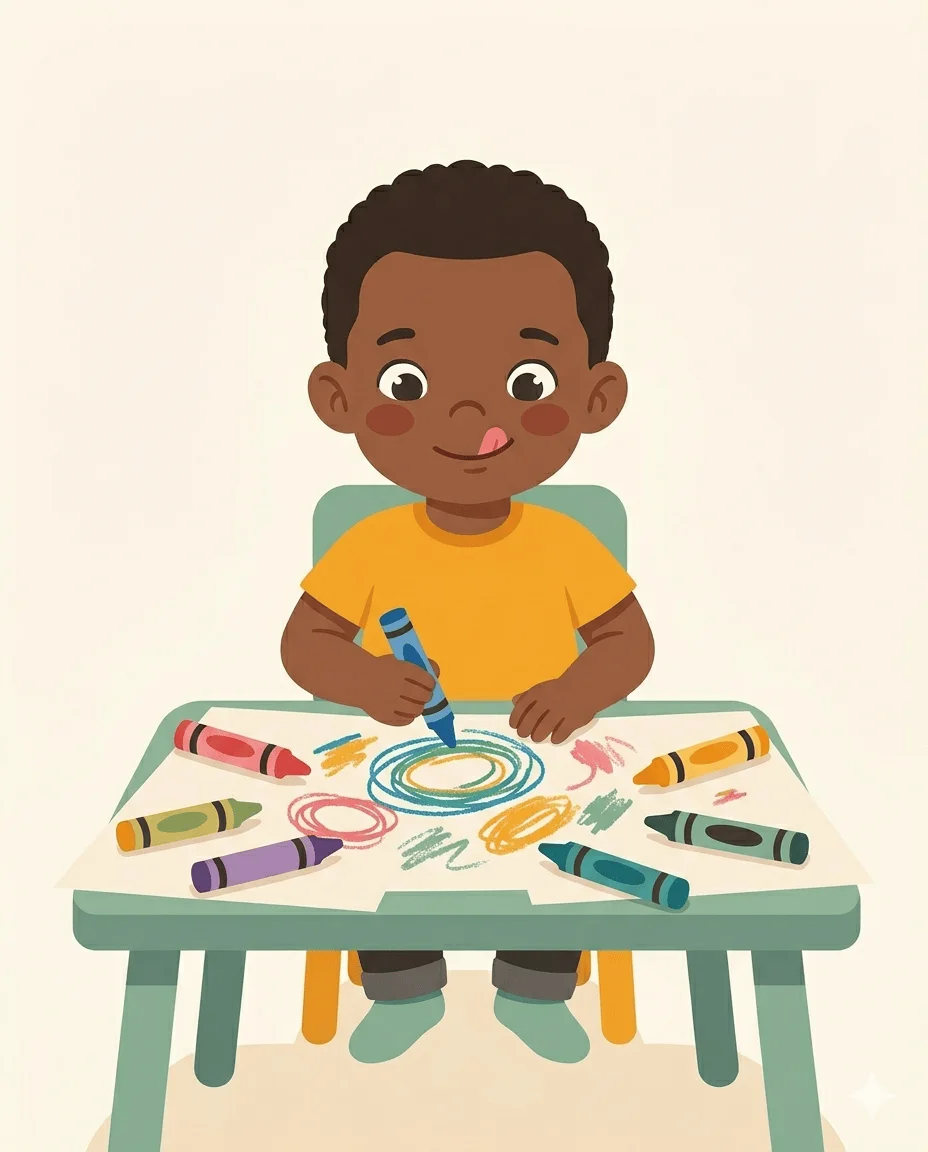
Start with a blank sheet of paper and take turns: you draw one simple element (a circle, a curved line, a dot), then your child adds one, back and forth. Neither of you knows what the picture will become until the end. The constraint of one mark at a time encourages deliberate, precise strokes — exactly the kind of controlled fine motor movement needed for pre-writing. The shared creation also builds collaboration and the wonderful surprise of emergent art.

Best for this moment

for calmer, lower-pressure moments, especially when you need an indoor option.

Parent tip

Set out markers and paper before inviting your toddler in so the first minute feels smooth.
What success looks like

A good outcome is a few minutes of engaged play, some back-and-forth with you, and a small sign of progress in creativity.

More help for this situation

Instructions

Get ready
  • Place a blank sheet of paper between you with a selection of drawing tools.
  • Explain the rules: one mark each, taking turns, to create something together.
  1. Place a blank sheet of paper between you with a selection of drawing tools.
  2. Explain the rules: one mark each, taking turns, to create something together.
  3. Begin with a simple shape — a large circle — and pass the paper.
  4. Your child adds their mark; no guidance on what to add.
  5. Continue back and forth, narrating occasionally: "I wonder what this is becoming."
  6. After ten to fifteen turns each, declare the drawing finished.
  7. Together, look at the picture and decide what it is.
  8. Give it a title and display it on the wall.

Why it helps

Controlled, deliberate mark-making develops the proprioceptive awareness and hand stability needed for pre-writing (Exner, 2001). Taking turns within a shared drawing task also builds sustained attention and impulse control, as each player must wait, observe, and plan their next mark. The open-ended format removes performance pressure, encouraging children to experiment with lines, pressure, and direction without fear of making a mistake.

Variations

  • Play with a rule: each mark must touch the previous one.
  • Use different tools each round: pencil, pen, crayon, chalk.
  • At the end, give the picture a title and write a one-line story about it.

Safety tips

  • Use washable markers in case of table or clothing contact.
  • Ensure pencils and pens have blunt tips appropriate for toddler use.
  • Keep the activity relaxed and non-competitive — comparing drawing quality between players can dent a young child's confidence.

When to pause and seek extra support

Stop if your child becomes distressed, unsafe, or consistently frustrated by the activity. If play, behaviour, or development worries keep showing up across settings, check in with a qualified professional.

Get weekly activity ideas for your toddler

One email a week with practical toddler activities, behaviour tips, and developmental insights. No spam, unsubscribe any time.