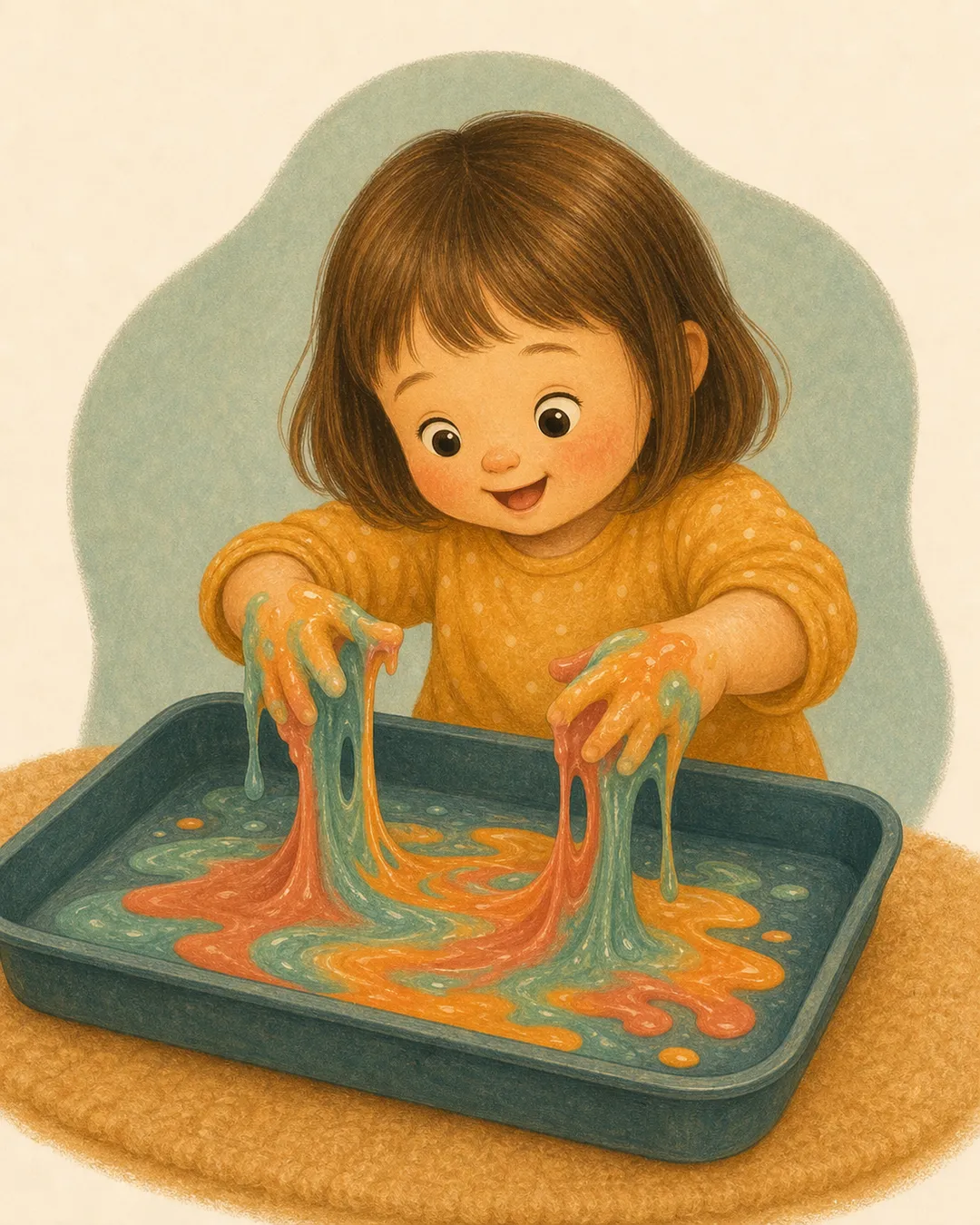
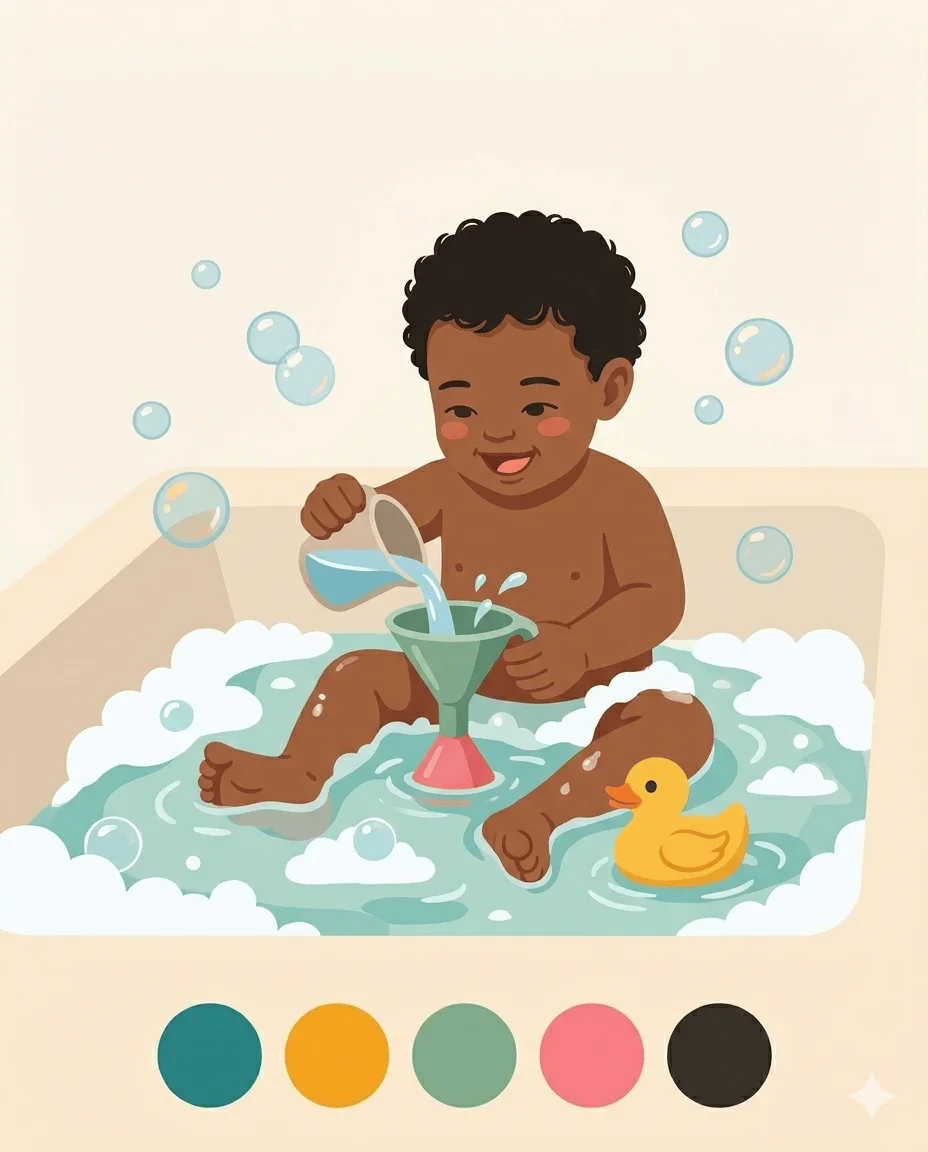
Place a large plastic bowl or washing-up bowl on a towel-covered low table or the kitchen floor.
Fill it with warm (not hot) water and add a squirt of washing-up liquid — let your child squeeze the bottle themselves.
1/4
Place a large plastic bowl or washing-up bowl on a towel-covered low table or the kitchen floor.
Fill it with warm (not hot) water and add a squirt of washing-up liquid — let your child squeeze the bottle themselves.
Drop in plastic cups, spoons, measuring cups, and small plates from the play kitchen or real unbreakable items.
Give your child a sponge and show them how to scrub: 'Rub the sponge on the cup — we're making it sparkly clean!'
Set out a second smaller bowl or a towel as the 'drying station' where clean items go.
Let them wash each item, then place it on the drying towel: 'That one's clean — put it on the towel to dry!'
When all items are washed, encourage them to pour the dirty water out (into the sink with your help) and wipe down the table.
Stack the clean items together and put them away — completing the whole cycle from dirty to clean to stored.
Parent tip
Set out measuring cups and plastic cups before inviting your toddler in so the first minute feels smooth.
What success looks like
Watch for focused exploration — fingers digging in, pouring back and forth, or sorting by feel. Even a few minutes of this builds concentration.
Toddlers are fascinated by grown-up tasks, and washing up is one of the most accessible to replicate safely. A bowl of warm soapy water, a sponge, and a collection of plastic items create a self-contained station where your child can scrub, rinse, and stack 'clean' items on a towel. The warm water is sensory-regulating, the scrubbing builds hand strength, and the purposefulness of doing a real household job feeds their growing desire for autonomy.
Why it helps
Practical life activities like washing up are central to Montessori education because they develop concentration, coordination, independence, and a sense of order simultaneously. The warm water provides calming sensory input that can regulate an overstimulated child. The full cycle — dirty, wash, rinse, dry, put away — builds sequential thinking and the understanding that tasks have a beginning, middle, and end, which is a foundational executive function skill.
Variations
Add food colouring to the water so it looks like a special cleaning potion — watching the colour change as they wash is mesmerising.
Give them a small bottle brush to clean the insides of cups and bottles for an extra fine motor challenge.
Set up two bowls — one soapy for washing, one clear for rinsing — to introduce the concept of a two-step process.
Safety tips
Test the water temperature on your own wrist before your child touches it — it should be comfortably warm, never hot.
Use only unbreakable items — no glass or ceramic, even if they seem sturdy.
Keep the water level low (halfway up the bowl) to minimise splashing and reduce the risk of your child slipping on a wet floor.
Try one of these next
A few connected ideas chosen by theme, energy, set-up, and age fit.