TinyStepper

Getting My Own Water

At a glance: Set up a low water station with a small jug and cup so your toddler can pour their own drink independently. A 5-minute, low-energy indoor activity for ages 18m3y.

Built by a parent of toddlersBest for 18m-3y

Field-tested ideas shaped by direct parenting experience and advice from reputable sources, including NHS Best Start in Life and NSPCC child development research.

18m3y5 minslow energyindoorsome mess

Place a child-height stool or low table near the kitchen with a small jug of water and a cup. Show your toddler how to pour: hold the jug with two hands, tilt slowly, stop when the cup is full enough. They will spill. That is part of learning. A towel lives next to the station for mopping up. This single daily act of self-service — getting your own water when you are thirsty — is one of the most powerful independence builders available to toddlers.

Best for this moment

for calmer, lower-pressure moments, especially when you need an indoor option.

Parent tip

Set out plastic cups and small pitcher before inviting your toddler in so the first minute feels smooth.
What success looks like

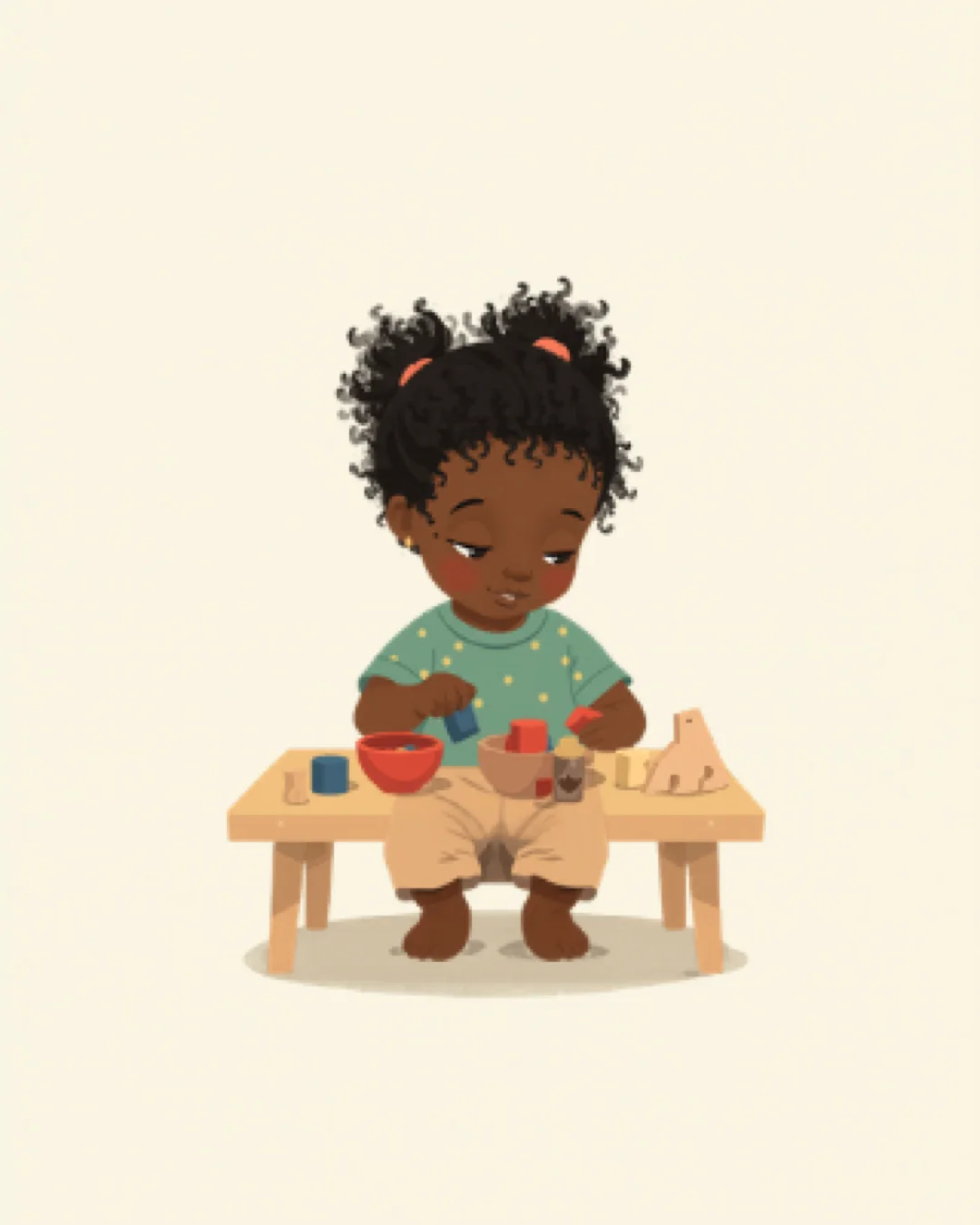
A good outcome is a few minutes of engaged play, some back-and-forth with you, and a small sign of progress in body awareness.

More help for this situation

Instructions

Get ready
  • Choose a low, stable surface your toddler can reach without climbing
  • Place a small, lightweight jug filled halfway with water
  1. Choose a low, stable surface your toddler can reach without climbing
  2. Place a small, lightweight jug filled halfway with water
  3. Add a small, wide-based cup that is hard to knock over
  4. Keep a towel or cloth next to the station
  5. Demonstrate: 'Hold with two hands. Tilt slowly. Stop — that's enough!'
  6. Let your toddler try — expect spills and celebrate effort
  7. Show how to mop up: 'We clean up spills — easy!'
  8. When they are thirsty, redirect: 'You know where your water is!'

Why it helps

Pouring is a foundational Montessori practical life skill that builds fine motor control, hand-eye coordination, and bilateral coordination simultaneously. The independence of serving yourself a drink when thirsty — without asking or waiting — builds the self-efficacy that psychologists identify as critical for healthy development. The inevitable spills provide natural consequence learning without punishment, teaching cause and effect through direct experience.

Variations

  • Start with a very small jug (a measuring cup works well) to reduce spill volume.
  • Add a tray under the station to contain mess.
  • Extend to pouring for others: 'Would you like to pour Daddy a drink too?'

Safety tips

  • Use an unbreakable cup and jug — plastic or bamboo, never glass.
  • Keep the jug only half full to reduce the weight and potential spill volume.
  • Place the station on a waterproof surface or use a tray to contain spills.

When to pause and seek extra support

Stop if your child becomes distressed, unsafe, or consistently frustrated by the activity. If play, behaviour, or development worries keep showing up across settings, check in with a qualified professional.

Get weekly activity ideas for your toddler

One email a week with practical toddler activities, behaviour tips, and developmental insights. No spam, unsubscribe any time.